
Edwardian Library Shelving
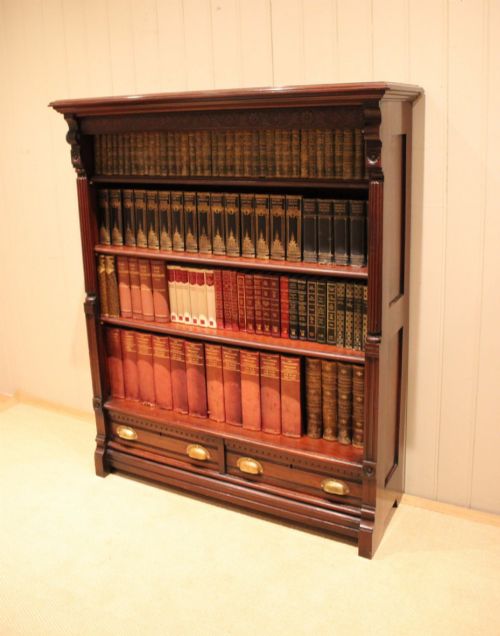
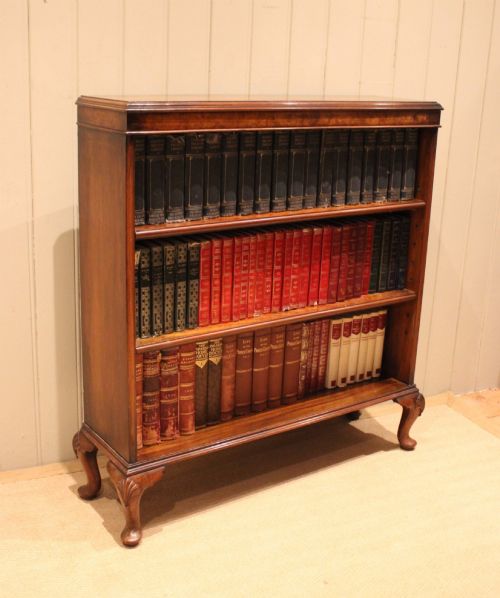
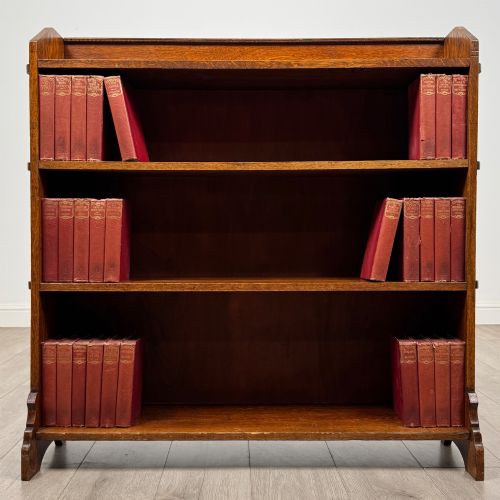
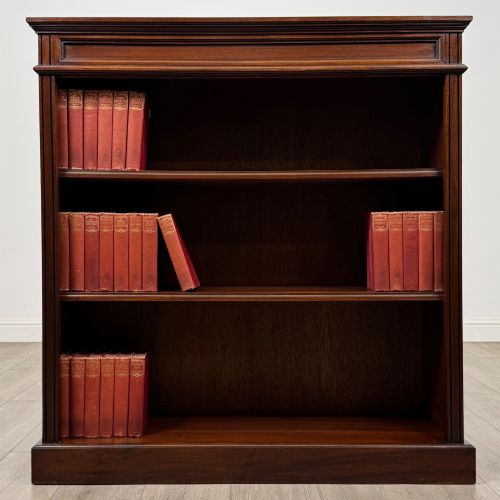
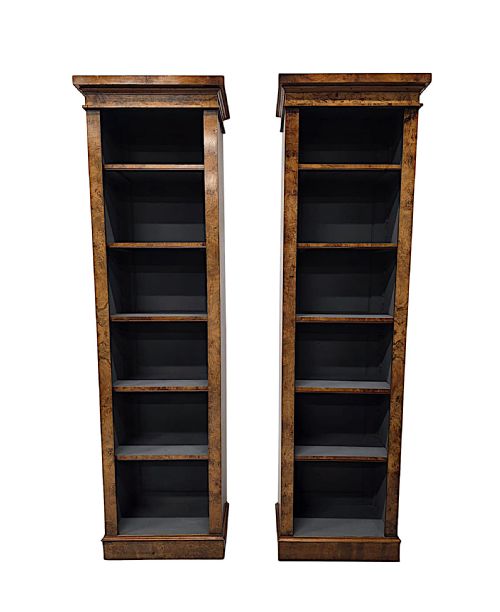
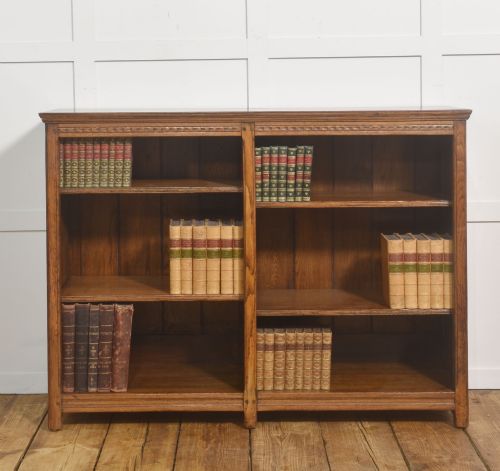
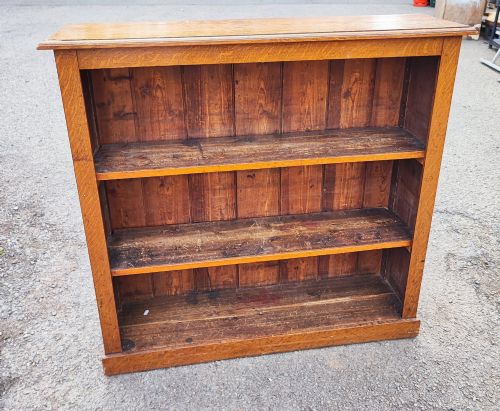
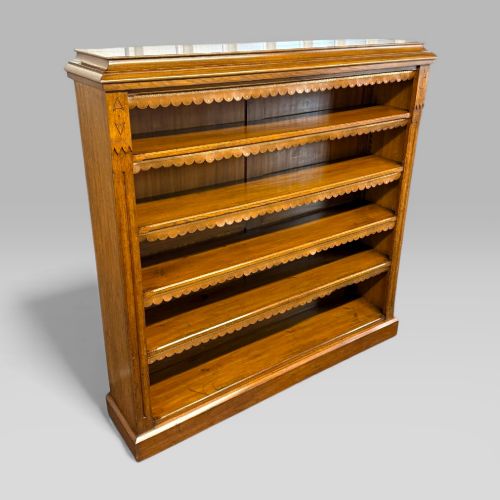
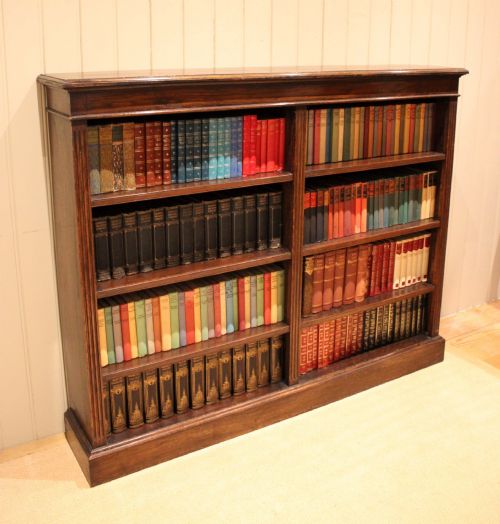
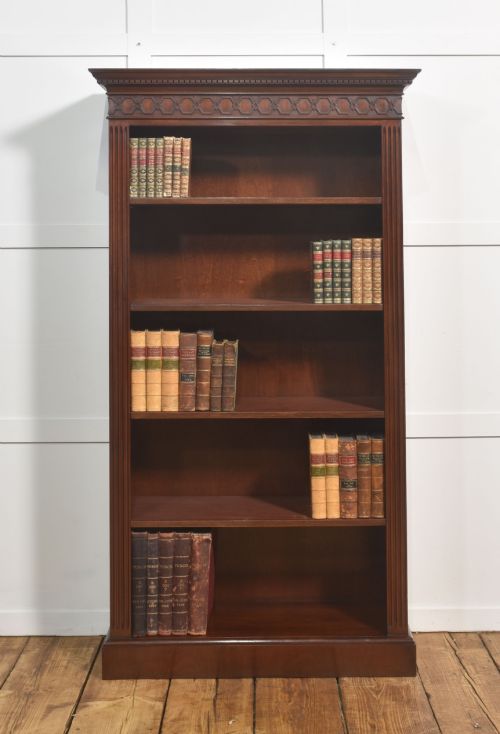
Edwardian library shelving brings orderly warmth to a room, offering practical book storage built in solid oak and rich mahogany.
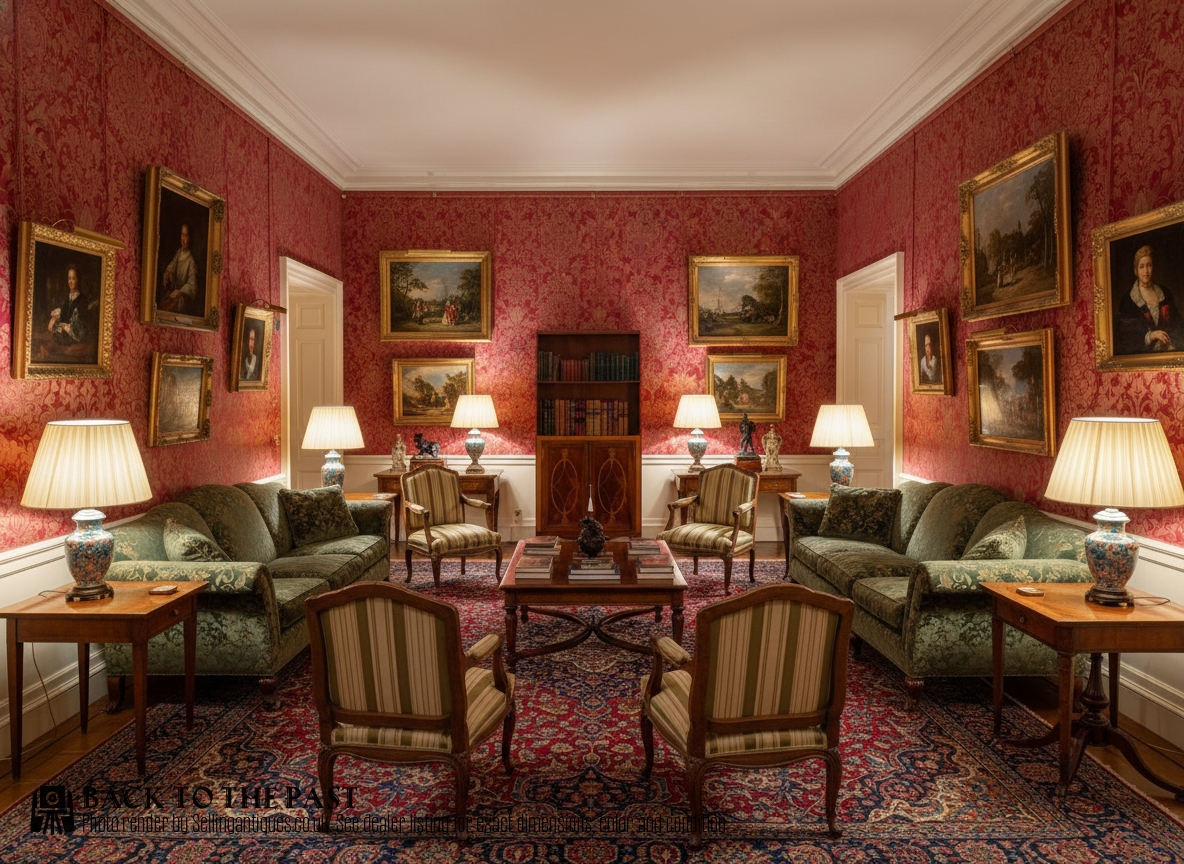
Edwardian Library Shelving
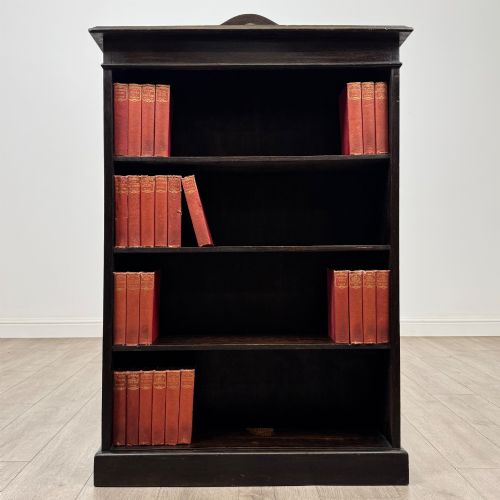
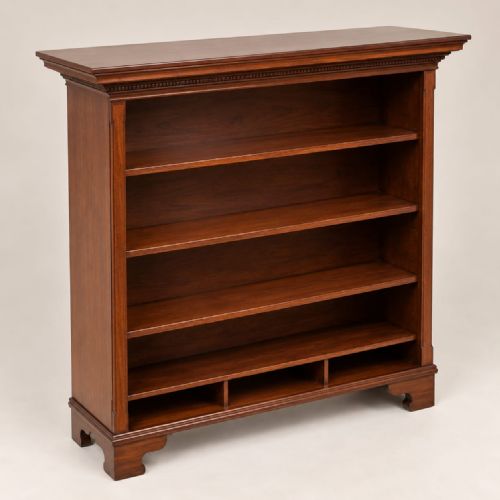
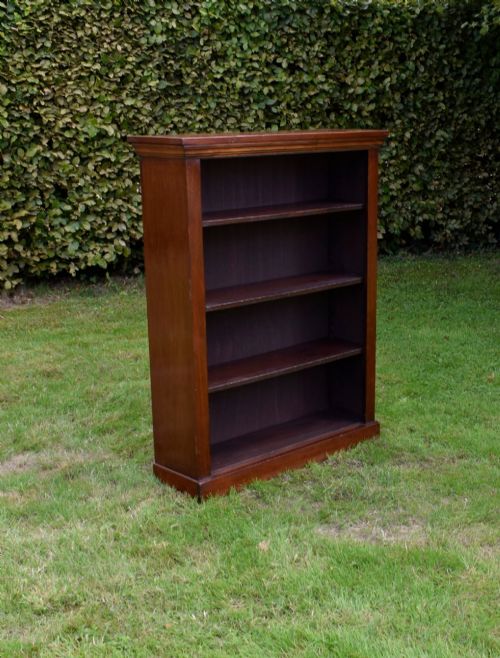
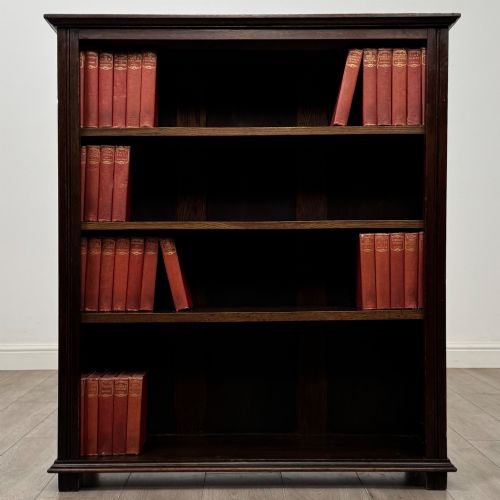
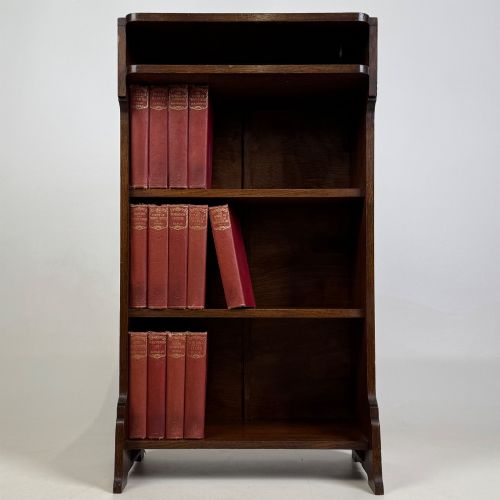
Edwardian library shelving mainly comprises open bookcases, adjustable shelf units, and sectional barrister designs intended for domestic and study spaces. Buyers encounter pieces spanning the Edwardian period, early 20th century, and late Victorian eras, with oak and mahogany dominating the forms.
Materials and construction
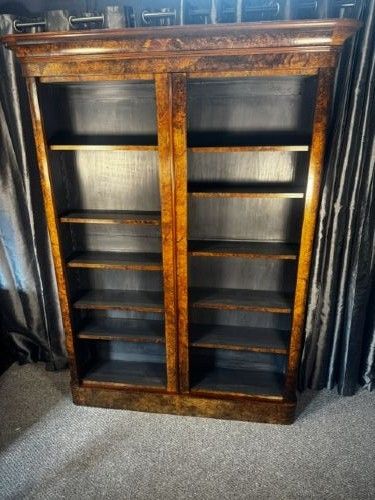
Cabinetmakers utilised solid timbers such as oak, mahogany, and walnut, frequently applying walnut veneer and burr walnut for decorative surfaces. Brass fittings appear on castors and modular stacking mechanisms, while glass provides protection on display variants.
Adjustable shelving systems allowed owners to alter shelf heights for varying book sizes, and sectional barrister bookcases utilised interlocking glazed units. Inlaid decorative work and brass castors finished finer cabinet pieces from the Victorian and Edwardian periods.
Edwardian Library Shelving Retail Price Guide 2026
Typical asking prices for edwardian library shelving among the pieces listed under this phrase on Sellingantiques today, from the lower quarter to the upper quarter. They describe what is for sale here now, not the wider market.
Early twentieth-century lawyers kept their books remarkably dust-free by stacking them inside patented modular glass cases.
Judging quality
The grade of timber and veneer selection dictates the visual weight of each bookcase, with burr walnut and figured mahogany representing finer material choices. Solid oak and heavy mahogany frames provide structural longevity compared to lighter commercial builds.
Refined cabinetmaking appears in precision joinery, smoothly operating adjustable shelf racks, and intact inlaid details. Original brass hardware and fitted castors further distinguish superior examples from standard utility shelving.
Waring and Gillows·Globe Wernicke
The Edwardian Library Shelving Glossary
- Barristers Stacking Bookcase
- A sectional bookcase with glazed lifting doors that stack in modular tiers. This design originated to protect legal volumes in offices.
- Open Bookcase
- A shelving unit without doors, allowing direct access to book collections. These pieces often feature adjustable wooden shelves.
- Waterfall Bookcase
- A tiered shelving unit where each successive shelf steps back from the one below. This stepped form creates a cascading profile.
- Aesthetic Movement
- A late 19th-century design style emphasising visual beauty over narrative content. Pieces from this movement often feature simplified forms and rich wood tones.
- Sheraton Revival
- A furniture style drawing inspiration from 18th-century neoclassical designs. These pieces frequently display delicate inlay work and fine mahogany veneers.
Edwardian Library Shelving: Frequently Asked Questions
How do I adjust the shelves?
Most period library shelving uses a system of wooden ratchets, metal shelf studs, or brass tracks inset into the interior uprights. You simply lift the shelf slightly and reposition the supports to the desired height slot.
Ensure the shelf rests evenly on all four supports before loading books back onto the wood.
Are these bookcases suitable for heavy books?
Solid oak and heavy mahogany library bookcases were engineered specifically to hold substantial collections of heavy leather-bound volumes. The thick timber shelves resist sagging under normal library loads.
Modular sectional units also provide robust support due to their reinforced frames.
How do I distinguish Edwardian from Victorian oak?
Victorian oak furniture frequently displays darker finishes, heavier carving, and Gothic or revival influences. Edwardian pieces tend to feature lighter golden oak tones and cleaner, less ornate lines.
Proportions also shifted during the Edwardian era toward neater, more compact domestic sizing.
Can sectional bookcases be separated?
Barrister and sectional bookcases are built from individual modular tiers stacked on a base and topped with a cornice. These sections lift apart easily for moving and transport.
Each tier functions independently while locked in place by the stacking mechanism.