


Large Upholstered Ottoman
A large upholstered ottoman provides generous seating and surface space, bringing both comfort and presence to a room.
Large Upholstered Ottoman
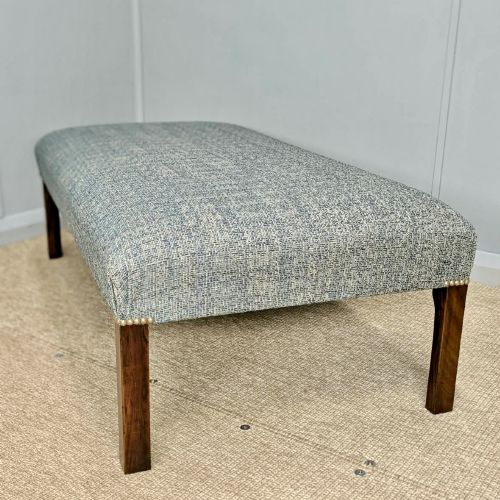
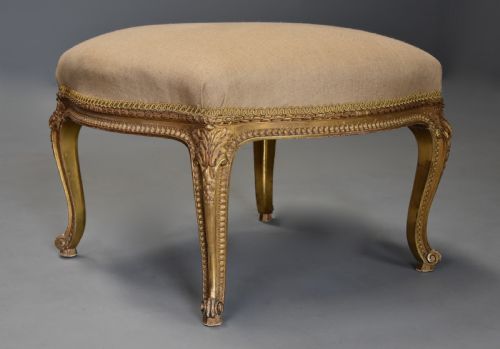
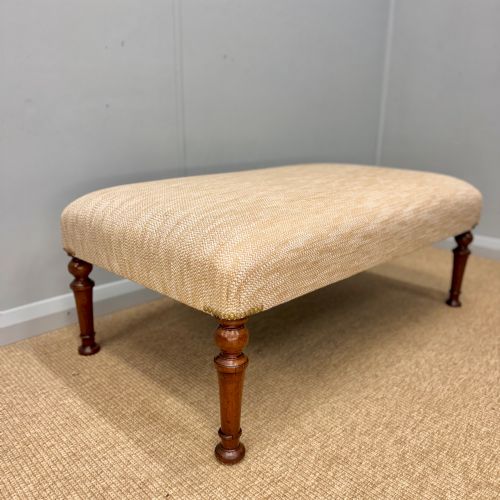
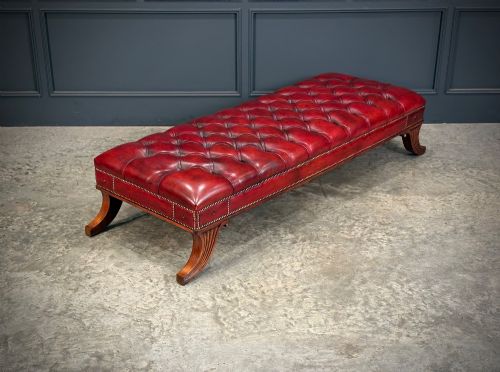
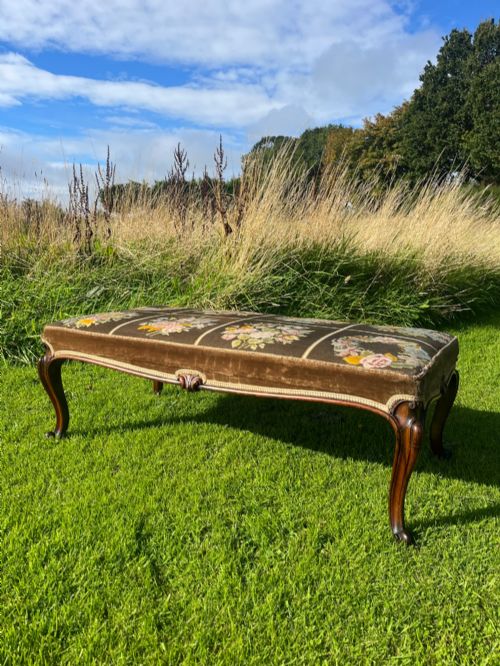
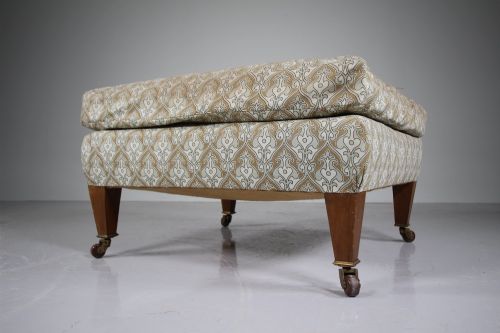
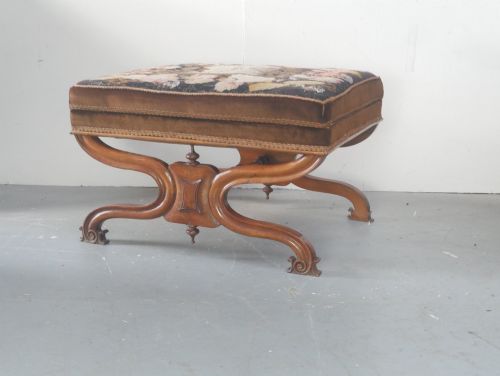
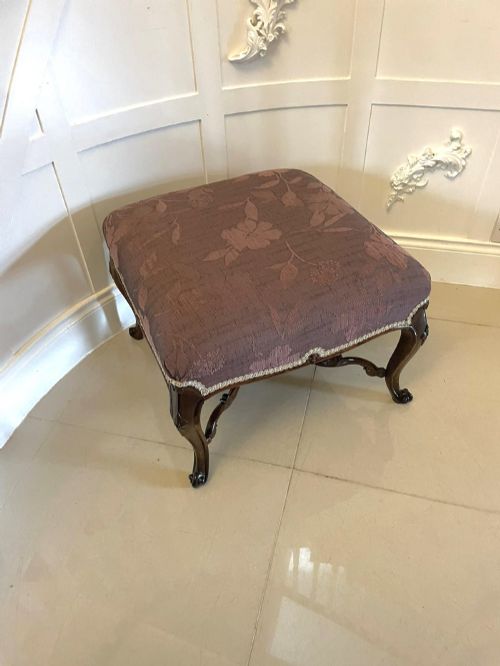
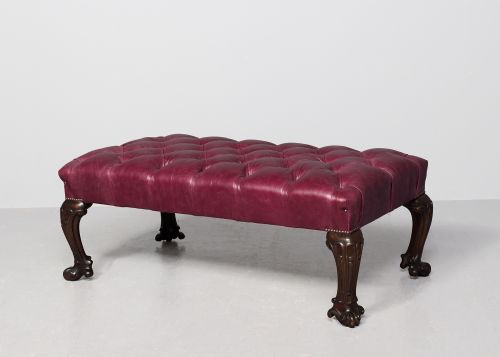
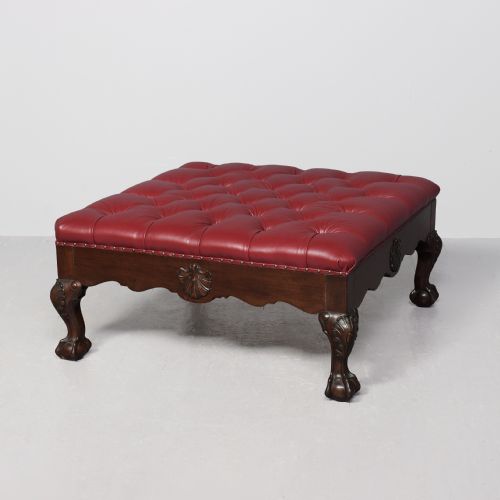
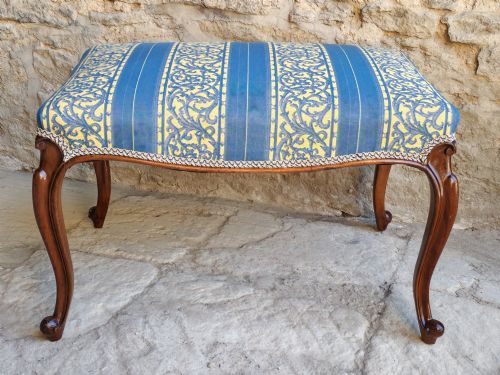
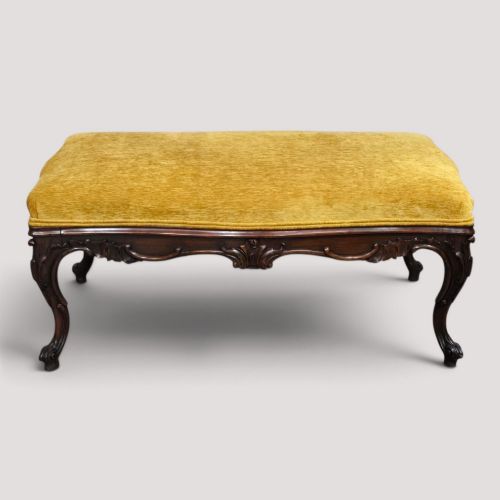
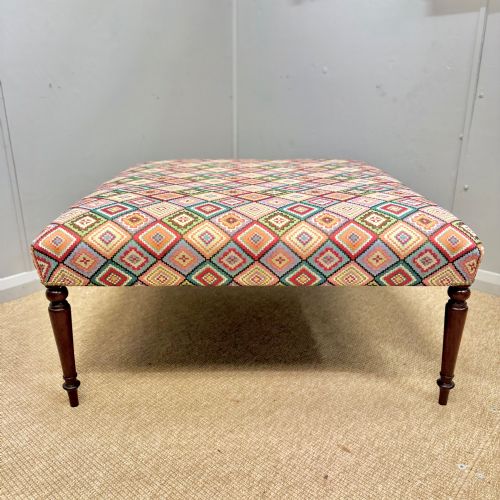
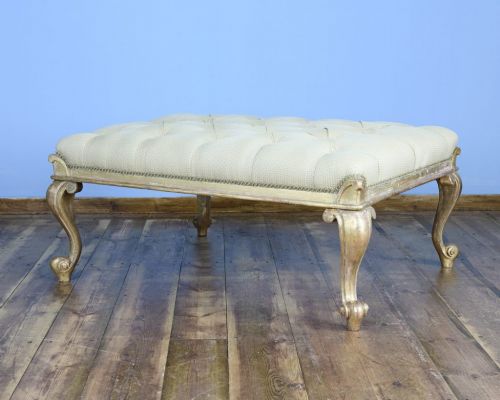
A large upholstered ottoman appears in forms such as long benches, centre stools, window seats, and storage boxes. These pieces serve multiple domestic roles, functioning as comfortable footrests, casual seating, and coffee table alternatives.
The pieces on this page span the nineteenth century, eighteen seventy, and nineteen thirty, drawing on Victorian, Georgian Revival, Anglo-Indian, English Country, French Louis XV, and French Chateau styles. Buyers will frequently encounter generous rectangular proportions supported by wooden frames.
Materials range from mahogany, rosewood, oak, pine, and hardwood frames to coverings of linen, wool, velvet, tapestry fabric, and crewel work. Many examples incorporate hinged lids that open to reveal felt-lined storage compartments.

How they were made
Frames are constructed from solid hardwoods like mahogany, rosewood, oak, and pine, often shaped with carved details or gilded surfaces. These structural foundations provide the rigidity necessary to support heavy daily use as seats or tables.
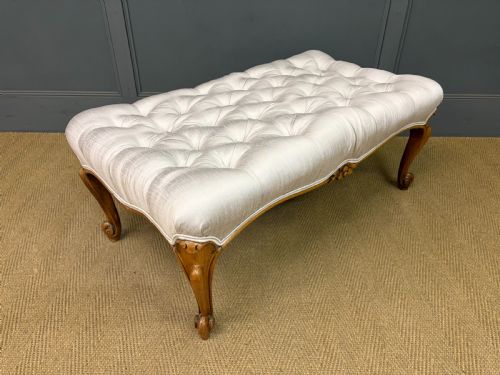
Upholstery techniques involve traditional stuffing secured beneath textiles such as linen, wool, velvet, tapestry fabric, and crewel work. Buttoning and detailed stitching techniques keep the padding firm and create structured surfaces.
Large Upholstered Ottoman Retail Price Guide 2026
Typical asking prices for large upholstered ottoman among the pieces listed under this phrase on Sellingantiques today, from the lower quarter to the upper quarter. They describe what is for sale here now, not the wider market.
Listings feature mahogany, rosewood, oak, pine, and hardwood frames paired with wool, velvet, linen, and tapestry coverings.
What varies in quality
Quality rests in the choice of timber and the execution of the frame, where dense hardwoods like mahogany and rosewood indicate a higher tier of production than softer woods like pine. Carved details and gilded finishes further separate standard utilitarian items from finer decorative examples.
The choice and execution of the upholstery material dictate the visual impact of the piece. Heavy crewel work, tapestries, and rich velvets reflect superior textile selection compared to plain modern fabrics.
Hallett & Sons
The Large Upholstered Ottoman Glossary
- Centre stool
- A large freestanding seat designed to sit in the middle of a room rather than against a wall. These pieces often function as coffee tables in modern interiors.
- Crewel work
- A type of embroidery using wool yarn on a heavy linen or cotton foundation. This technique appears on nineteenth-century upholstery.
- Box ottoman
- A storage stool featuring a hinged lid that lifts to reveal an interior compartment. Many historical examples include felt linings.
- Gilded
- Covered with a thin layer of gold leaf or gold paint applied to the wooden frame. This decorative treatment enhances the formality of the piece.
- Mahogany
- A durable tropical hardwood prized for its deep reddish-brown colour and stable grain. It forms the structural basis for many Victorian frames.
Large Upholstered Ottoman: Frequently Asked Questions
How were large upholstered ottomans originally used?
These pieces served multiple functions in nineteenth-century homes, acting as comfortable footstools, extra seating for guests, and window seats. Versions with internal compartments provided concealed storage for blankets and household items.
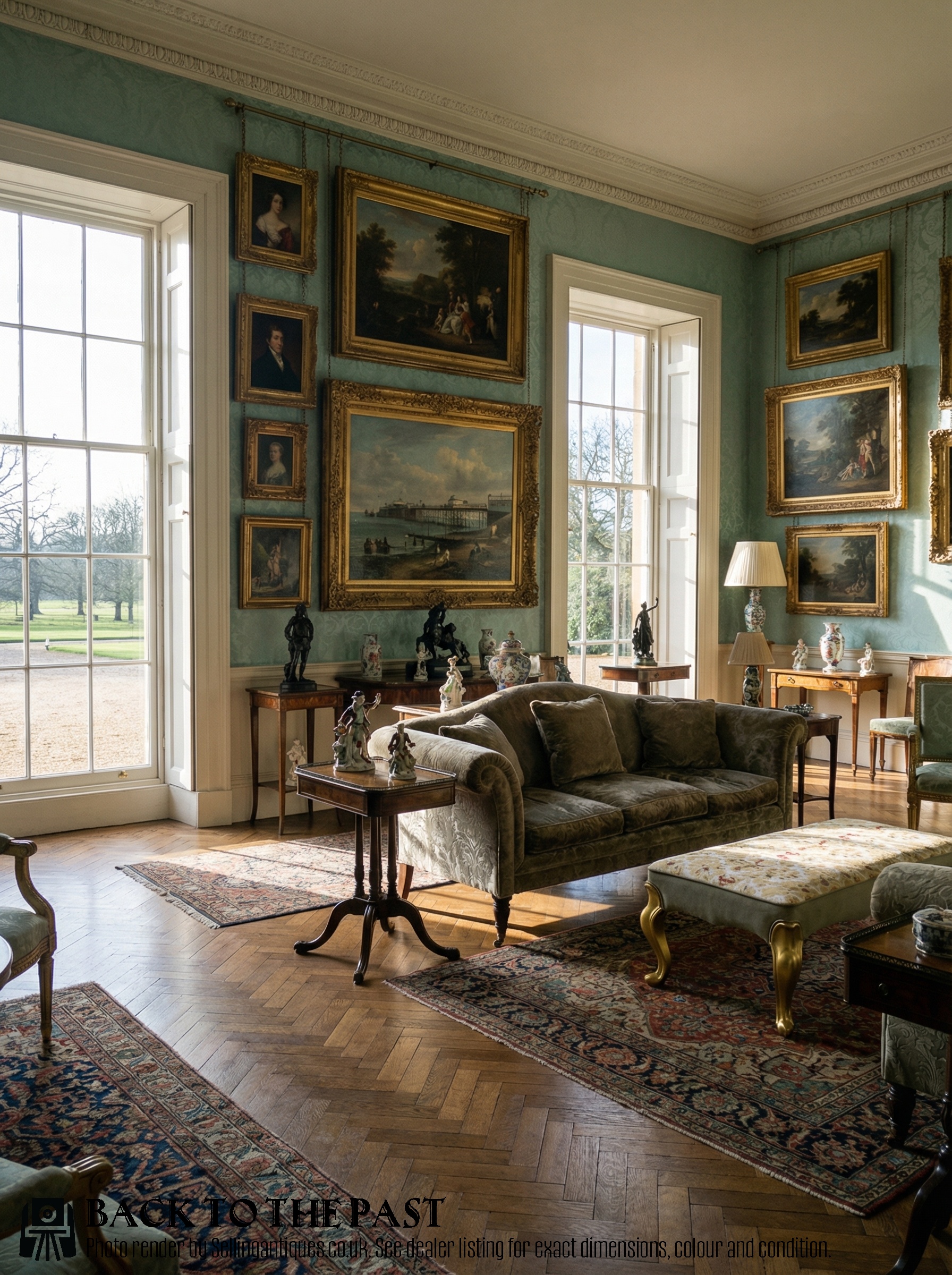
Over time, many of these sturdy frames have adapted to modern living as substitute coffee tables. Their generous dimensions allow them to anchor large reception rooms while offering practical utility.
What woods appear in these frames?
Makers utilised a variety of solid timbers depending on the period and the intended formality of the piece. Mahogany, rosewood, and oak provide sturdy foundations for Victorian and revival designs, while pine appears in simpler or storage-focused forms.
The choice of timber directly affects the weight and durability of the furniture. Hardwood frames support heavy upholstery and frequent seating without losing structural integrity.
How do I identify a Victorian ottoman?
Victorian examples often feature dense hardwood frames made from mahogany or rosewood, combined with deep buttoning or heavy textiles like crewel work and velvet. Many incorporate hinged storage boxes lined with felt.
Stylistic influences from the nineteenth century frequently lean towards substantial proportions and revival aesthetics. Comparing the framing materials and textile choices helps confirm the era of production.
Can I use an ottoman as a coffee table?
Firmly padded and stable centre stools or large ottomans make practical alternatives to traditional wooden coffee tables. Adding a large tray provides a flat surface for drinks and books while retaining soft edges.
Ensure the upholstery fabric is durable enough to withstand daily handling and potential spills. Pieces with solid hardwood frames offer the necessary stability for everyday use.