
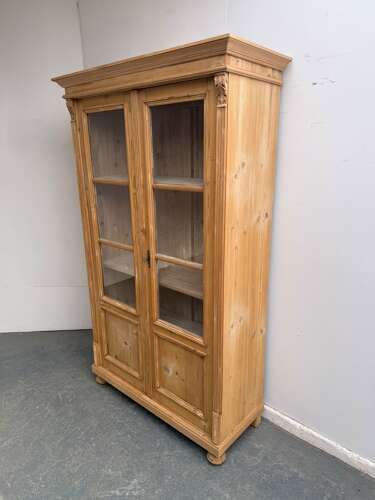
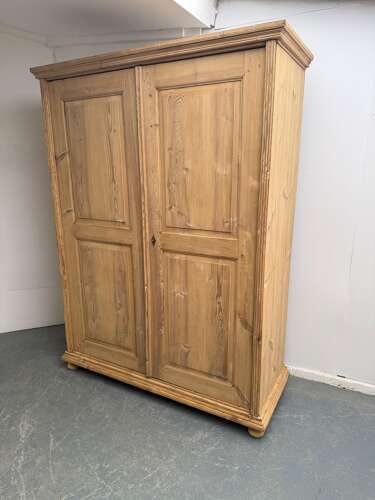
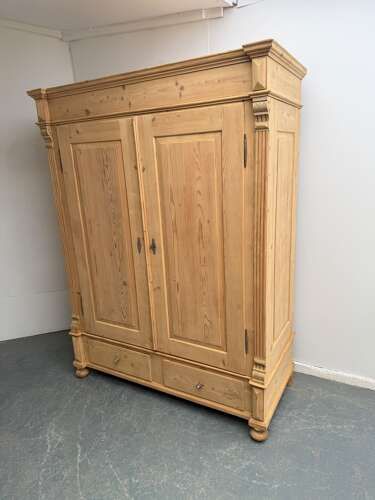
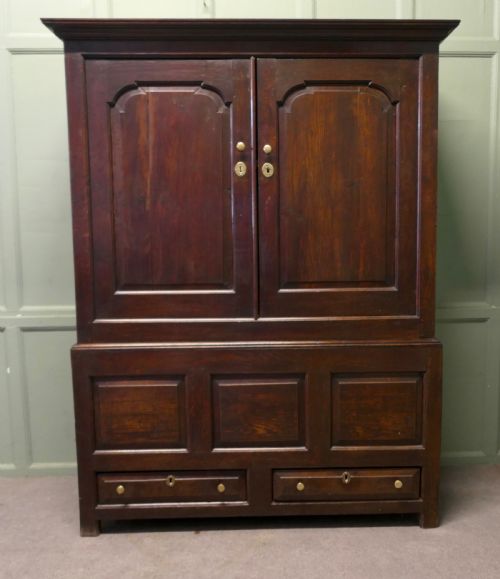
Large Storage Cupboard
A large storage cupboard offers substantial capacity for household organisation, spanning periods from the eighteenth century to the twentieth.
Large Storage Cupboard
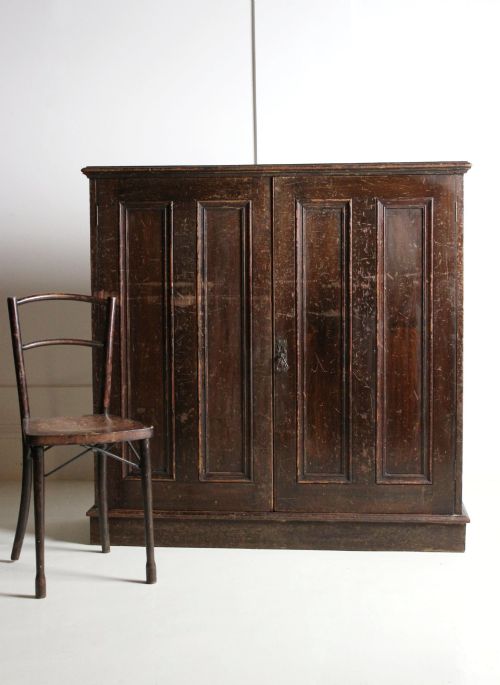
A large storage cupboard provides deep internal space for household items, linens, and garments across multiple shelves or hanging rails. These pieces encompass utilitarian furniture from country houses, schools, and farmhouses alongside more formal domestic examples.
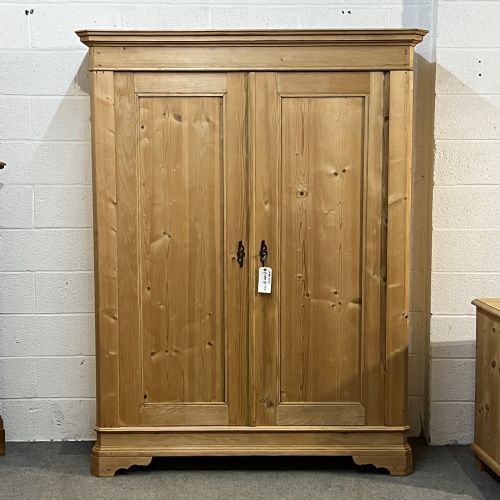
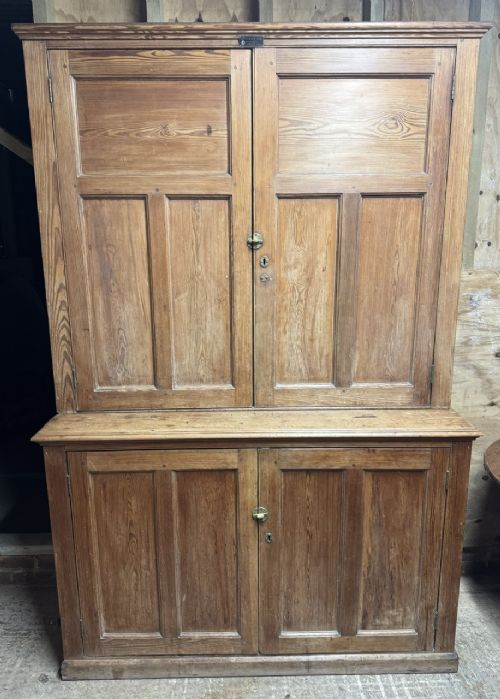
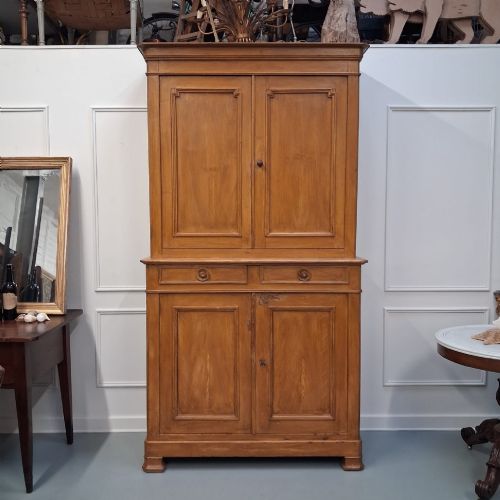
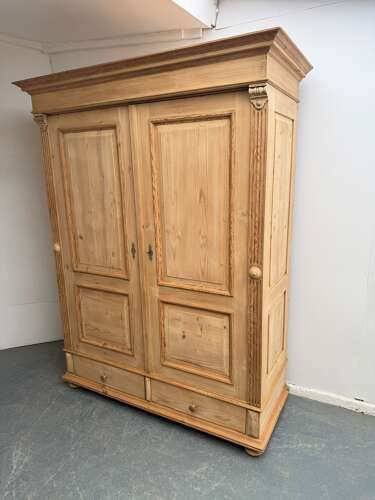
The most common versions met on this page are constructed from pine, often originating in the Victorian era or the nineteenth century. Forms range from housekeeper cupboards and linen presses to knockdown wardrobes and school cabinets.
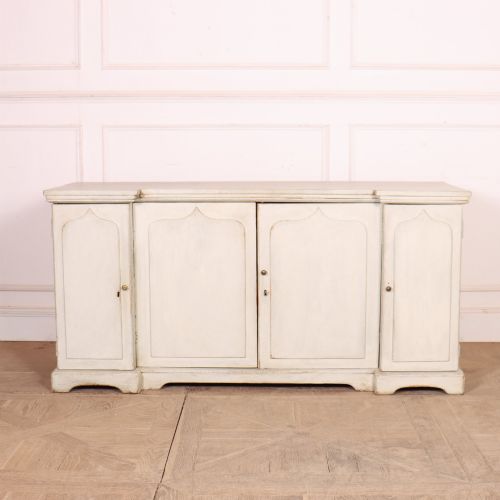
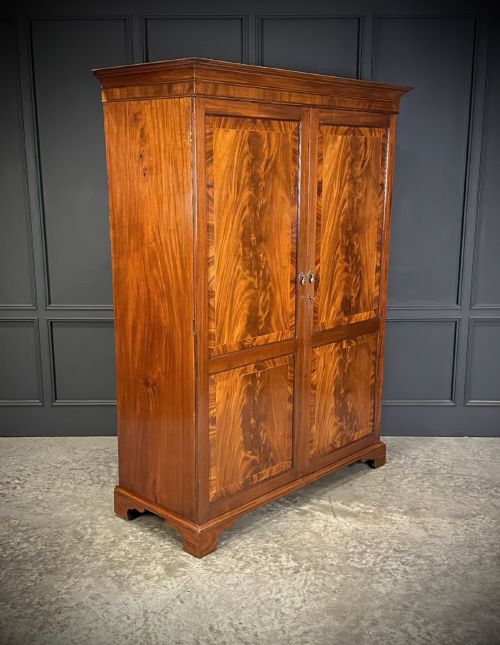
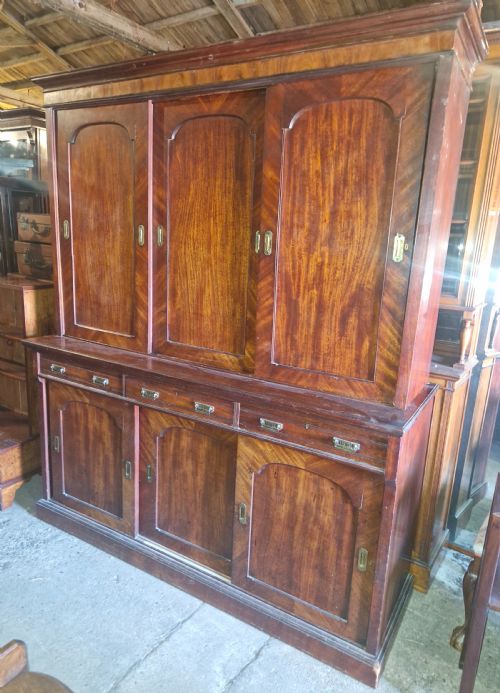
Earlier examples include eighteenth-century oak housekeepers cupboards, while later pieces span painted pine, walnut, and mahogany. These functional items served demanding domestic roles in estate offices, larders, and bedrooms.
How they were made
Construction relies heavily on solid timbers such as pine, oak, and mahogany, supplemented by structural brass or iron hardware. Many nineteenth-century pine wardrobes utilise knockdown construction methods to facilitate transport and placement in domestic rooms.
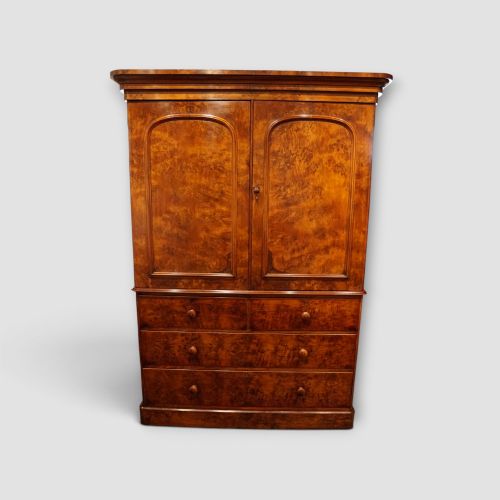
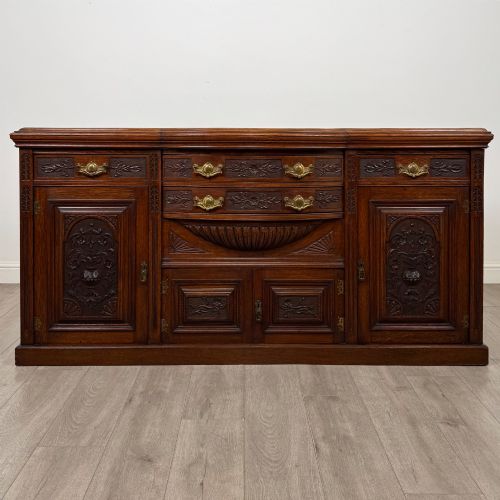
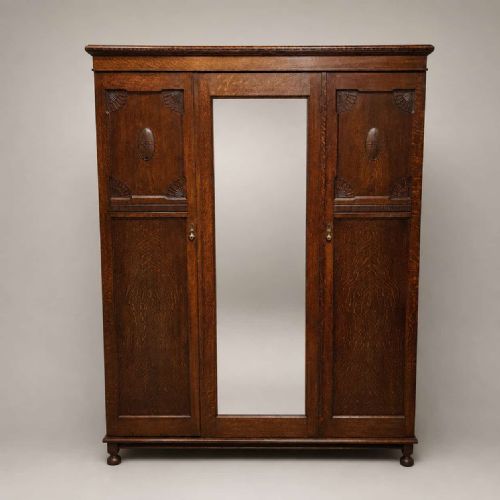
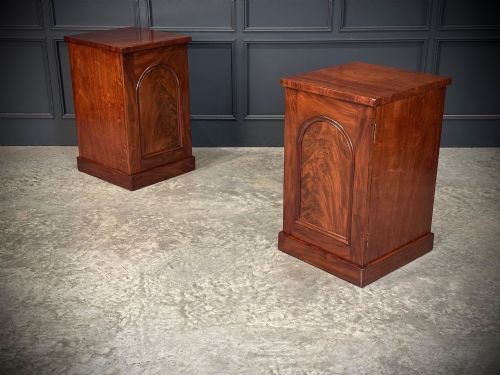
Surface finishes vary from wax and paint to polished mahogany and burr walnut veneers. Details such as glass doors, applied beads, and hand-carved elements appear across Victorian, Georgian, and Arts and Crafts examples.
Listings feature eighteenth-century oak, nineteenth-century pine, and twentieth-century oak, reflecting shifts in domestic storage from estate furniture to painted utility pieces.
What varies in quality
Quality rests upon the selection of timber, such as figured walnut, flame mahogany, or dense pitch pine, alongside the integrity of the original construction. Superior pieces retain their original painted surfaces, brass handles, and functional locking doors without modern timber replacements.
The sophistication of the joinery and hardware distinguishes standard utility pieces from fine estate furniture. Well-executed fielded panels, balanced proportions, and intact interior configurations indicate higher workshop standards.
Maple & Co
The Large Storage Cupboard Glossary
- Knockdown
- Furniture designed to be disassembled into modular sections for transport. This method was common for large nineteenth-century pine wardrobes.
- Housekeeper cupboard
- A large storage piece traditionally used for linens and provisions in country houses. These incorporate a combination of upper cupboards and lower drawers.
- Linen press
- A tall cabinet featuring upper sliding trays or shelves enclosed by doors, positioned above a chest of drawers. Mahogany and oak versions frequently display panelled doors.
- Breakfront
- A cabinet or sideboard whose central section projects forward from the recessed flanking wings. This architectural arrangement adds visual depth to large oak and mahogany case pieces.
Large Storage Cupboard: Frequently Asked Questions
How do I assemble a knockdown wardrobe?
Knockdown wardrobes utilise pegged joints, bolts, or tongue-and-groove systems designed to let large carcasses travel up stairs and through doorways.
Carefully align the panels and secure the internal fixings without forcing the timber to ensure the structure remains square.
Where were housekeepers cupboards used?
These large cupboards stood in domestic service quarters, estate offices, and large country house utility rooms to house linens and dried provisions.
Their deep shelves and drawer bases accommodated bulky household textiles before built-in bedroom closets became standard.
How do I care for painted pine furniture?
Maintain painted pine surfaces by dusting with a dry cloth and avoiding harsh chemical cleaners that strip historical finishes.
Keep the timber away from direct heat sources to prevent the wood from splitting or the historic paint layers from flaking.