


Large Stone Garden Sculptures
Large stone garden sculptures bring presence to grounds and terraces, offering grand figures and animals cast or carved to weather outdoors.
Large Stone Garden Sculptures
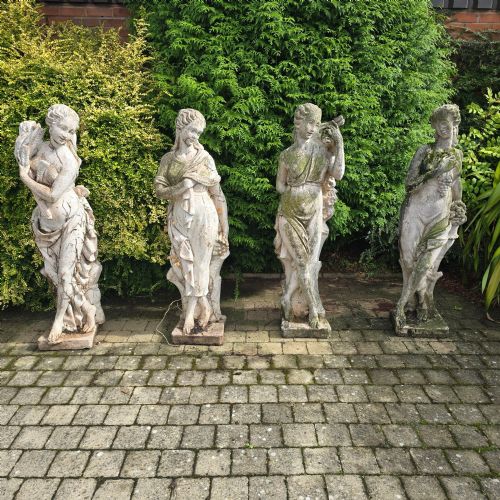
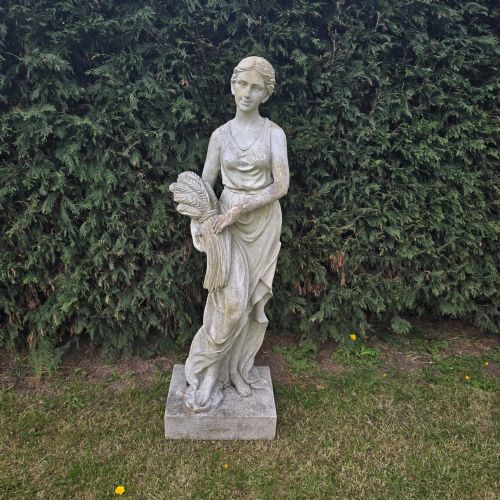
When you search for large stone garden sculptures, you encounter substantial garden statuary, architectural salvage, and pier finials designed for substantial outdoor placement. These pieces range from life-sized figures and allegorical representations like the Four Seasons to impressive pairs of guardian lions and eagles.
The selections span the nineteenth century through the mid-twentieth century, drawing on Classical Revival, Neoclassical, and English Country styles. You are most likely to meet cast, composite, and reconstituted stone pieces from the 1920s, 1930s, and 1950s, alongside nineteenth-century terracotta and carved marble.
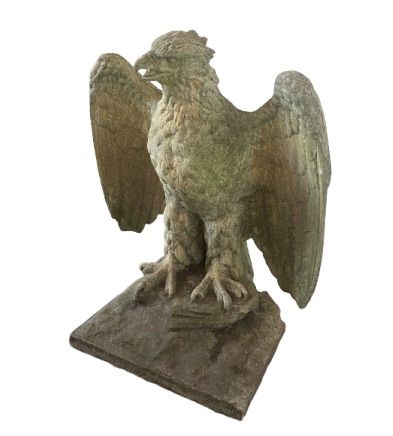
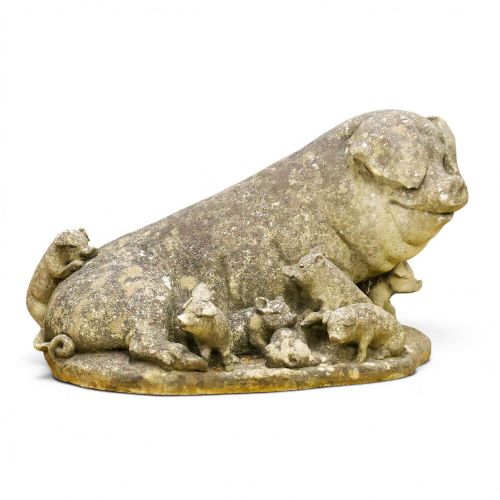
Forms include single figures on plinths and pedestals, architectural ornaments such as crowns and busts, and bold animal sculptures like pigs, dogs, and birds of prey. Each format is built to anchor a vista, punctuate a lawn, or crown a gate pier.
How they were made
Makers utilised various aggregate and binding methods for cast, composite, reconstituted, and composition stone, pouring mixtures into moulds to achieve detailed classical figures and heraldic animals. This technique allowed workshops to produce uniform yet substantial garden ornaments with consistent structural integrity.
Terracotta pieces were shaped from clay and fired in kilns, yielding robust statues and large architectural elements often finished in natural buff tones. Salt glazed pottery provided an alternative dense surface for outdoor figures exposed to the elements.
Listings feature reconstituted stone, terracotta, and carved marble across periods from the nineteenth century to nineteen-fifty.
What varies in quality
The definition and depth of the modelling separate superior figures from simpler productions, particularly in the rendering of facial expressions, drapery folds, and anatomical proportions. Finer examples display crisp, deliberate detailing that survives decades of outdoor exposure.
The composition and compaction of the stone or terracotta dictate how well a piece ages, with denser aggregate mixes resisting frost action and surface degradation more successfully than porous alternatives. Surface patination achieved through natural weathering adds depth to higher-grade materials.
The integrity of the original design, whether a cast form or a carved marble block, determines the visual weight and authority of the sculpture in a landscape setting. Pairs of animals or matched finials demonstrate greater symmetry and sculptural balance in superior commissions.
Hurlford Kilmarnock
The Large Stone Garden Sculptures Glossary
- Reconstituted Stone
- A manufactured material made from crushed stone and cement binders, moulded to resemble natural carved masonry. It is widely used for durable garden statuary and architectural ornaments.
- Pier Finial
- An ornamental architectural element placed on top of a gate pier or pillar. These often take the form of eagles, urns, or decorative caps.
- Terracotta
- Fired clay used for sculptural and architectural ceramics, typically reddish-brown or buff in colour. It offers a warm, porous surface that weathers distinctively outdoors.
- Plinth
- A heavy base or pedestal supporting a statue, bust, or column. It elevates the sculpture to improve its visibility and presence in a garden.
- Neoclassical Revival
- An artistic movement drawing inspiration from the classical art and culture of ancient Greece and Rome. This style heavily influences the proportions and themes of nineteenth and twentieth-century garden figures.
Large Stone Garden Sculptures: Frequently Asked Questions
Where should I place large garden statues?
These sculptures suit focal points in garden designs, such as the end of a long gravel path, the centre of a lawn, or framing an entrance. Positioning them near structural planting allows foliage to frame the stone.
Heavier pieces require level, firm ground or a dedicated concrete pad to prevent settling over time. Pier finials belong strictly on sturdy gate posts or masonry pillars.
How do I clean weathered stone sculptures?
Gentle washing with water and a soft brush removes loose dirt and organic growth without damaging the aged surface. Avoid harsh chemical cleaners or pressure washers that strip away the historic patination.
Allowing natural moss and lichens to remain is often preferred by collectors, as it enhances the weathered character of cast stone and terracotta.
Are cast stone pieces frost resistant?
Quality cast, composite, and reconstituted stone mixtures are generally dense enough to withstand normal winter freezes. Ensuring water does not pool in hollows helps prevent frost cracking.
Moving vulnerable terracottas or unsealed pieces under cover during severe winter weather extends their lifespan outdoors.
How can I tell cast stone from carved marble?
Carved marble displays tool marks from chisels and possesses a crystalline structure visible under close inspection. Each carved piece is a unique manual creation.
Cast stone often reveals slight mould seams or uniform surface textures typical of poured aggregate production, even when hand-finished afterwards.