




Traditional Stone Garden Ornaments
Traditional stone garden ornaments bring character to outdoor spaces through weathered surfaces, classical forms, and sturdy materials shaped by decades in the open air.
Traditional Stone Garden Ornaments
Traditional stone garden ornaments encompass functional pieces and sculptural works designed to sit within landscape settings, ranging from utilitarian staddle stones to decorative urns and sundials. Buyers searching for traditional stone garden ornaments encounter items spanning several centuries, including pieces originating from the eighteenth century, the Victorian era, and the early twentieth century.
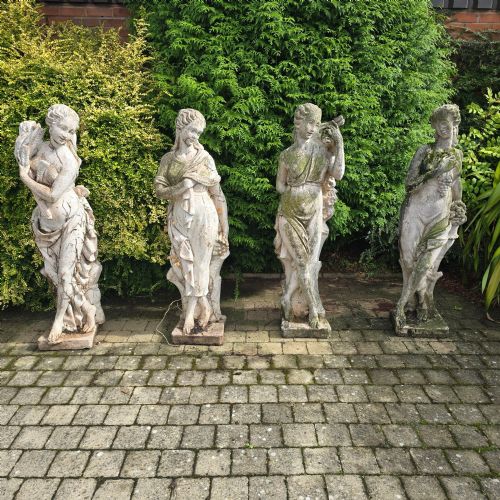
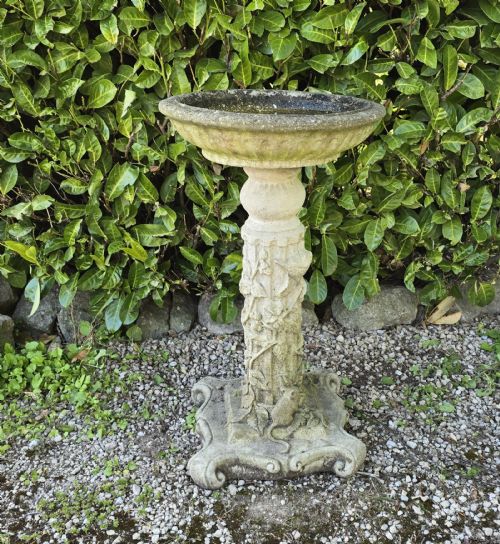
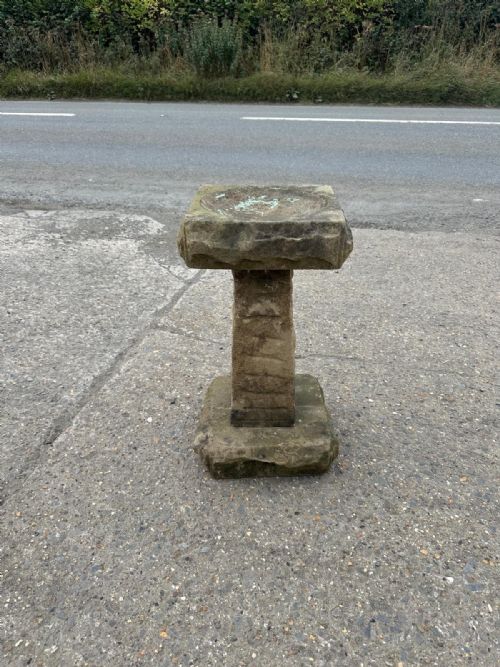
The selections available on this page reflect a rich variety of forms, such as campana urns, bird baths, lion guardians, and mill wheels. Materials range from native granite and sandstone to reconstituted stone and cast stone, showing how different eras approached the decoration of lawns and courtyards.
Many objects carry the patina of long exposure to the elements, displaying growths of moss and lichen that confirm their history outdoors. These items provide an enduring connection to historical English country and classical revival gardening traditions.
How they were made
Masons and stonecutters shaped natural geological materials including sandstone, Purbeck stone, granite, and limestone using traditional hand tools, carving architectural elements and sturdy yard fixtures directly from quarried blocks. These hard materials ensured that items like staddle stones and mill wheels could withstand heavy agricultural use and decades of weather.
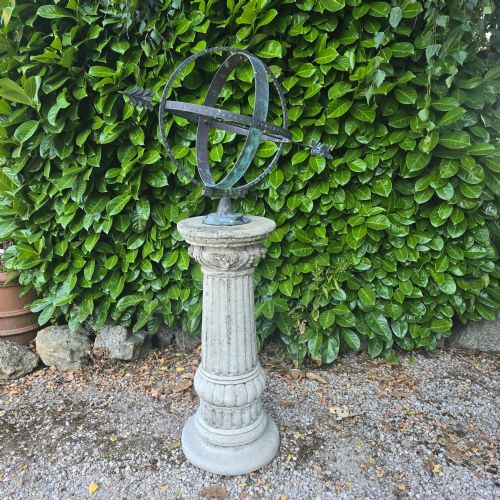
Later pieces utilised cast stone and reconstituted stone, where crushed aggregate and cement binders were poured into moulds to replicate the details of carved masonry and classical statuary with consistency. Metal components such as brass were occasionally incorporated for functional elements like armillary sphere sundials.
What varies in quality
The distinction between ordinary and superior pieces rests largely on the depth of hand-carved detail and the selection of the original geological material. Pieces hewn from durable natural stone like Cornish granite or fine sandstone display a sculptural integrity that moulded substitutes rarely achieve.
Proportion and execution define the visual success of figurative works and architectural vessels, where the confidence of the maker's hand dictates the elegance of a campana urn or the dignity of a stone lion. Natural weathering further elevates quality, creating an integrated organic surface of moss and lichen that only time can produce.
Andrew Handyside
The Traditional Stone Garden Ornaments Glossary
- Staddle stone
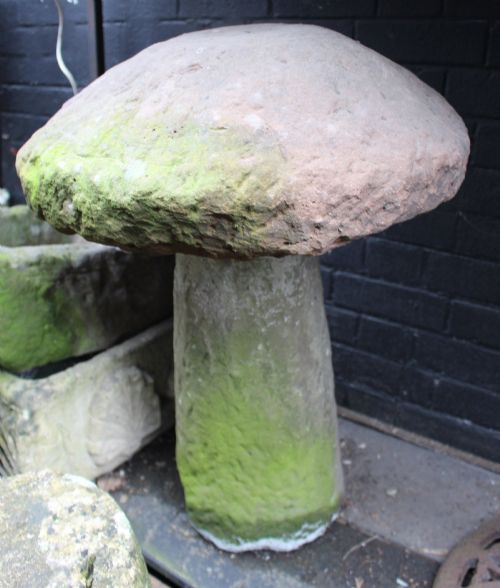
- A mushroom-shaped stone support originally used to elevate granaries and grain stacks above damp ground and vermin. These architectural salvage pieces now serve as sculptural garden ornaments.
- Campana urn
- A bell-shaped garden vessel with a flared rim and pedestal base, often associated with classical revival styles. They were traditionally utilised for planting or as formal landscape focal points.
- Armillary sphere
- An astronomical instrument adapted as a garden sundial, consisting of a skeletal sphere of metal rings centred on a gnomon. They reflect classical scientific themes in landscape design.
- Reconstituted stone
- A manufactured material made from crushed stone aggregate mixed with a cement binder, moulded to imitate natural carved masonry. It became popular for mass-producing garden ornaments.
- Mill stone
- A heavy circular stone wheel once used in milling grain or crushing materials, now repurposed as a rustic landscape feature. Examples appear in granite, limestone, and sandstone.
Traditional Stone Garden Ornaments: Frequently Asked Questions
How do I identify a genuine staddle stone?
Genuine staddle stones usually consist of two separate parts: a tapering base and a cap shaped like a cap or mushroom. Look for tool marks on natural stone such as granite or sandstone that indicate hand-shaping.
Older examples will show significant weathering, tool wear from agricultural use, and natural accumulation of moss or lichen around the surfaces.
What is the difference between cast stone and natural stone?
Natural stone is quarried directly from the earth and carved by masons, offering unique geological variations and superior long-term durability. Cast stone is a manufactured composite made from crushed stone and cement poured into moulds.
While cast stone replicates the appearance of carved masonry, natural sandstone, granite, and Purbeck stone display distinct mineral grains and individual tool marks.
How should I care for weathered garden ornaments?
Weathered stone ornaments require minimal intervention to preserve their historic character. Avoid aggressive pressure washing or chemical cleaners that strip away the natural accumulation of moss, lichen, and patination.
Gentle brushing with water is usually sufficient to remove loose debris while protecting the aged surface built up over decades outdoors.
Can I leave antique stone bird baths outside in winter?
Most traditional stone and reconstituted stone bird baths tolerate cold weather well if they are sturdy and free of deep structural cracks. However, standing water inside the basin should be emptied before freezing temperatures arrive to prevent ice expansion from causing damage.
Placing items on small wooden blocks or feet can also prevent moisture from rising from the ground into the base during winter.