



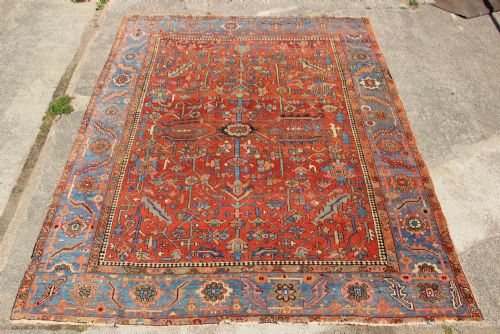
Large Red Carpet
A large red carpet anchors a room with rich pigment and centuries of regional weaving tradition.
Large Red Carpet
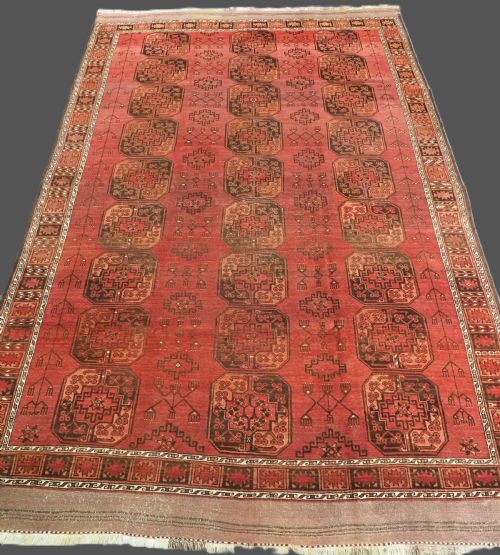
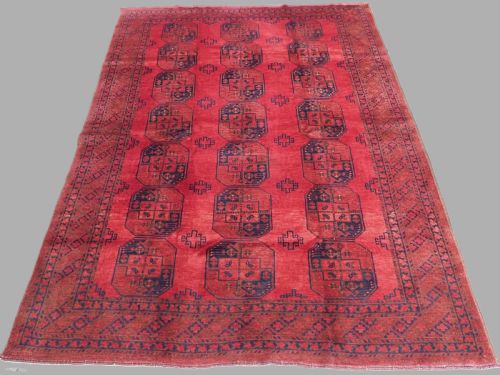
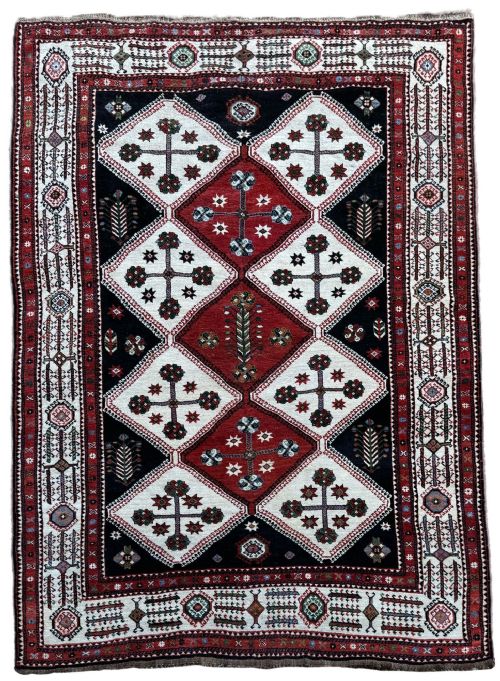
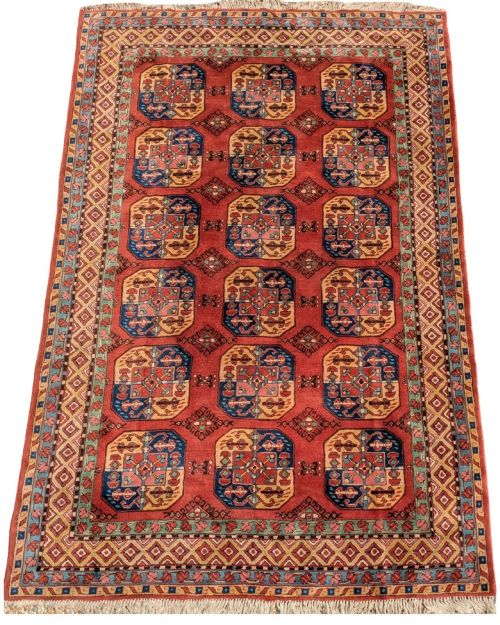
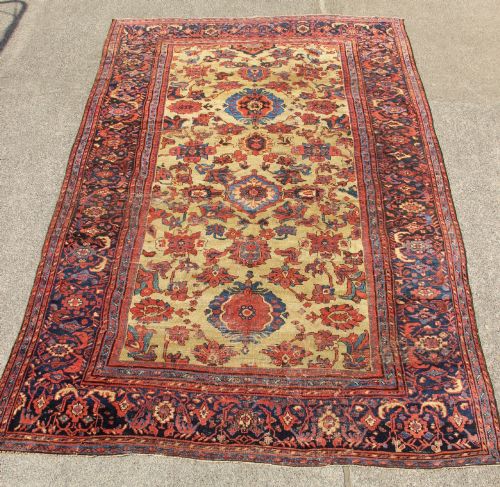
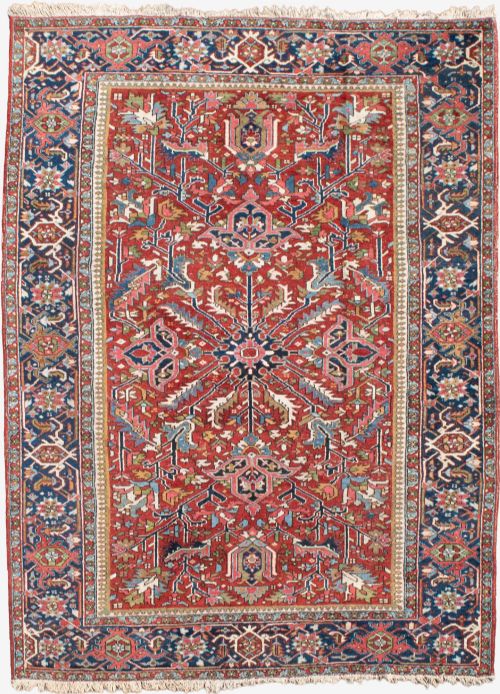
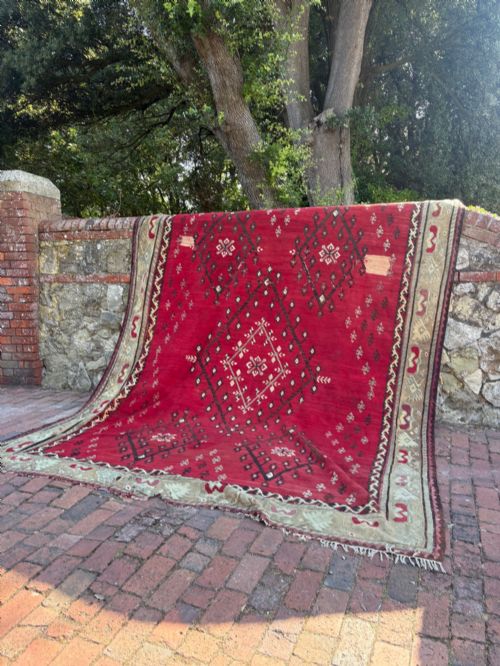
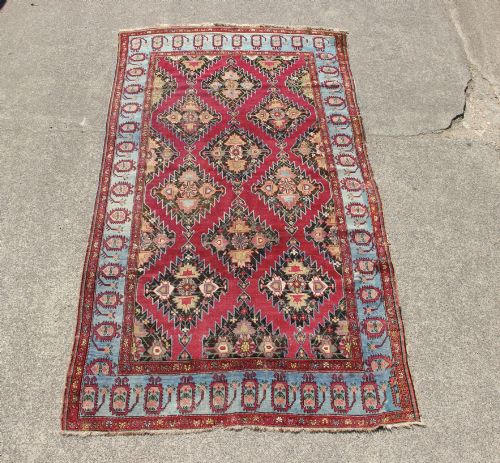
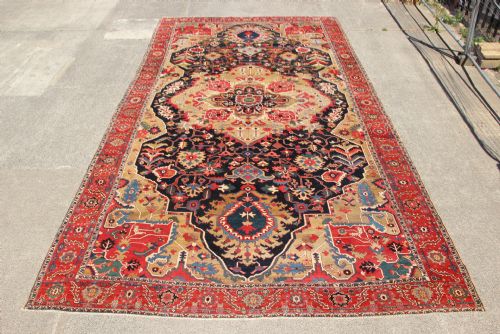
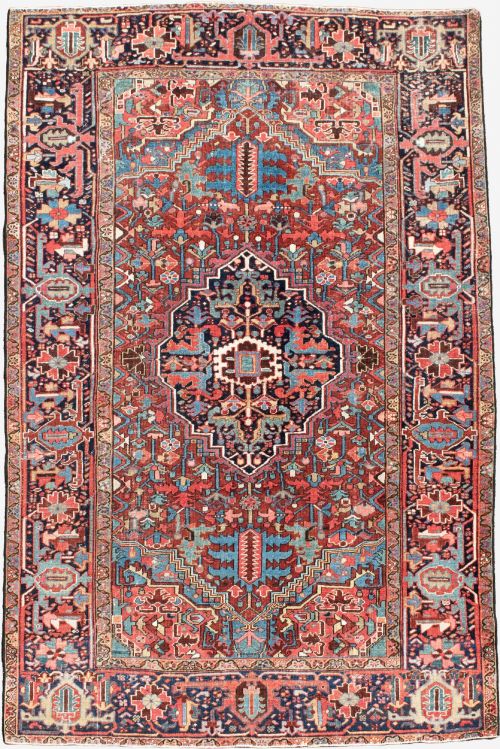
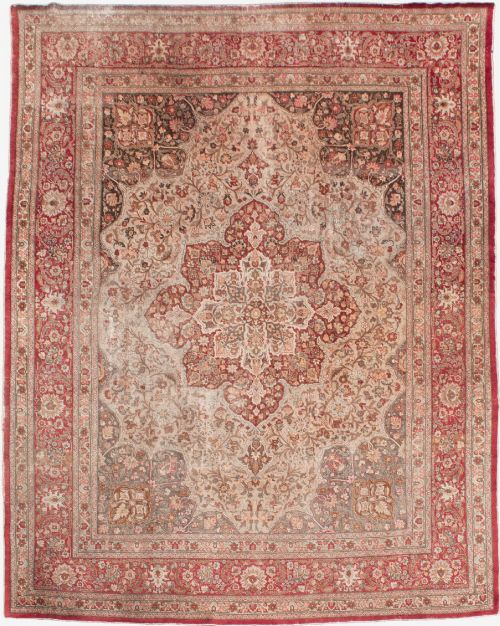
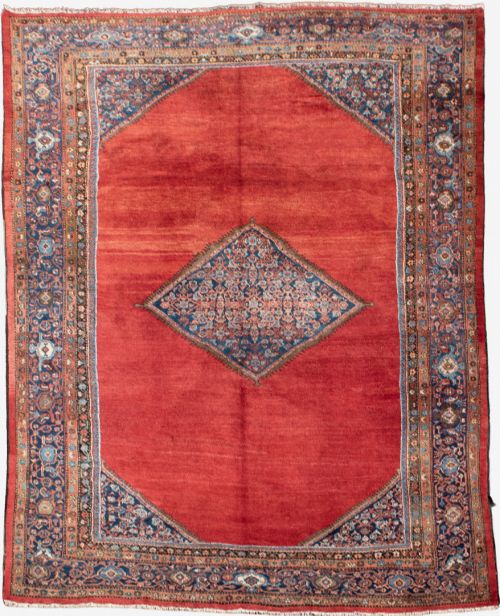
A large red carpet encompasses room-size floor coverings originating predominantly from Persian and tribal workshops across the nineteenth and early twentieth centuries. These pieces display deep crimson and madder hues, often structured around geometric medallions or all-over floral motifs.
The most common examples on this page are antique Heriz carpets and various regional Persian village weaves dating from the eighteen-eighties to the nineteen-twenties. Buyers seek these substantial textiles to provide scale, warmth, and grounded colour to principal living spaces.
Assessing quality and distinction
Quality rests in the precision of the knotting, the complexity of the design geometry, and the depth achieved by natural dyes. Finer knot density allows intricate medallion and floral details to remain crisp and legible across large surfaces.
The grading of a piece also depends on the integrity of the wool pile and the balance of the colour palette. Uniform saturation and harmonious secondary tones separate superior village and town carpets from standard commercial production.
Large Red Carpet Retail Price Guide 2026
Typical asking prices for large red carpet among the pieces listed under this phrase on Sellingantiques today, from the lower quarter to the upper quarter. They describe what is for sale here now, not the wider market.
Several vintage carpets come with battle scars from village life, including timeworn repairs that prove someone loved walking on them a century ago.
The Large Red Carpet Glossary
- Heriz
- A style of Persian carpet known for bold geometric medallions and robust structural durability originating from north-west Persia. These pieces frequently employ striking red fields offset by navy and ivory corners.
- Ersari
- A Turkmen tribal subgroup recognised for producing main carpets featuring distinct guls and deep red colourways. Their weaving often displays traditional octagonal motifs passed down through generations.
- Kilim
- A flatweave carpet produced without a pile by tightly interweaving warp and weft strands. These textiles offer a lighter floor covering with sharp geometric patterns.
- Madder
- A natural dye derived from the root of the Rubia plant, utilised extensively to produce rich reds and terracotta shades in antique carpets. It yields a nuanced hue that mellows gracefully over time.
- Gul
- A medallion or repeating primary motif used in Turkmen and tribal carpet designs. These octagonal or stepped forms often indicate the specific ancestral lineage of the weavers.
Large Red Carpet: Frequently Asked Questions
How do I clean a large red carpet?
Routine maintenance requires gentle vacuuming without a rotating beater bar to protect the hand-knotted pile and foundation.
Professional specialist cleaning is recommended for deep washing to preserve the natural wool fibres and vegetable dyes.
Are these carpets suitable for high traffic areas?
Traditional room-size carpets constructed from hand-spun wool and sturdy foundations are inherently durable and designed for daily domestic use.
Placing an appropriate underlay beneath the rug helps absorb impact and prevents unnecessary sliding on hard floors.
How can I identify a Heriz carpet?
Heriz pieces are typically distinguished by a large, bold central geometric medallion and heavy, durable wool construction.
The corner spandrels often feature sharp, angular floral designs set against a prominent red field.
What period do most of these carpets date from?
The majority of the rugs and carpets available span from the late nineteenth century through the early twentieth century.
This era encompasses traditional village and tribal production before the widespread adoption of synthetic chemical dyes.