
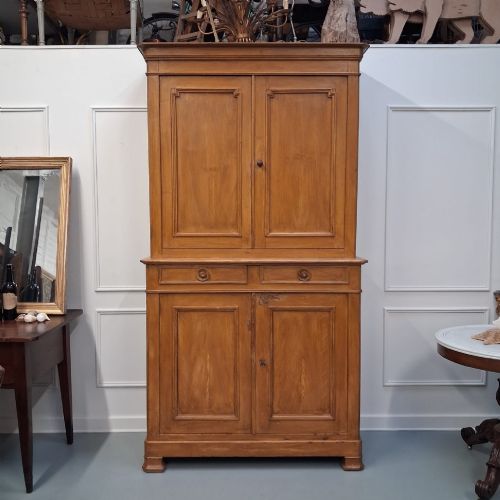

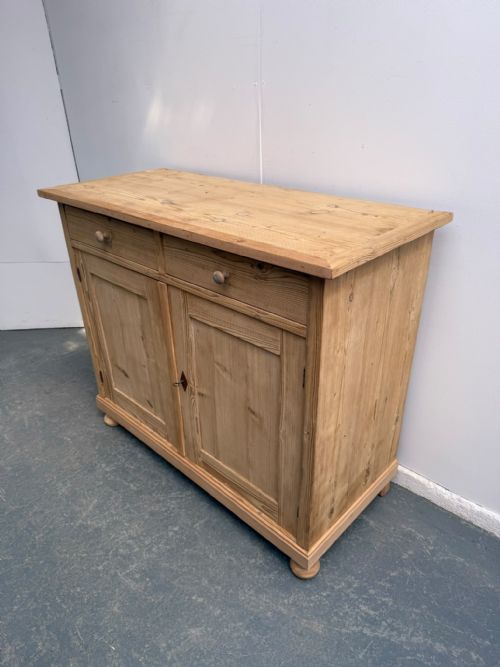
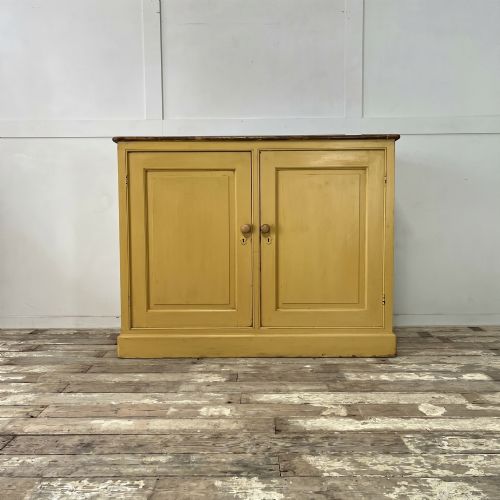


Large Pine Dresser Base
A large pine dresser base offers generous utility and sturdy charm, anchoring a kitchen or dining room with practical surface space and enclosed storage.
Large Pine Dresser Base
A large pine dresser base provides a heavy, functional foundation originally designed for rural and domestic food preparation or storage. These pieces typically combine a flat timber top with combinations of drawers and cupboards underneath.
The versions most common on this page date from the nineteenth century and the Victorian era, reflecting English and occasionally French or German country house traditions. They frequently appear in stripped pine or with historic painted finishes.
Surviving examples span several regional vernacular styles, including rustic farmhouse, Georgian, and Victorian country. They serve equally well today as kitchen sideboards, serving tables, or media consoles.
How they were made
Makers constructed these sturdy carcasses primarily using solid pine, sometimes incorporating secondary timbers like beech or sycamore for internal framing and drawer construction. Pitch pine also appears on larger utilitarian cupboards.
Hardware details typically include brass or iron pulls, hinges, and key escutcheons that secure doors and drawers. Surfaces were either left plain to develop a natural patina, waxed, or finished in layers of paint.
Joinery techniques relied on traditional hand-cut joints designed to withstand heavy daily use in domestic kitchens and sculleries. Potboard bases and dog kennel compartments added specialised storage variations below the main counter.
Object forms include dresser bases, housekeepers cupboards, potboard dressers, serving tables, and sideboards.
What varies in quality
Proportion and scale dictate much of the visual weight, with well-balanced proportions commanding greater interest than awkward or overly chunky carcasses. The presence of original hardware and intact historic paint or patination elevates a piece above standard utilitarian examples.
Structural integrity depends on the retention of original timber boards and sound joinery rather than excessive modern replacement parts. Subtle details like panelled doors, shaped aprons, and bread slide mechanisms separate simpler storage pieces from more ambitious country house furniture.
The Large Pine Dresser Base Glossary
- Dresser base
- A low cabinet with a flat top surface and a combination of drawers and cupboards below, traditionally used for food preparation and storage.
- Potboard
- An open lower shelf beneath a dresser base traditionally utilised for storing heavy pots, pans, and earthenware.
- Dog kennel centre
- A central open recess positioned between flanking cupboards in a dresser base, originally designed to house a small domestic dog or store baskets.
- Bread slide
- A pull-out wooden shelf integrated into the cabinetry, historically used for cooling bread or expanding counter space.
- Housekeeper's cupboard
- A tall, large storage cabinet designed for domestic linens and dry goods, often sharing construction traits with large dresser bases.
Large Pine Dresser Base: Frequently Asked Questions
What is a large pine dresser base?
A large pine dresser base is a heavy, functional low cabinet featuring a flat wooden top with drawers and cupboards underneath. These pieces served as the central workspace in traditional kitchens and sculleries.
Today, they function as versatile sideboards, serving tables, or kitchen islands that offer substantial storage capacity.
How do I care for antique pine furniture?
Maintain antique pine by dusting regularly with a dry cloth and avoiding excessive moisture or direct heat sources. Wax finishes benefit from occasional nourishing to protect the wood and preserve the surface sheen.
Keep painted surfaces clean with mild soap and water, avoiding harsh chemical cleaners that strip historic finishes.
How can I tell Victorian pine from 18th century pieces?
Eighteenth century pieces often display simpler, heavier construction with wider boards and hand-wrought iron hardware. Georgian examples tend to feature more restrained lines and distinct regional cabinetmaking traits.
Victorian pieces frequently incorporate machine-sawn elements, standard brass fittings, and varied configurations like dog kennel centres or bread slides.
Can I use a dresser base as a kitchen island?
A dresser base makes an excellent freestanding kitchen island if the height aligns comfortably with standard modern work surfaces. The combination of top surface space and enclosed lower storage suits contemporary kitchen layouts well.
Ensure the timber top receives a protective seal if you plan to use it intensively for food preparation.