
Large Painted Mirror
When sourcing a large painted mirror, collectors seek substantial vertical proportions combined with historical decorative finishes.
Large Painted Mirror
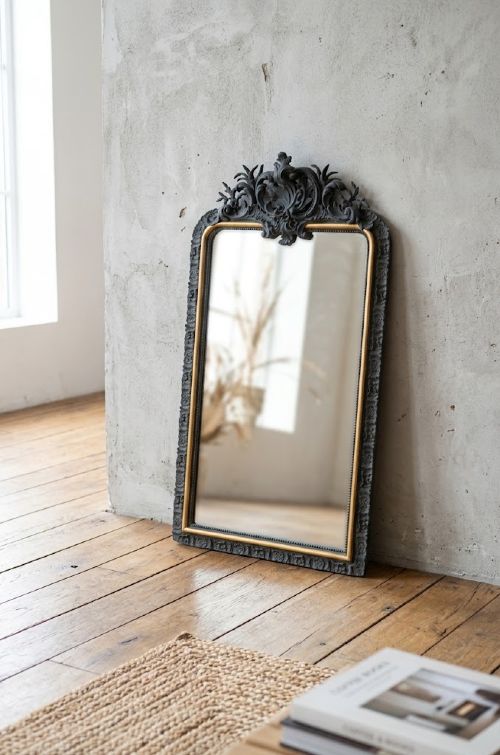
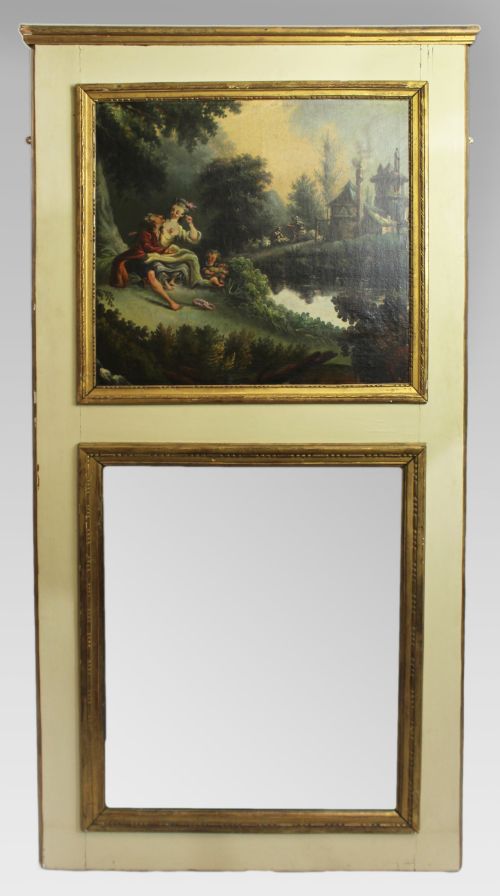
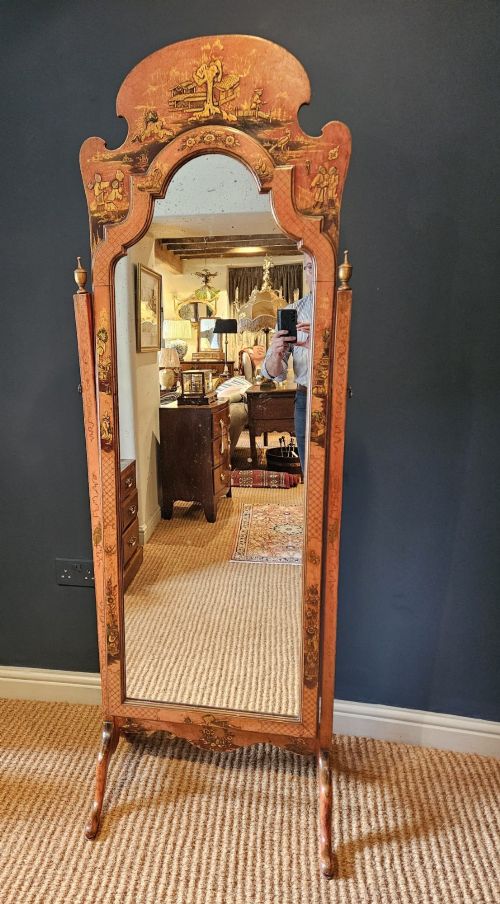
A large painted mirror dominates a domestic interior through significant dimensions and applied surface pigments, originating primarily across nineteenth-century English and French workshops. The category spans architectural overmantels designed for drawing-room chimneypieces, tall French trumeaus incorporating pastoral oil panels, and substantial pier mirrors meant for placement between windows.
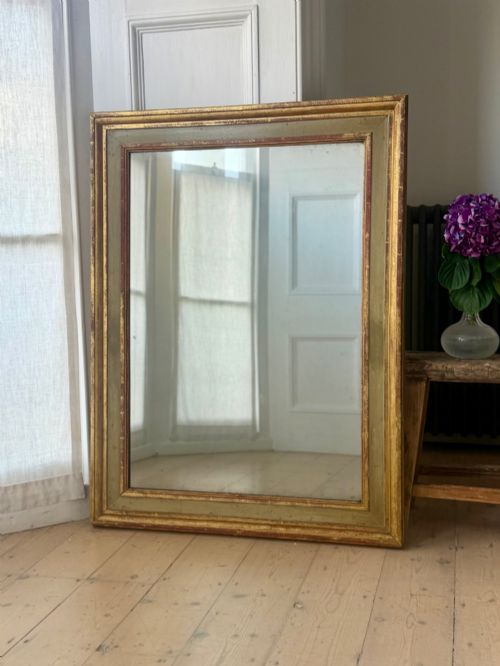
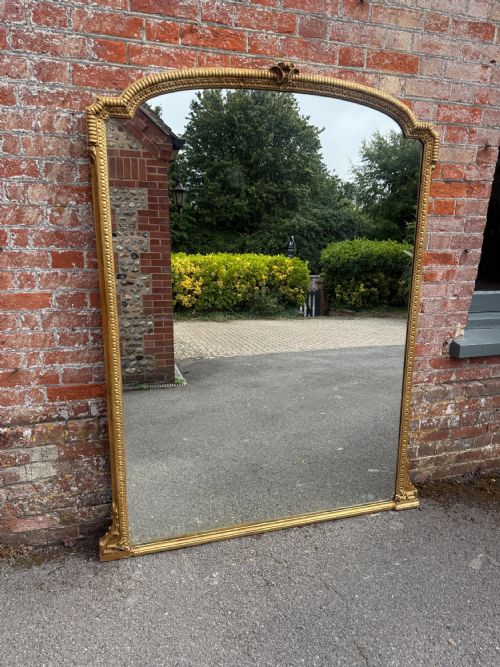
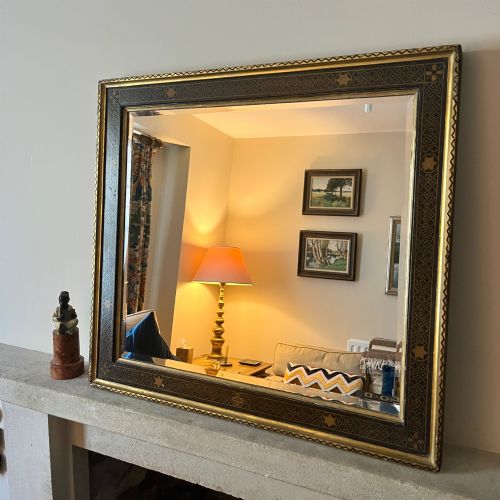
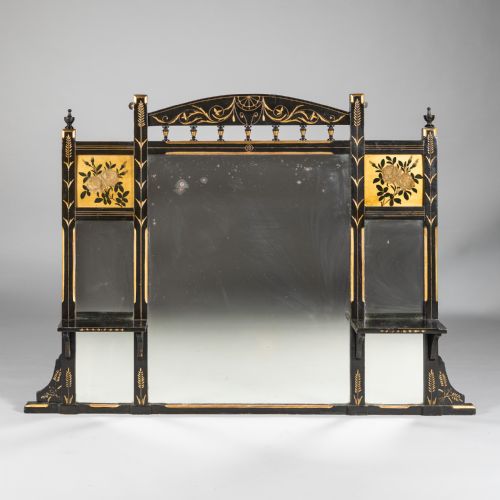
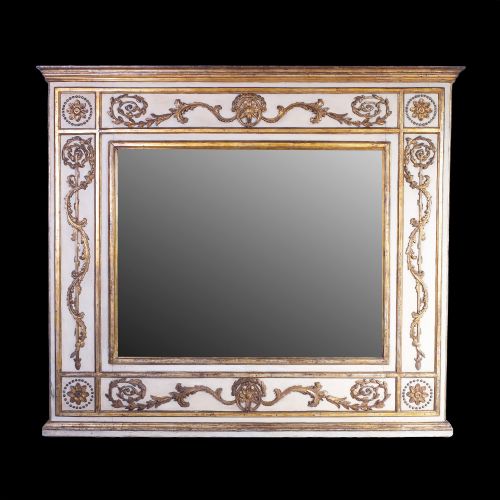
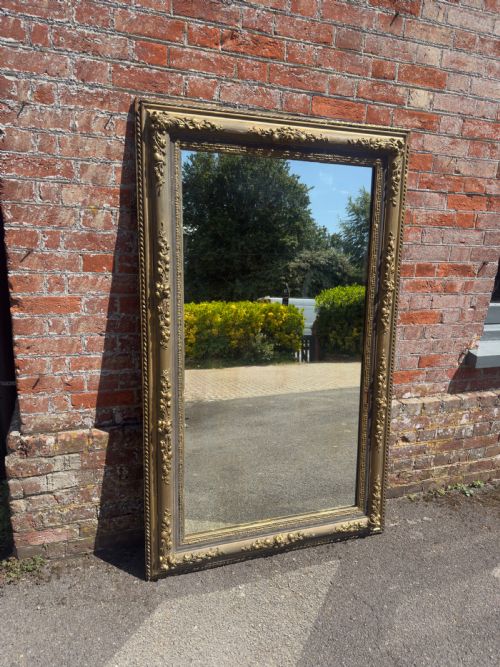
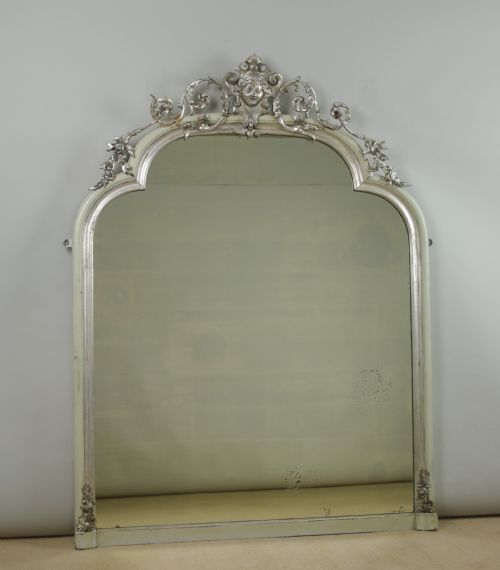
The most frequent examples encountered on this page date from the Victorian and Edwardian eras, often taking the form of overmantel mirrors with arched tops or rectangular frames. These pieces merge carved wooden structures with painted grounds, frequently accented by parcel gilding or silvering to catch interior candle and gas light.
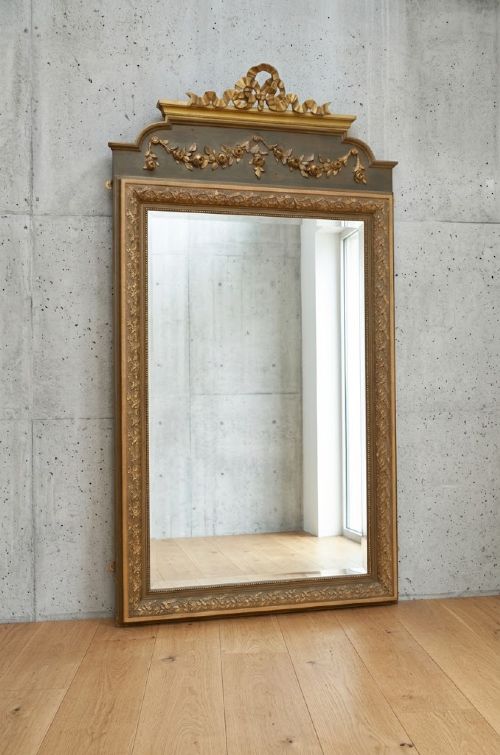
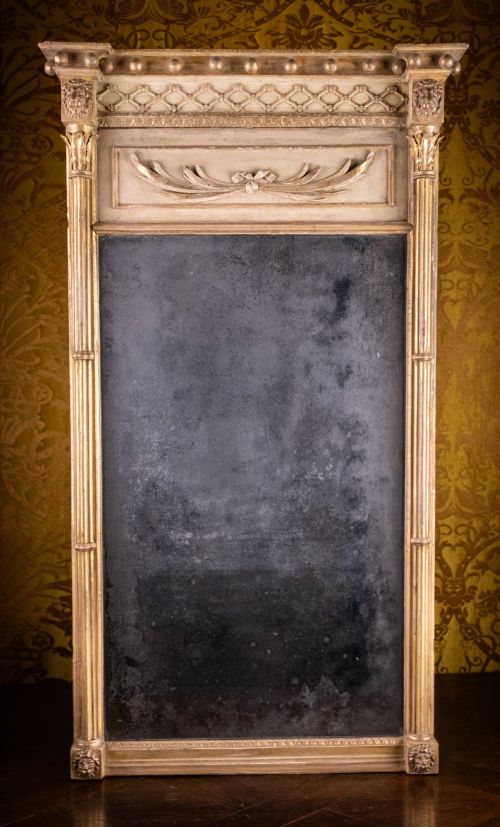
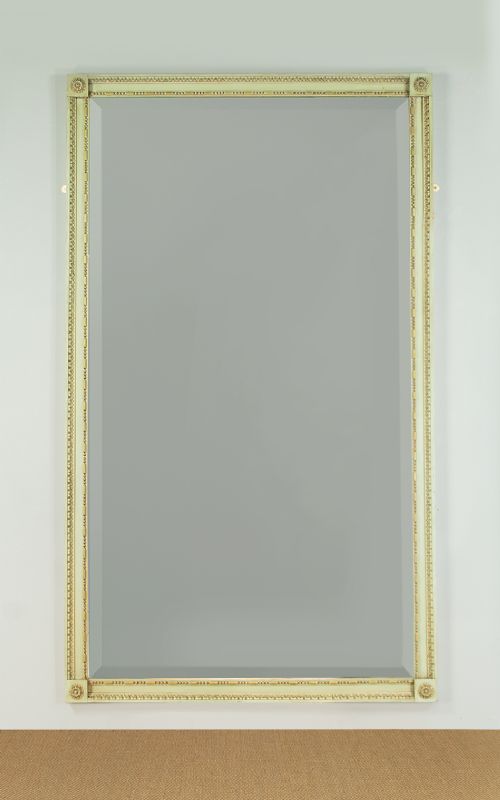
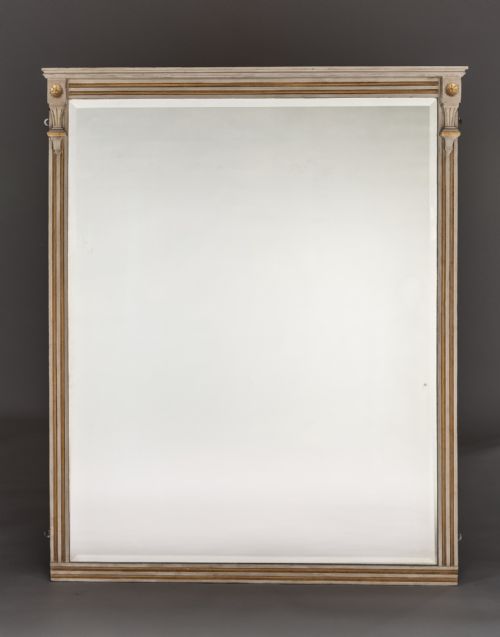
French variants from the nineteenth century lean towards Rococo revival and Empire styles, incorporating delicate ribbon crests, lion masks, or olive green and white paint schemes. English examples from the same period favour robust wooden mouldings, gesso enrichment, and column supports framing heavy reflective glass.
Materials and construction
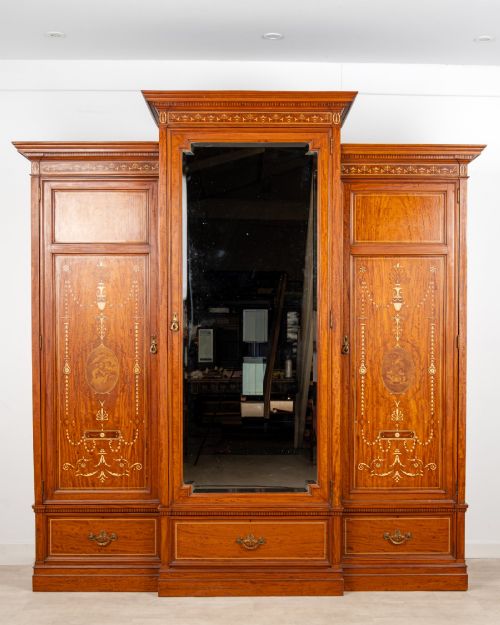
Makers constructed the foundational frames from timber such as pine, satinwood, or carved hardwoods, applying layers of gesso to build up intricate relief ornaments like scrolls, floral motifs, and classical ribbons. This plaster-like medium allowed artisans to carve crisp details before applying decorative paint layers and gold leaf.
Surfaces received treatments ranging from flat oil paints and faux marble finishes to ebonising and parcel gilding, where metallic leaf highlights specific raised elements. Early plates typically consist of mercury glass or thick historical mirror glass, secured within the wooden rebate by aged backing boards.
Large Painted Mirror Retail Price Guide 2026
Typical asking prices for large painted mirror among the pieces listed under this phrase on Sellingantiques today, from the lower quarter to the upper quarter. They describe what is for sale here now, not the wider market.
Gradations in craftsmanship
Originality of the glass plate and the underlying gesso ornamentation separates standard domestic mirrors from exceptional salon examples. Intact period gilding, retaining its original burnished lustre alongside undisturbed historical paint layers, commands higher regard among collectors.
The Large Painted Mirror Glossary
- Gesso
- A traditional chalk or plaster mixture applied to wooden frames to create a smooth surface for gilding or painting. Artisans carved intricate relief details directly into this hardened material.
- Trumeau
- A decorative wall mirror paired with an oil painting or carved panel housed within a single unified frame. These pieces historically hung between windows or above fireplaces in grand European interiors.
- Overmantel
- A large mirror specifically proportioned to hang on the wall above a fireplace mantelpiece. They frequently feature horizontal expanses or arched tops designed to balance the hearth below.
- Parcel Gilt
- A decorative technique where only specific raised portions of a painted or ebonised frame are highlighted with thin gold leaf. This method provides contrast against darker background finishes.
- Pier Mirror
- A tall mirror designed to hang on the narrow section of wall between two windows. They often incorporate matching consoles or extended vertical frames to maximise reflected light.
Large Painted Mirror: Frequently Asked Questions
How do I hang a heavy antique overmantel mirror?
These substantial frames require professional wall anchoring directly into structural studs or masonry using heavy-duty load-bearing brackets. The weight of the timber, gesso, and thick glass demands secure mechanical support rather than standard picture hooks.
Position the base securely against the wall surface while ensuring the hanging wire or integrated mounting plates distribute the downward force evenly across the structural frame.
What is mercury glass?
Historical mirrors often utilise a double-walled blown glass technique involving a silvering mixture inserted between glass layers, commonly termed mercury glass. This material produces a characteristic mottled reflection and dark speckling distinct from modern chemical silvering.
Examinations of the glass edge or backing often reveal the uneven characteristics associated with nineteenth-century plate production and historic manufacturing methods.
How do I clean an antique painted frame?
Dust surfaces gently using a dry, soft-bristled brush to remove particulate matter without disturbing fragile gesso or flaking historic paint layers. Avoid commercial chemical sprays, abrasive cloths, or excessive moisture that might soften underlying water-gilding or traditional oil paints.
Preserving the original surface patina requires minimal intervention and regular gentle maintenance rather than aggressive restoration attempts.
Are these mirrors suitable for bathrooms?
High humidity and fluctuating temperatures in bathrooms accelerate the degradation of historic gesso, wooden frames, and antique silvered glass plates. Placing these pieces in stable, dry environments prevents warping of the timber and deterioration of the painted finishes.
Living rooms, hallways, and dining spaces provide the ideal atmospheric conditions required to preserve nineteenth-century decorative mirrors.