
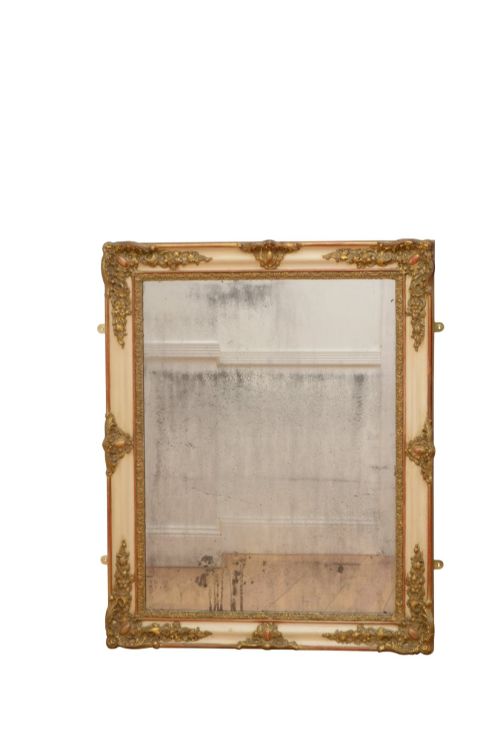


Distressed Gesso Mirror
A distressed gesso mirror brings aged texture and reflective depth into a room, offering a focal point grounded in nineteenth-century craftsmanship.
Distressed Gesso Mirror
When searching for a distressed gesso mirror, buyers encounter grand overmantel mirrors and tall wall mirrors originating primarily from the nineteenth century. These pieces bridge French and English aesthetic traditions, spanning styles from Louis Philippe to Rococo Revival.
The dominant forms on this page include arched top, shaped top, and rectangular frames designed for domestic interiors. Many examples display the characteristic wear of aged painted and gilded surfaces built up over generations.
How They Were Made
Artisans built these frames from carved wood, applying layers of gesso - a mixture of chalk and binder - to create smooth surfaces for detailed ornamentation. This plaster-like buildup was then sculpted, painted, and leafed in gold or silver.
Mirrors from the eighteenth and nineteenth centuries frequently feature original mercury plates or early mirror glass held within heavy wooden rebates. The decorative distress develops naturally through time or through deliberate historic finishing techniques.
Some nineteenth-century mirrors retain faint traces of old workshop chalk marks hidden deep within their carved plaster scrolls.
What Varies in Quality
The integrity of the carved wooden substrate and the depth of the gesso relief dictate the baseline standard of a piece. Deeper, crisper carving beneath the plaster layers indicates superior workshop production.
Originality of the glass and surface finishes distinguishes exceptional examples from heavily restored ones. Untouched original mercury plates and authentic aged paint or gilding command higher regard among collectors.
Charles Nosotti
The Distressed Gesso Mirror Glossary
- Gesso
- A plaster mixture applied to carved wood to create a smooth base for gilding and painting. It accepts detailed mouldings and relief work before receiving surface finishes.
- Overmantel Mirror
- A large mirror traditionally hung above a fireplace mantelpiece. These pieces often feature arched or shaped tops to fit architectural proportions.
- Louis Philippe Mirror
- A mid-nineteenth century French mirror style characterised by a simple rounded upper corners and restrained classical framing. They combine elegance with domestic scale.
- Mercury Plate
- An early type of mirror glass backed with a tin-mercury amalgam. It produces a distinctive dark, mottled reflection distinct from modern silvered glass.
- Cushion Mirror
- A frame style with a broad, convex profile that slopes outward or inward toward the glass. This volumetric shape catches light across multiple angles.
Distressed Gesso Mirror: Frequently Asked Questions
How do I hang a heavy overmantel mirror?
These large framed pieces require secure wall anchors fixed directly into masonry or heavy timber studs. Professional mirror hangers utilise heavy-duty brackets to support the substantial combined weight of wood, gesso, and glass.
Position the mirror at a height that reflects eye-level artwork or open light rather than blank ceiling space. Ensuring proper weight distribution protects the historic wooden frame from structural strain over time.
Are original mercury plates safe?
Original mercury glass plates are stable behind the glass surface and present no daily handling hazard. They contribute the characteristic dark speckling and soft reflection valued by collectors.
Avoid removing the backing boards or exposing the rear silvering layers during cleaning. Standard household glass cleaner should be applied sparingly to a cloth rather than sprayed directly onto the historic plate.
How can I tell a nineteenth-century mirror from a reproduction?
Examine the construction of the wooden backing, joinery, and the composition of the gesso layers under magnification. Antique frames exhibit hand-carved tool marks, oxidized metallic leaf, and shrinkage cracks appropriate to age.
Modern reproductions often display uniform distressing patterns and machine-cut timber components lacking historical depth. The weight and oxidisation of the mirror glass provide further clues to period manufacture.
What is a French Bistro mirror?
Bistro mirrors are functional wall mirrors produced in France during the nineteenth century for commercial hospitality spaces. They typically feature simple wooden frames designed to withstand busy environments.
Their robust construction and practical proportions make them versatile for modern domestic hallways and dining rooms. The surface distress on these examples usually reflects active everyday use in period establishments.