
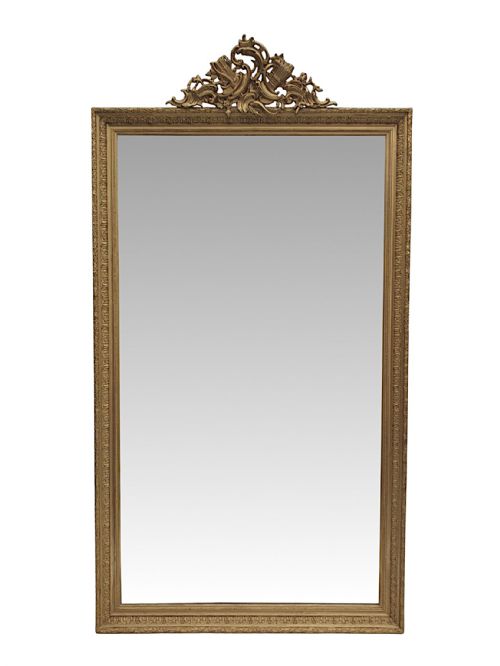
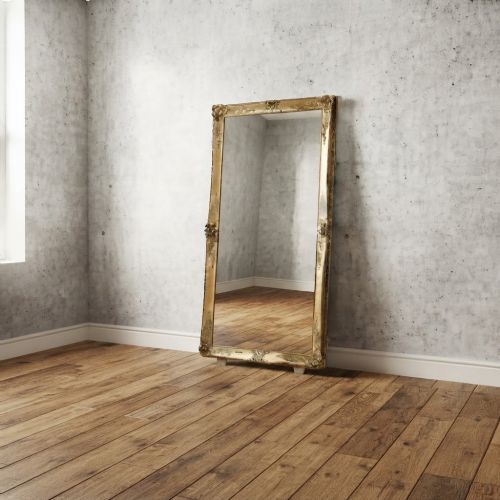
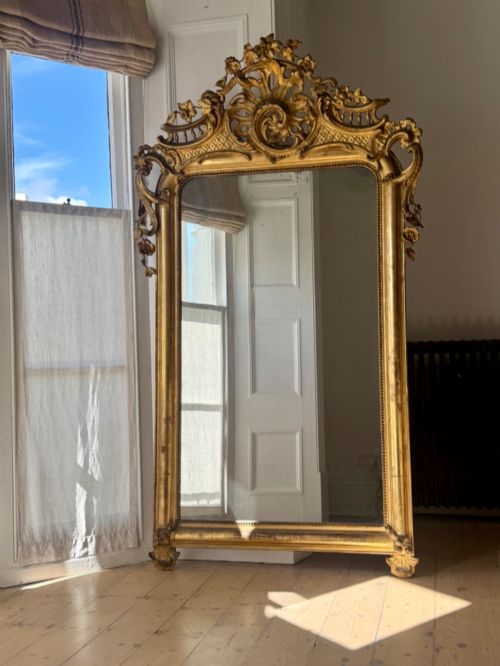
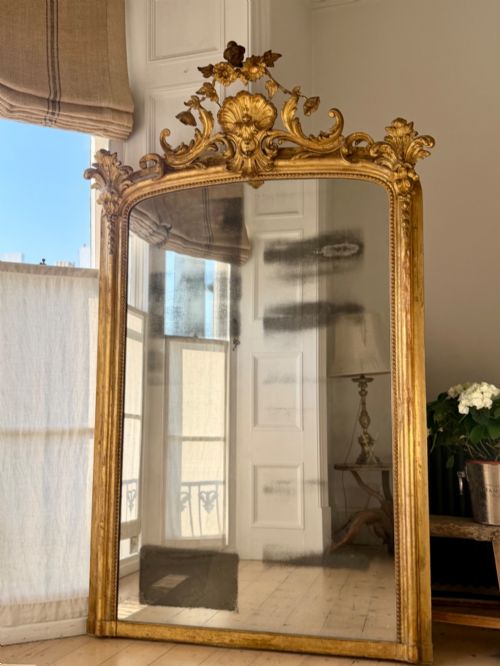
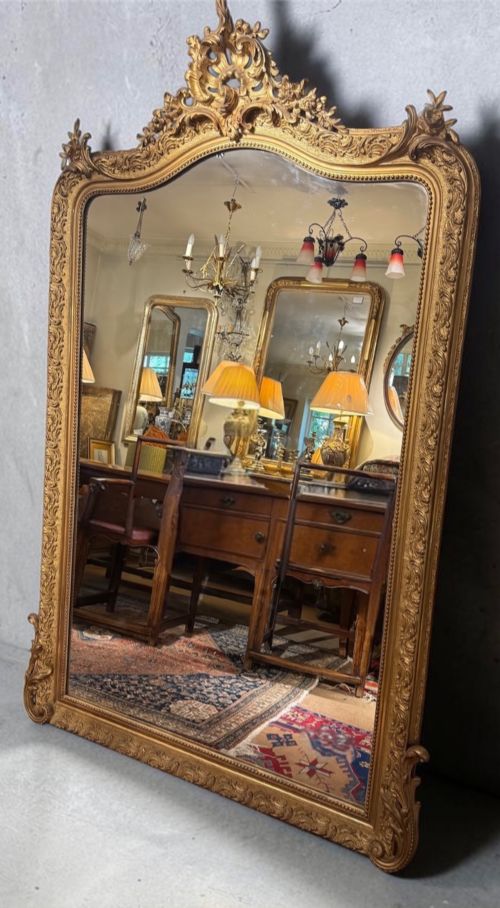
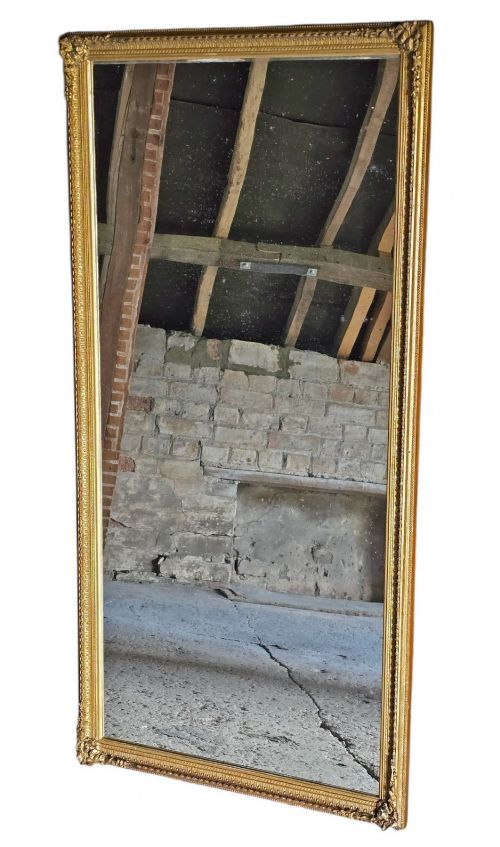
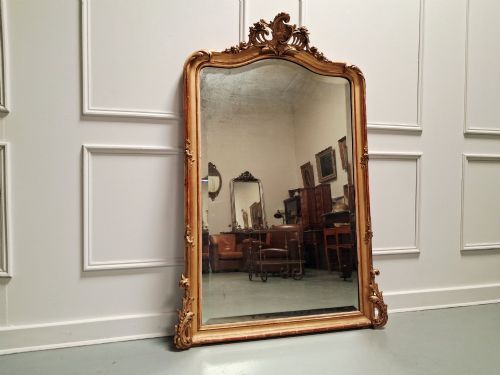
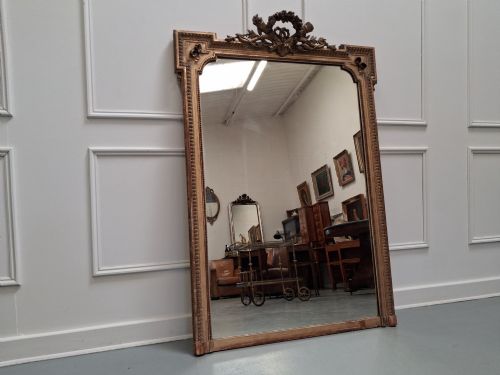
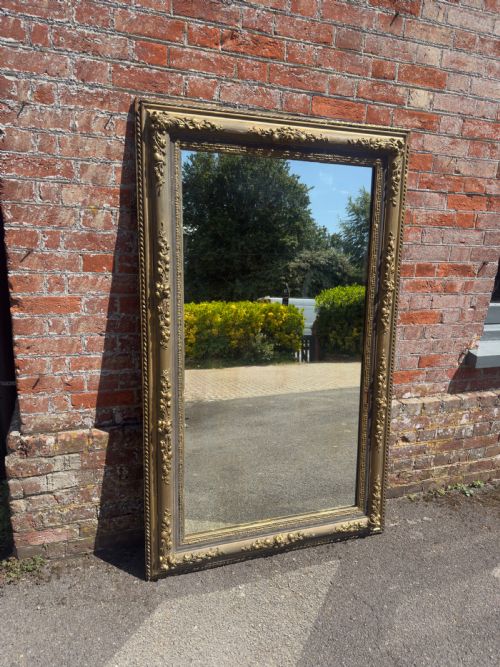
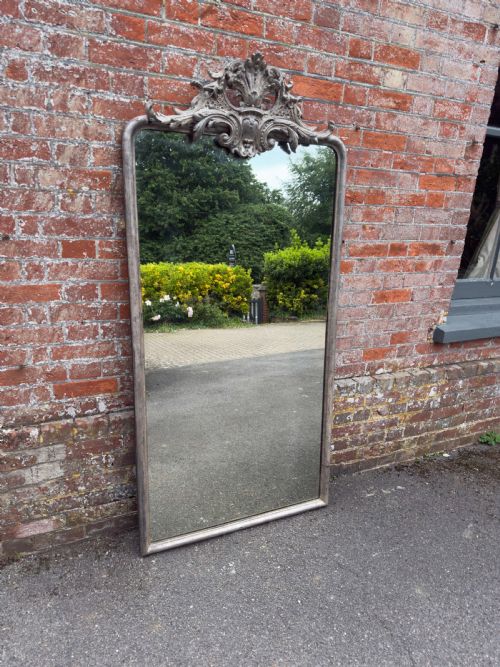
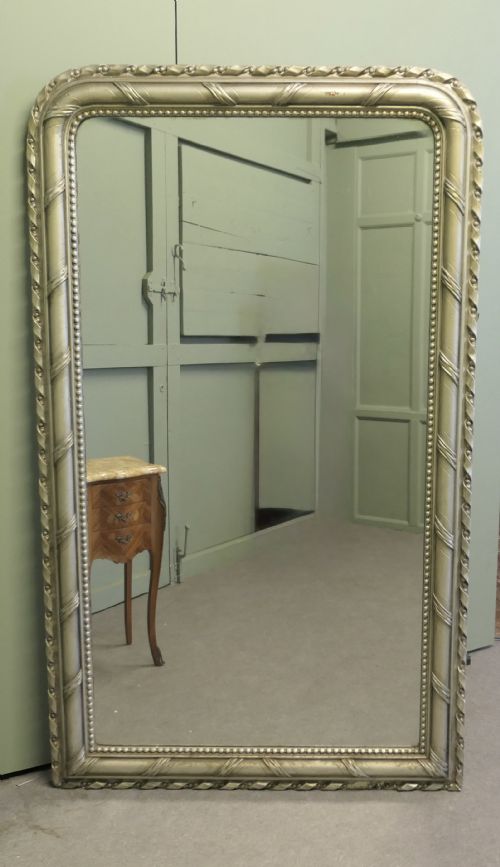

Large French Floor Mirror
A large french floor mirror brings height and reflected light to a room, functioning as both a practical dressing glass and a statement architectural element.
Large French Floor Mirror
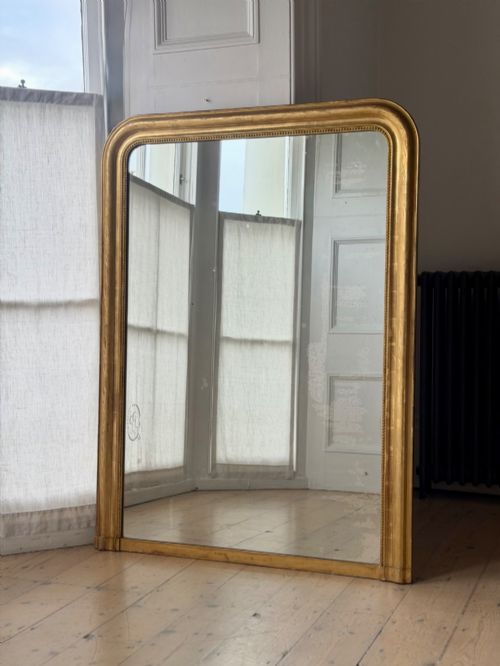
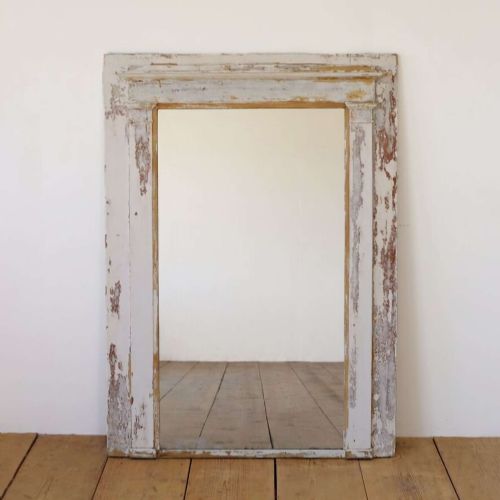
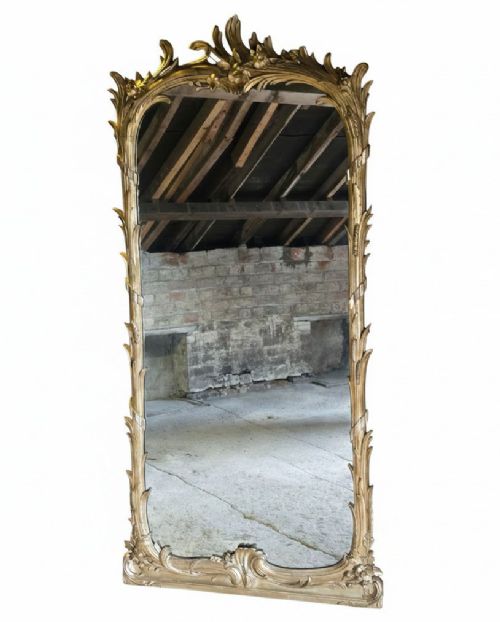
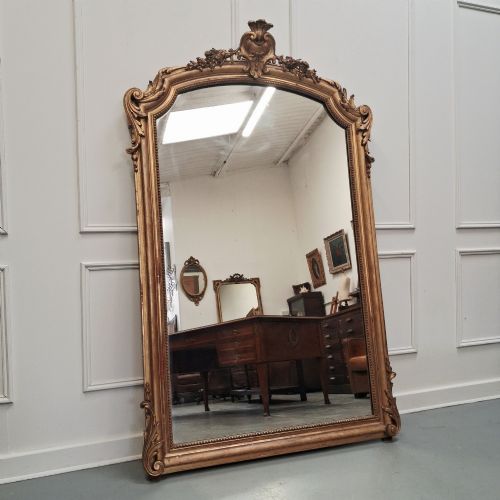
When searching for a large french floor mirror, a buyer encounters tall vertical glasses designed to stand directly on the floor or lean against a wall, frequently originating from the nineteenth century.
The selections span from ornate Louis Philippe and Rococo revival styles to simpler architectural frames, providing substantial height often exceeding six feet.
Many examples utilise traditional proportions intended to amplify natural daylight within reception rooms and grand chambers.
How they were made
Traditional frames are constructed from carved wood or moulded gesso applied over a wooden base, providing a stable foundation for intricate decorative details.
Finishes commonly include applied gold leaf, silver leaf, or painted surfaces, while older pieces utilise authentic mercury glass with characteristic foxing.
Some antique mirrors retain centuries of reflections, having watched generations adjust their cravats before stepping out.
What varies in quality
Quality rests in the crispness of the carved wood and gesso ornamentation, where hand-tooled details display greater depth and definition than moulded substitutes.
The condition and clarity of the mirror glass itself dictate desirability, with period silvering and original mercury plates commanding higher regard than modern replacements.
Nosotti s
The Large French Floor Mirror Glossary
- Mercury glass
- A type of silvered glass produced by pouring a mercury amalgam between double-walled glass, popular in earlier periods before modern chemical silvering methods.
- Gesso
- A plaster-like mixture applied to wood frames and carved or moulded into decorative motifs before gilding.
- Giltwood
- Wood that has been decorated with a thin layer of gold leaf or gold paint across its surface.
- Trumeau
- A decorative wall mirror or panel featuring painted scenes or carvings integrated into the upper section of the frame.
- Overmantel mirror
- A large mirror specifically proportioned to hang or stand on the mantelpiece above a fireplace.
Large French Floor Mirror: Frequently Asked Questions
How do I safely support a heavy floor mirror?
Large antique floor mirrors carry considerable weight due to their dense wooden frames and thick glass plates. Securing them safely to the wall behind the frame prevents accidental tipping.
Professional wall brackets or heavy-duty D-rings fastened into wall studs provide the necessary stability while allowing the piece to rest securely against the skirting board.
What is mercury glass?
Mercury glass refers to double-walled blown glass objects or mirror plates coated on the inside with a silver-and-mercury mixture. It creates a distinctive deep, reflective quality.
Over time, the chemical composition alters to produce characteristic dark spots known as foxing, which collectors value as a sign of age.
Can these mirrors stand freely without fixing?
Many taller examples are designed as leaner mirrors with sturdy timber backs intended to tilt securely against a wall. Their substantial weight helps keep them anchored in place.
However, in rooms with heavy foot traffic or children, attaching a discreet anchor wire ensures complete safety without altering the visual presentation.
How do I identify a Louis Philippe frame?
Louis Philippe mirrors typically feature understated elegance with rounded upper corners and clean, restrained architectural lines. The frames rely on subtle moulding rather than excessive ornamentation.
This mid nineteenth century style balances classic proportions with a simplicity that suits both traditional and contemporary interiors.