





Large Oval Tray
When you search for a large oval tray, you enter a diverse field of heavy serving pieces and display platters forged from silver plate, oak, copper, and mahogany.
Large Oval Tray
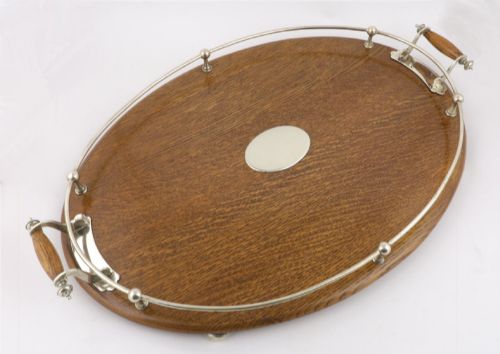
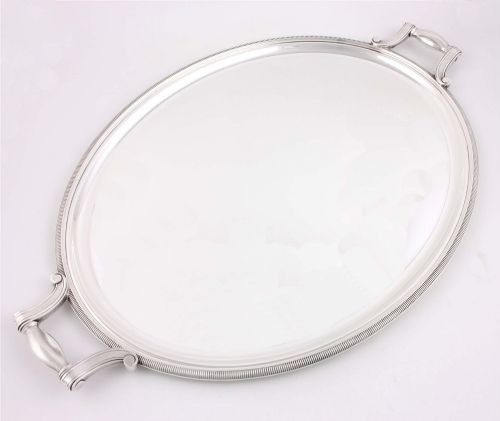
A large oval tray serves primarily as a monumental centerpiece for drinks, cocktails, or substantial meat platters, designed to command attention on a sideboard or dining table. You are most likely to encounter silver plated Edwardian and Victorian examples on this page, often featuring pierced galleries or robust carrying handles.
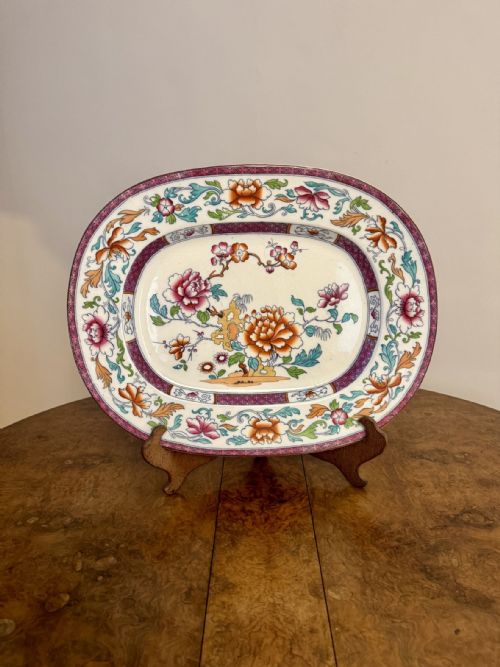
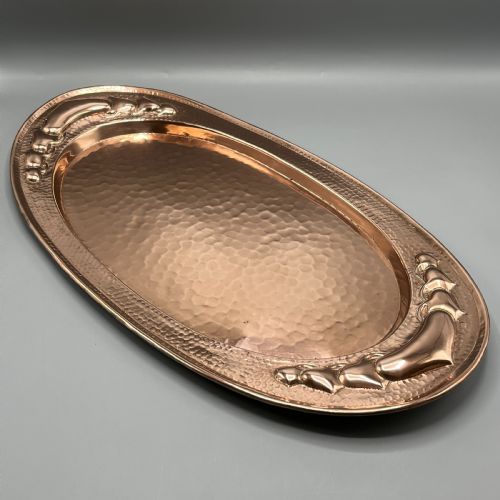
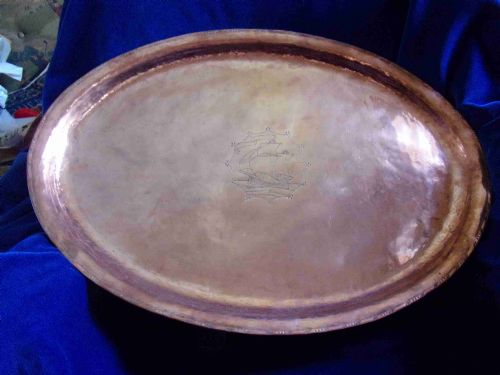
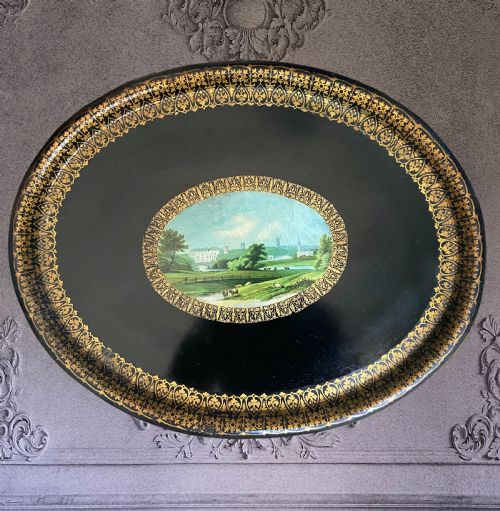
The selections span centuries, incorporating Georgian mahogany formats alongside heavy electroplated nickel silver and rustic Arts and Crafts hand-hammered copper. Alongside British metalwork, French tole ware, porcelain, and lacquer pieces from various periods appear in domestic serving formats.
How they were made
Makers shaped heavy oak and figured mahogany using precise carpentry, frequently adding cast sterling silver or electroplated galleries, handles, and mounts to secure the perimeter. Copper variants display visible hand-beaten repoussé work, where artisans hammered the metal from reverse to raise intricate floral or geometric reliefs.
Silver plating involved fusing thin sheets of silver onto base metals like copper or nickel silver, while porcelain and earthenware platters relied on high-temperature kiln firing and hand-applied underglaze blue painting. Tole ware pieces required layers of lacquer applied to metal bases, dried, and painstakingly painted by hand.
Some copper trays carry the unmistakable hammer marks of individual Arts and Crafts artisans who worked late by candlelight.
What varies in quality
The distinction between ordinary production and superior work rests on the weight of the metal, the crispness of engraved surface decoration, and the integrity of applied mounts. Solid sterling silver and heavy-gauge silver plate retain their structural rigidity and plating depth far better than thin commercial alternatives.
Timber selection and joinery define wooden examples, where figured mahogany and secure gallery assemblies indicate higher workshops. Hand-chased detailing and maker signatures from established houses denote superior craftsmanship compared to unmarked factory output.
Hugh Wallis·Harrison Bros·Elkington & Co·Peters Hamburg·Christofle·Walker & Hall·Mappin & Webb·John Grinsell·Samson
The Large Oval Tray Glossary
- Gallery
- A raised pierced or openwork metal rim surrounding the edge of a tray to keep decanters and glasses secure during transit.
- Silver Plate
- A thin layer of silver bonded to a base metal such as copper or nickel silver, providing the appearance of solid silver at a lower cost.
- Tole Ware
- Painted or lacquered metalware, typically iron or tin, popular in the nineteenth century for decorative trays and domestic vessels.
- Repoussé
- A metalworking technique where an artisan hammers a design from the reverse side to form a raised relief on the front.
- Salver
- A flat serving tray, usually made of silver or other metal, traditionally used for presenting letters, cards, or glasses.
Large Oval Tray: Frequently Asked Questions
How were large oval trays used historically?
These large serving pieces functioned primarily in domestic dining rooms and drawing rooms for transporting heavy tea services, decanters, and large meat platters.
Servants used the sturdy handles and raised galleries to carry glassware securely between rooms, while others remained stationary on sideboards as decorative display pieces.
What materials are most common?
Silver plate over copper or nickel silver dominates the selection, alongside solid sterling silver examples from prominent nineteenth and twentieth-century makers.
Wooden variants utilise figured mahogany and oak, often paired with contrasting metal galleries, while alternative materials include copper, papier mache, porcelain, and painted tole ware.
Can I use these trays for daily serving?
Sturdy metal and wooden trays remain entirely functional for serving drinks or food, provided they receive appropriate gentle cleaning care.
Silver-plated surfaces require non-abrasive polishes to preserve the plating, while wooden trays benefit from occasional wax conditioning to protect the polished grain.