


Antique Japanned Lacquer Tray
An antique japanned lacquer tray brings rich hand-painted detail and polished black surfaces into a room, serving both display and daily use.
Antique Japanned Lacquer Tray
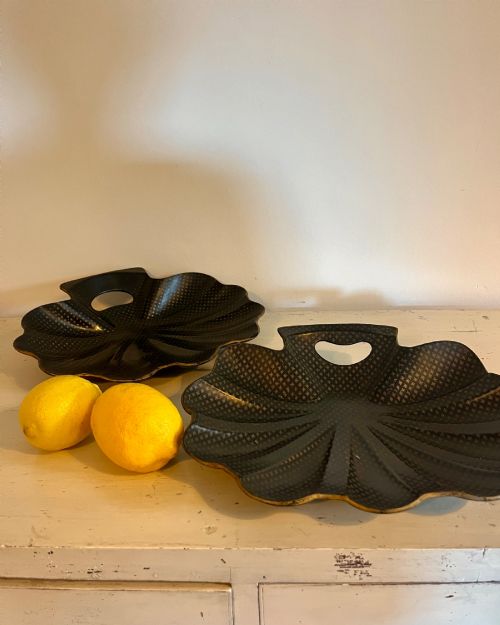
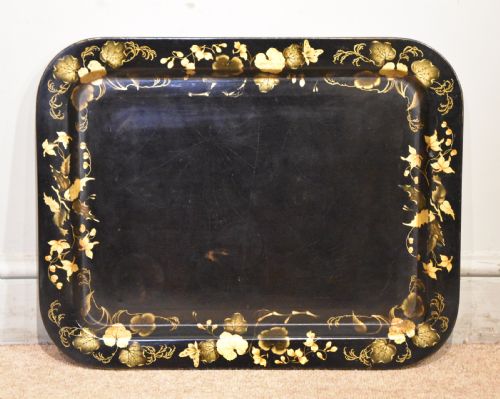
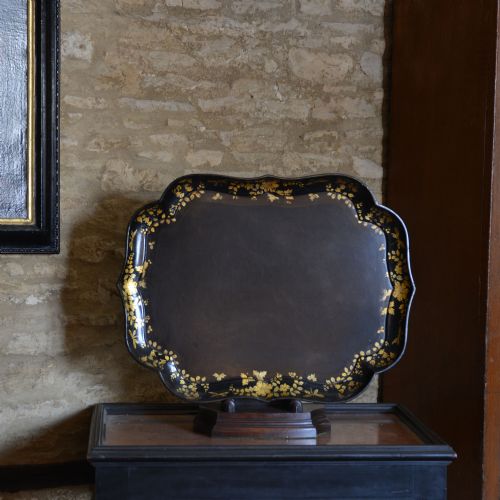
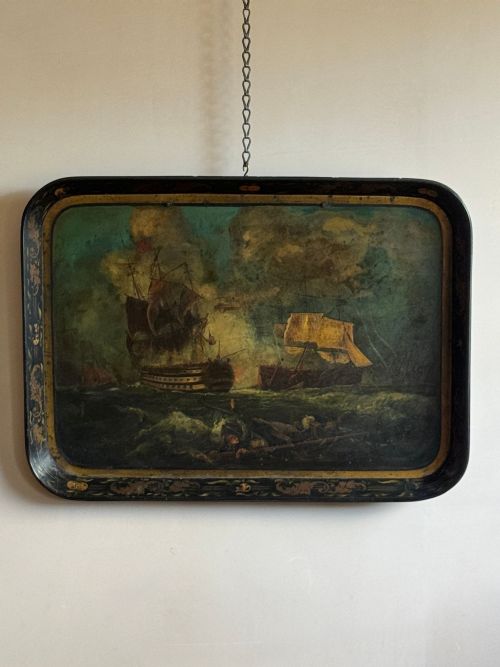
An antique japanned lacquer tray is typically formed from papier-mâché, wood, or metal toleware, finished with glossy dark coats and painted decoration. These pieces date across the Georgian, Regency, and Victorian periods, often taking large oval, rectangular, or kidney-shaped forms.
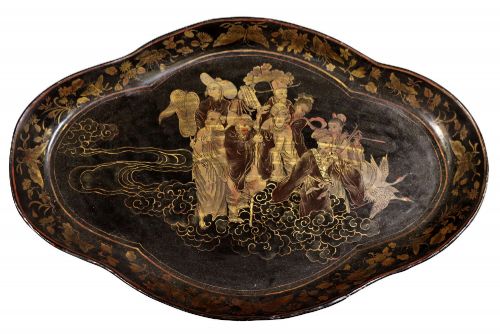
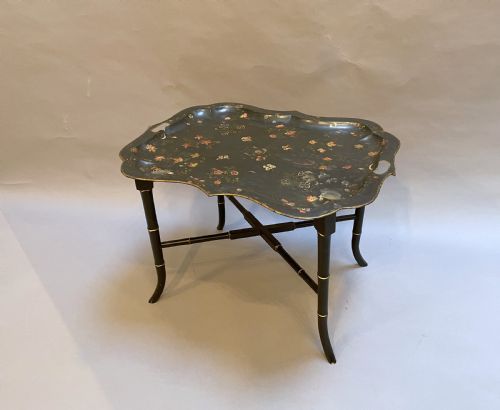
Buyers encounter serving trays, decorative trays, and items mounted on later stands as occasional tables, side tables, or coffee tables. Styles lean towards Chinoiserie landscapes, Japanese export designs, and French Napoleon III influences.
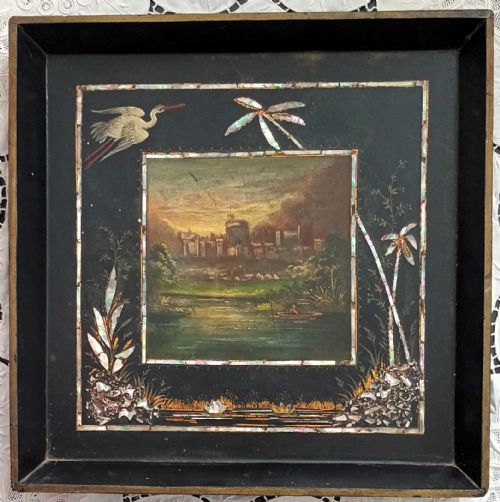
Many examples incorporate gilded borders, mother-of-pearl inlay, and intricate hunting scenes or figurative motifs. The form bridges functional serving ware and striking decorative art.
How they were made
Makers built papier-mâché bases by pressing layers of paper pulp with glue and oil, creating a remarkably sturdy yet light foundation. Wood and metal toleware served as alternative structural materials for trays and related items like inkstands.
Workers applied multiple coats of dark lacquer to achieve a smooth, deep surface before adding hand-painted details. Gold leaf, paint, and mother-of-pearl inlay finished the ornamentation, often sealed with protective varnish coats.
Listings feature items from the 18th century, Georgian, Regency, and Victorian periods, alongside later 19th-century and early 20th-century tables.
What varies in quality
The sophistication of the hand-painted decoration separates standard production from exceptional examples. Fine pieces display crisp detailing in gold leaf, delicate brushwork in scenes, and precise inlay work.
The integrity of the underlying papier-mâché or wood body and the depth of the original lacquer finish dictate the overall caliber of a piece. Maker attribution, particularly to known workshops, elevates the stature of an item.
Jennens & Bettridge·Henry Clay
The Antique Japanned Lacquer Tray Glossary
- Japanned
- European imitation of East Asian lacquerwork, created by applying layers of varnish and dark paint to a base. This finish mimics oriental lacquer through glossy dark surfaces and painted motifs.
- Papier-mâché
- A composite material made from paper pulp or layered paper mixed with glue and resin, pressed into moulds. It forms a lightweight yet durable base for painted trays and tables.
- Toleware
- Painted or lacquered sheet metal items produced in domestic and commercial workshops. These metal trays and boxes often feature bright colours and gilt decoration.
- Chinoiserie
- European decorative style interpreting Chinese and East Asian artistic traditions. It appears on trays through scenic landscapes, pavilions, and figurative motifs.
- Gilt
- Covered thinly with gold leaf or gold paint. This technique highlights rims, borders, and painted details on the dark lacquer background.
Antique Japanned Lacquer Tray: Frequently Asked Questions
What is an antique japanned lacquer tray?
An antique japanned lacquer tray is a serving or decorative piece made from papier-mâché, wood, or metal, finished with dark glossy lacquer and hand-painted designs. These trays date mainly from the Georgian, Regency, and Victorian eras.
Many pieces feature Chinoiserie motifs, gilt borders, and mother-of-pearl inlay. They range from small portable trays to large surfaces mounted on stands as tables.
How were these trays used historically?
Historically, these trays served for carrying tea and glassware, or for displaying items on tables and desks. Their durable surfaces and raised edges made them practical for daily household tasks.
Larger versions also functioned as desk sets or game boards. Wealthy households displayed them prominently in entertaining rooms.
How do I live with a lacquer tray?
Living with a lacquer tray involves placing it away from direct sunlight and excessive moisture to protect the delicate finish. Many owners use them on coffee tables or mount them on stands.
Gentle dusting with a soft, dry cloth preserves the painted surface. Avoid placing hot or wet items directly on antique lacquer without protection.
How do I tell periods apart?
Distinguishing periods involves examining the materials, decorative style, and construction methods. Georgian and Regency pieces often showcase classic Chinoiserie and crisp gilding on papier-mâché.
Victorian examples frequently introduce mother-of-pearl inlay and more diverse scenic paintings, including hunting scenes. Later nineteenth-century items may also reflect Japanese export influences.