


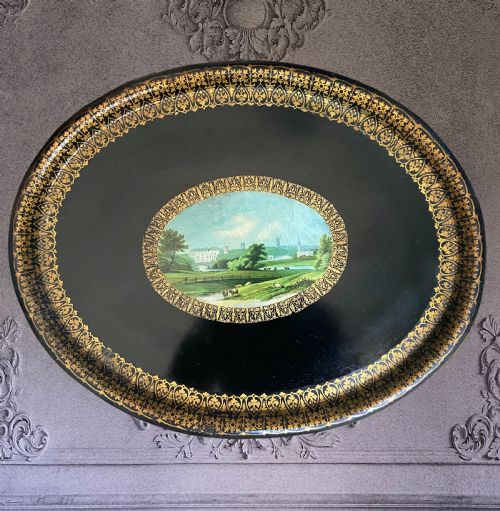


Gilt Japanned Tray
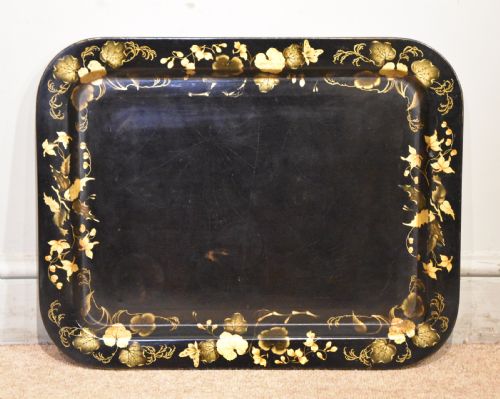
A gilt japanned tray brings dark polished lacquer and bright gold leaf together to catch the candlelight.
Gilt Japanned Tray
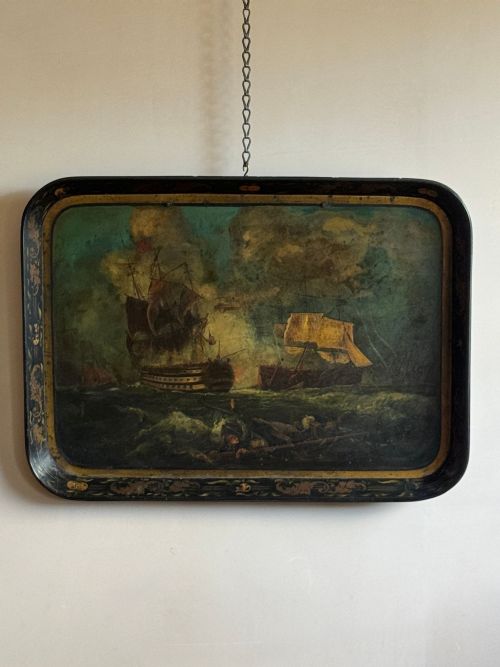
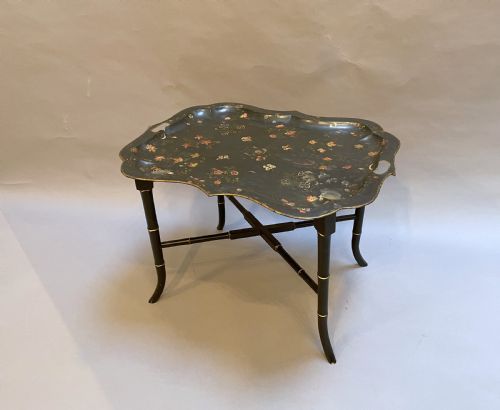
A gilt japanned tray serves as both a functional piece and a decorative surface, emerging across the Georgian, Regency, and Victorian periods. These pieces take the form of large oval or shaped servers that frequently find new life mounted on later stands as occasional tables.
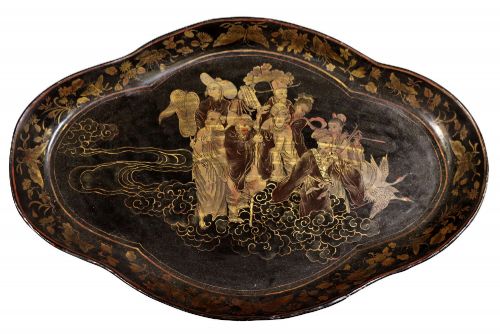
Papier-mâché and toleware dominate the selection, carrying painted Chinoiserie scenes or geometric gold decoration. Buyers encounter everything from simple serving trays to grand tables adapted from earlier periods.
Materials and Methods
Layers of paper pulp and glue are pressed and baked to form sturdy papier-mâché, while sheet iron provides the foundation for durable toleware vessels. Artisans then apply dark lacquer surfaces that receive intricate hand-painted details and gold leaf embellishment.
Metalwork relies on shaped sheet iron painted with opaque pigments, known as tôle peinte, finished with protective varnishes. Wood and brass appear primarily in the stands and supports added to these surfaces later.
Listings span the eighteenth, nineteenth, and early twentieth centuries, featuring papier-mâché, toleware, and wood.
Distinctions in Quality
The sophistication of the hand-painted decoration separates standard production from exceptional work, particularly in figurative scenes and Chinoiserie motifs. Master makers such as Henry Clay or Jennens and Bettridge applied refined gold leaf work and superior lacquer layers that endure.
The integrity of the underlying papier-mâché or sheet iron dictates the structural condition, alongside the preservation of the original gilt and painted surface.
Jennens and Bettridge·Henry Clay·H. Meeson
The Gilt Japanned Tray Glossary
- Japanned
- European imitation of East Asian lacquerwork achieved through layered varnishes and paints. This technique creates a glossy dark surface suitable for gold decoration.
- Papier-mâché
- A composite material made from paper pulp or sheets mixed with glue and pressed into moulds. It forms a remarkably strong, lightweight base for trays.
- Toleware
- Painted or enamelled sheet metal items produced in various forms. The term derives from the French tôle peinte.
- Chinoiserie
- European artistic style reflecting Chinese motifs and imaginary oriental landscapes. It appears frequently in the gold painted details of these pieces.
- Tôle peinte
- Painted sheet metal objects characteristic of the nineteenth century. These items often feature floral or figurative subjects set against dark grounds.
Gilt Japanned Tray: Frequently Asked Questions
How do I clean a papier-mâché tray?
Dust the surface gently with a dry, soft cloth to protect the delicate gold leaf and lacquer. Avoid using water, modern detergents, or chemical polishes that can lift the painted decoration.
Keep these pieces away from direct sunlight and damp conditions to prevent the lacquer from crazing or the papier-mâché base from warping over time.
Were these trays originally used as tables?
Most of these pieces started life as serving trays for tea or porcelain, designed to be carried by hand or placed on folding wooden frames. Many surviving examples were later mounted permanently onto custom stands to function as coffee tables or side tables.
Conversion to table height often happened in subsequent centuries to suit changing domestic fashions for low display surfaces.
What is the difference between toleware and papier-mâché?
Papier-mâché uses compressed paper pulp to create a lightweight, rigid tray body that holds fine curved details well. Toleware is formed from sheet iron, offering a heavier metallic substrate that responds differently to paint and lacquer.
Both materials provide a dark, smooth ground that makes the applied gold leaf and painted scenes stand out.
How can I date a nineteenth century tray?
Examine the weight, the composition of the base material, and the style of the painted Chinoiserie or floral motifs. Regency examples often feature crisp gold decoration and classical proportions, whereas later Victorian pieces display broader decorative treatments.
Signatures or impressed marks from notable makers like Jennens and Bettridge also help establish a firm period of manufacture.