

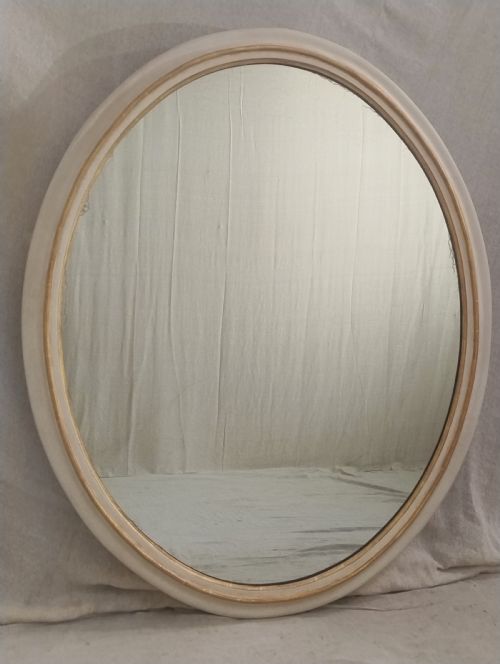
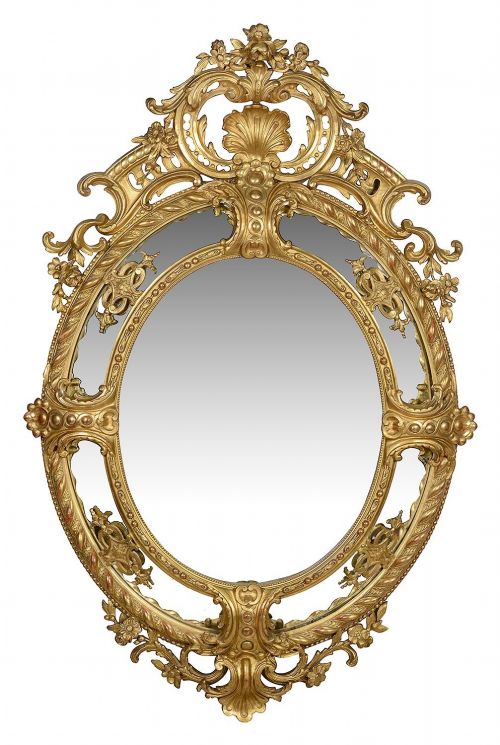


Large Oval Gilded Mirror
A large oval gilded mirror brings scale and reflected light to a room, drawing the eye with curved frames finished in gold.
Large Oval Gilded Mirror
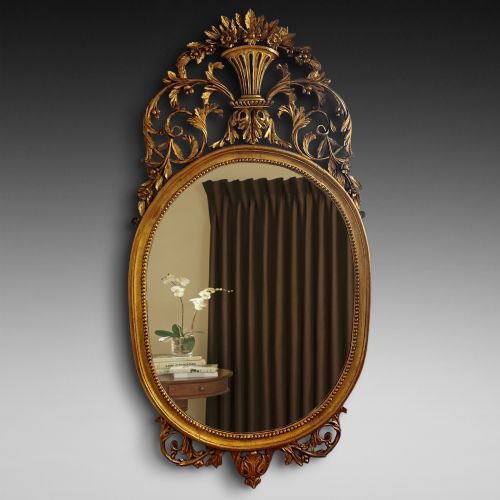
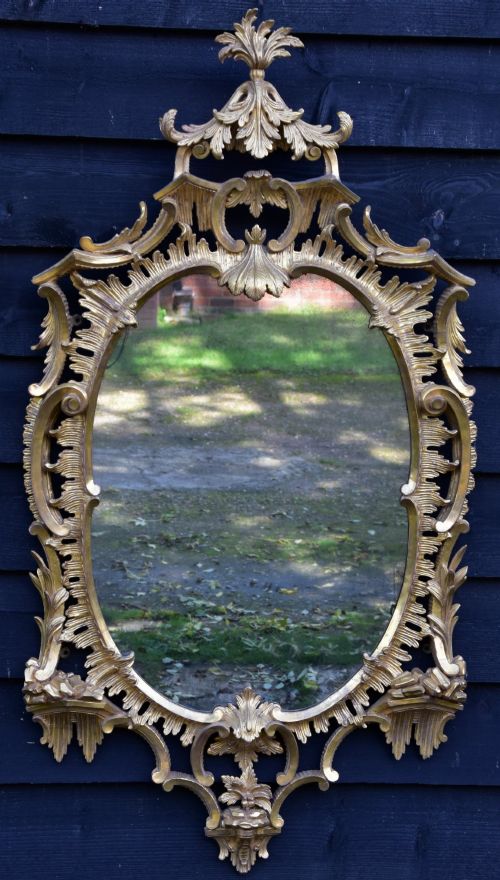
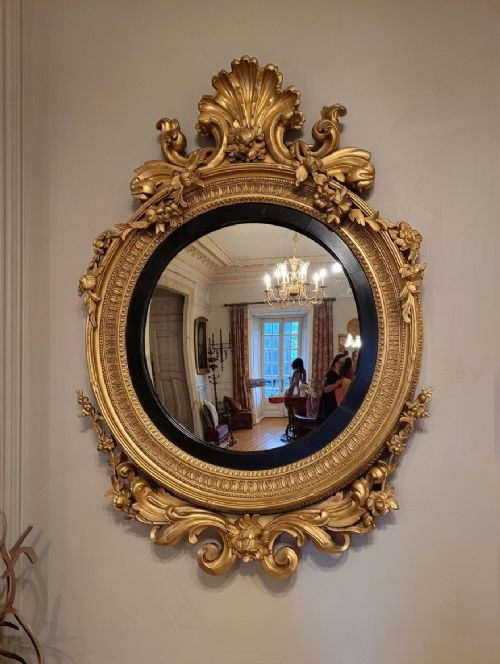
A large oval gilded mirror is typically encountered as a wall mirror or an overmantel mirror dating from the eighteenth century through to the Edwardian period. These pieces appear in styles ranging from Georgian and Regency to Victorian Rococo Revival and French Neoclassical.
The form spans domestic interiors, serving both as pier mirrors placed between windows and as grand focal points above fireplaces. Evidence shows works originating from English and continental workshops, including Italian and French designs.
How they were made
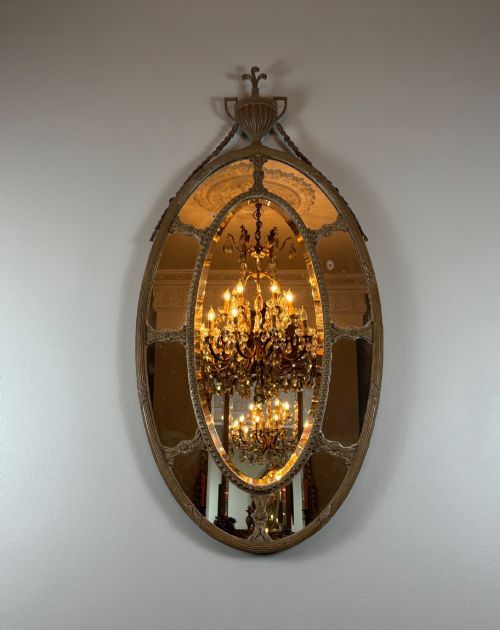
Makers shaped frames from carved wood or built up intricate relief decoration using gesso and composition applied over a wooden base. Carved elements often include decorative details such as urns, swags, and ornate scrolling foliage.
The luminous finish relies on gold leaf or parcel-gilt techniques applied to the prepared surface. Mirror glass within these frames ranges from simple plates to bordered designs.
Listings span multiple decades, incorporating Georgian, Victorian, and Edwardian periods alongside French Neoclassical and Rococo Revival styles.
What varies in quality
The depth and crispness of the carving distinguish finer examples from simpler production, particularly where gesso ornaments meet wooden frames. Superior pieces retain the original gold leaf surface and display well-proportioned decorative motifs like swags and urns.
Structural integrity of the timber base and the clarity of the original mirror glass also separate standard domestic looking glasses from high-status overmantel and pier mirrors.
The Large Oval Gilded Mirror Glossary
- Giltwood
- Wood that has been coated with gold leaf or gold paint. This material forms the primary structure for many traditional decorative frames.
- Gesso
- A plaster-like mixture applied to wood frames to create a smooth surface for carving or moulding details. It is often built up into high-relief decorative motifs.
- Overmantel mirror
- A large mirror designed to hang specifically above a fireplace mantelpiece. These pieces often anchor the proportions of a principal reception room.
- Pier mirror
- A tall mirror designed to hang on the wall space between two windows. They frequently paired with console tables in period interiors.
- Parcel-gilt
- A finish where only specific portions of an object are gilded while other areas show exposed wood or ebonised surfaces.
Large Oval Gilded Mirror: Frequently Asked Questions
Where should I hang a large oval mirror?
These mirrors suit principal reception rooms, hallways, and above fireplace mantels where their scale creates a focal point. They reflect natural light effectively when placed opposite windows.
Ensure the wall construction supports the substantial weight of carved wood and gesso frames before hanging.
How do I identify a Victorian mirror?
Victorian examples often display heavy gesso ornamentation, cushion frames, or Rococo Revival styling characteristic of the nineteenth century. The proportions tend to be generous and robust.
Examine the backboards and fixings for signs of period construction methods to confirm the age.
What is the difference between gesso and carved wood?
Carved wood involves shaping the solid timber frame directly with chisels and gouges. Gesso is a chalk and binder mixture moulded or applied over a simpler wooden core to form relief decoration.
Many antique frames combine both techniques, using carved wooden structures enriched with moulded gesso ornaments.