

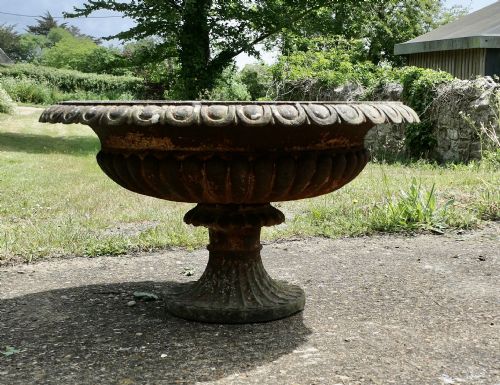


Large Outdoor Urn
A large outdoor urn anchors a garden terrace or driveway with unmistakable presence, built to hold everything from clipped box to trailing ivy.
Large Outdoor Urn
A large outdoor urn brings classical weight and botanical display to lawns, gravel paths, and stone courtyards. The pieces appearing here span from heavy nineteenth-century metal vessels to weathered terracotta and carved stone.
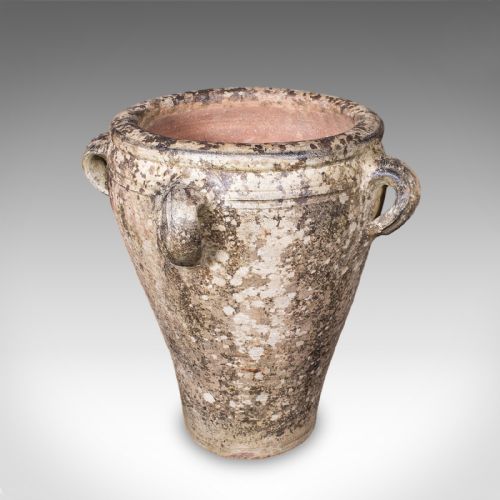
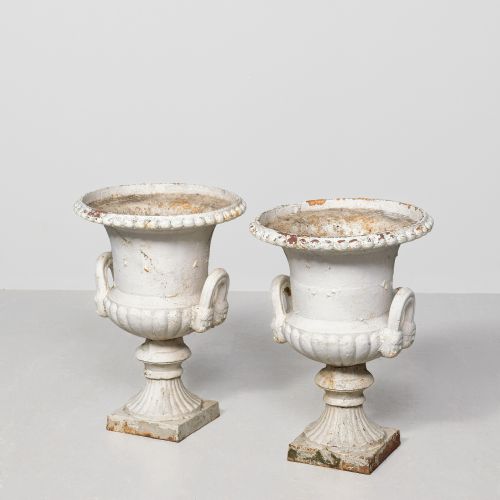
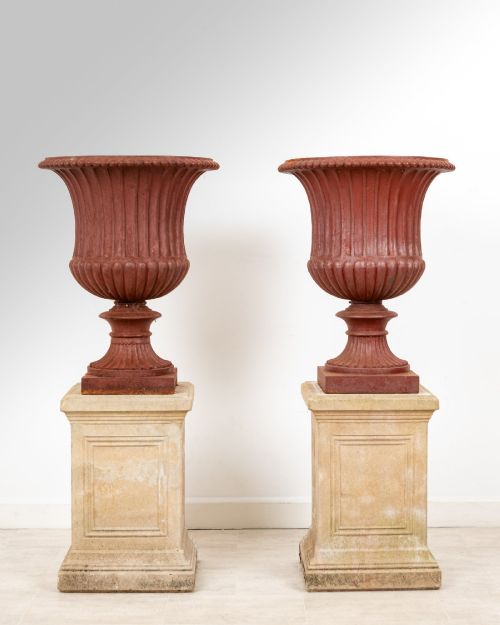
Buyers most frequently encounter robust cast iron campana shapes and terracotta jars originating from nineteenth-century workshops and subsequent decades. These forms range from structured pairs on plinths to single monumental temple vases.
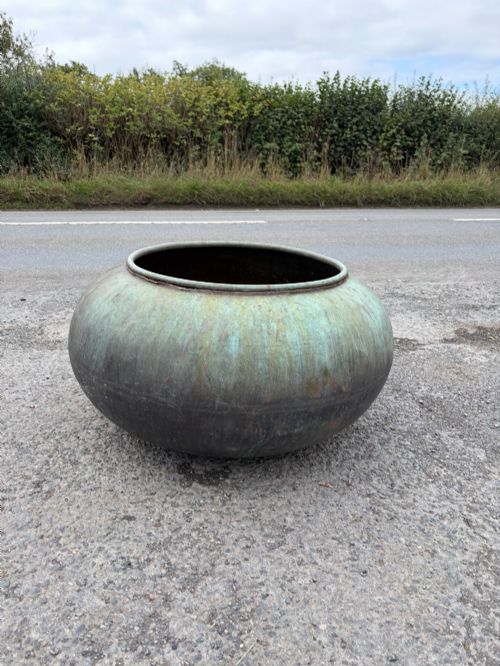
The selection also encompasses copper pots, marble vessels, and reconstituted stone planters designed for substantial garden schemes. Each piece serves primarily as a vessel for planting, though many stand alone as focal architecture.
Materials and Construction
Foundry casting accounts for the heavy metal examples, utilising cast iron and bronze poured into moulds to create crisp classical details and sturdy walls. These iron pieces often display accumulated layers of paint and natural oxidation from decades outdoors.
Terracotta and clay vessels rely on shaping and firing, producing porous bodies that breathe with the soil and weather distinctively over time. Carved stone and marble versions demonstrate direct subtraction from solid blocks, yielding sharp chisel marks and heavy plinths.
Large Outdoor Urn Retail Price Guide 2026
Typical asking prices for large outdoor urn among the pieces listed under this phrase on Sellingantiques today, from the lower quarter to the upper quarter. They describe what is for sale here now, not the wider market.
Current listings feature heavy garden vessels shaped from cast iron, terracotta, carved marble, and copper, spanning from the eighteenth century into the 1930s.
Assessing Quality and Character
The distinction between ordinary and exceptional vessels lies in the crispness of the cast ornament and the depth of the material's surface evolution. Fine iron castings retain sharp acanthus leaves and fluted bowls without smoothing from repeated overpainting.
Proportion and matching also dictate the desirability of pairs, where identical weathering and matching foundry marks elevate the set. The integrity of the drainage hole and the stability of the base dictate structural longevity in the garden.
Andrew Handyside
The Large Outdoor Urn Glossary
- Campana
- A bell-shaped garden urn with a flaring rim and a tapering lower body. This classic neoclassical form appeared frequently in nineteenth-century ironfoundries.
- Jardiniere
- A large ornamental pot or stand designed to hold growing plants or flowers. These vessels often sit directly on terraces or garden steps.
- Tazza
- A shallow cup or bowl mounted on a stem and foot. In garden metalwork, this term describes wide, open urns used for low planting.
- Verdigris
- A green or bluish patina formed naturally on copper and bronze through atmospheric weathering. It signals age and protects the underlying metal.
- Reconstituted stone
- A durable material made from crushed stone and cement binder pressed into moulds. It mimics the appearance of natural carved stone.
Large Outdoor Urn: Frequently Asked Questions
How do I protect cast iron urns from frost?
Cast iron withstands cold temperatures well, but trapped water freezing inside the bowl can exert immense pressure on the metal walls.
Elevate the base slightly off the ground on pot feet to ensure proper winter drainage and prevent moisture retention against the bottom.
Can terracotta urns remain outside all year?
Fired clay naturally absorbs moisture, which makes older terracotta susceptible to cracking when sub-zero temperatures arrive.
Move heavy jars under sheltered verandas during winter months or wrap them breathable hessian to mitigate freeze-thaw damage.
How do I date a cast iron garden urn?
Examine the casting seams, surface texture, and the presence of old bolted construction rather than modern welding. Nineteenth-century examples often display layered paint build-up and maker stamps beneath heavy oxidation.
Compare the classical ornament, such as egg-and-dart rims or beaded moulding, against known foundry catalogues from the Victorian era.
What is the best way to clean verdigris?
The powdery green oxidation on copper and bronze acts as a protective shield against further atmospheric corrosion.
Avoid harsh chemical strippers or wire brushes that remove this historical patina, opting instead for gentle rinsing with clean water and a soft bristle brush.