
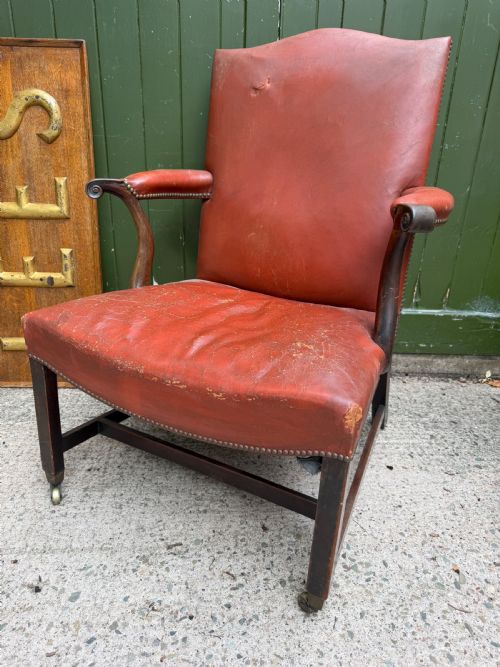
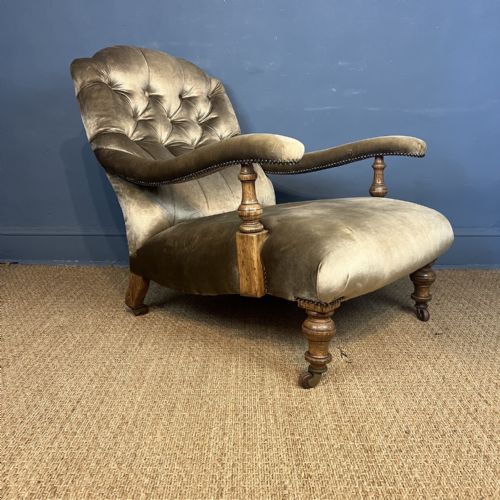
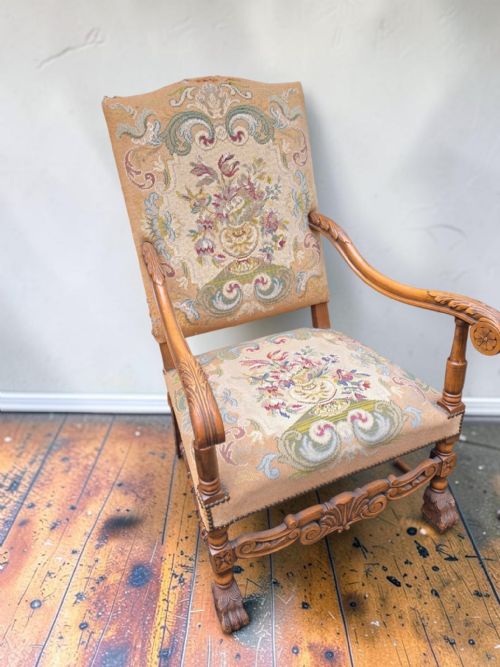
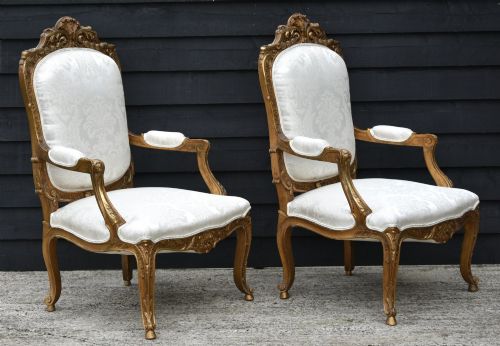
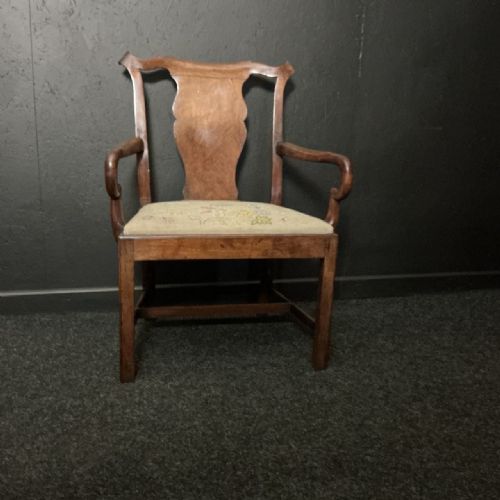


Large Open Armchairs
Large open armchairs offer generous proportions and supportive seating, drawing collectors seeking statement library and drawing room pieces.
Large Open Armchairs
Large open armchairs span centuries of domestic seating, encompassing robust oak master chairs alongside refined mahogany library armchairs. Buyers seeking large open armchairs encounter substantial seating designed for comfort in studies, halls, and grand reception rooms.
The selection here draws heavily on eighteenth-century Georgian forms and nineteenth-century revival pieces. Mahogany and walnut frames predominate, frequently accompanied by oak examples originating from English and Welsh workshops.
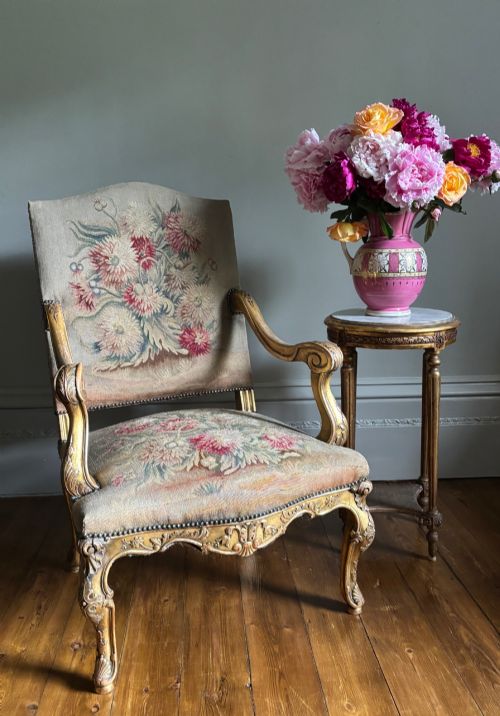
Many of these large open armchairs retain traditional upholstery including leather, velvet, and tapestry covers. Pairs appear alongside single master chairs, offering versatile seating options for period interiors.
Materials and Construction
Cabinet makers utilised dense hardwoods such as mahogany, walnut, and oak to construct the substantial frames required for large open armchairs. Timber selection dictated the depth of carving possible, allowing for intricate blind fretwork and sculptural scrollwork.
Joinery techniques relied on traditional mortise and tenon joints to withstand the stress placed on wide elbow rests and broad seats. Upholstery methods incorporated sturdy webbing and traditional stuffing to support heavy leather, needlework, and tapestry coverings.
Listings feature oak, walnut, and mahogany frames spanning from the seventeenth century through the late Victorian period.
Assessing Quality and Proportion
Quality in large open armchairs rests upon the harmony of proportion and the crispness of timber carving. Superior examples display balanced arm supports and finely detailed mouldings rather than clumsy, heavy-handed proportions.
The integrity of the frame and the retention of original timber patination elevate certain pieces above standard production. Surviving period upholstery or sympathetic re-covering using traditional materials further distinguishes the finer pieces in this range.
The Large Open Armchairs Glossary
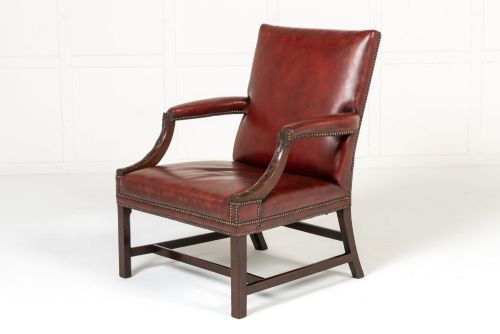
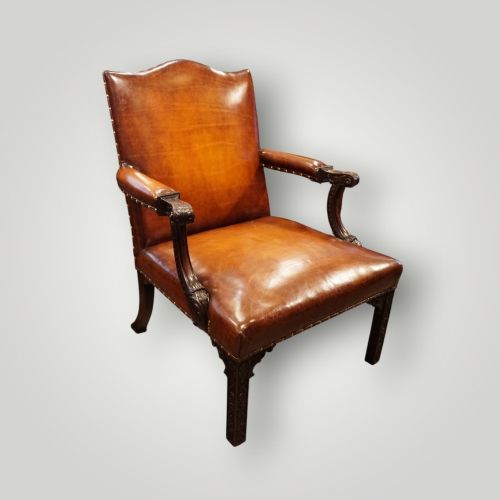
- Gainsborough armchair
- A wide seat armchair with padded arms and an open wooden frame, originating in the eighteenth century for library use.
- Blind carving
- Carved ornament applied to a flat surface in low relief, often seen on eighteenth-century mahogany rail frames.
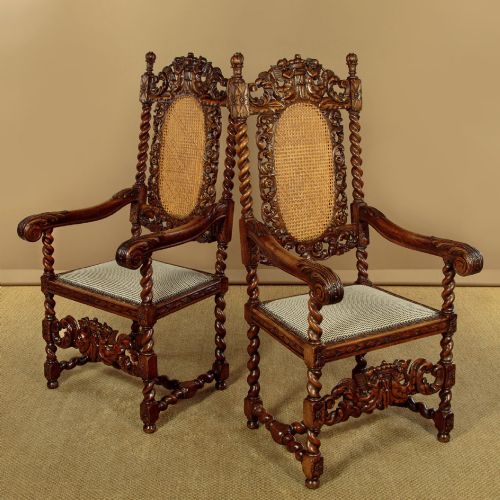
- Barley twist
- A turning technique resembling a twisted rope, frequently utilised on seventeenth and nineteenth-century furniture legs and supports.
- Regence style
- A transitional French design aesthetic bridging classicism and rococo, characterised by scrolling cartouches and subtle symmetry.
Large Open Armchairs: Frequently Asked Questions
Where were large open armchairs used?
These generous seats served primarily in libraries, studies, and grand halls where comfort and imposing presence mattered. Owners positioned them beside desks, fireplaces, or as standalone statement pieces.
Their robust construction and wide proportions suited them to formal reception rooms and long galleries in country houses.
How do I distinguish eighteenth-century pieces?
Eighteenth-century examples typically exhibit lighter timber framing, finer hand-carved details, and classic proportions associated with Georgian design. Mahogany and walnut dominated this era, often featuring restrained cabriole legs or straight carved supports.
Later nineteenth-century revivals frequently utilised heavier oak framing and deeper, more assertive carving styles influenced by earlier historical periods.
Are these armchairs suitable for daily use?
Most large open armchairs provide robust, supportive seating suitable for regular placement in living spaces and studies. Their solid hardwood frames withstand normal daily occupation when structurally sound.
Buyers should examine the internal webbing and upholstery support to ensure the seating remains comfortable for extended periods of reading or relaxation.
What upholstery materials appear most often?
Traditional coverings dominate this selection, featuring hand-dyed leather, woven tapestry, needlework, and velvet. These materials align with the historic character of the frames.
Many pieces retain or have been restored with period-appropriate textiles that complement the dark tones of mahogany, walnut, and oak frames.