
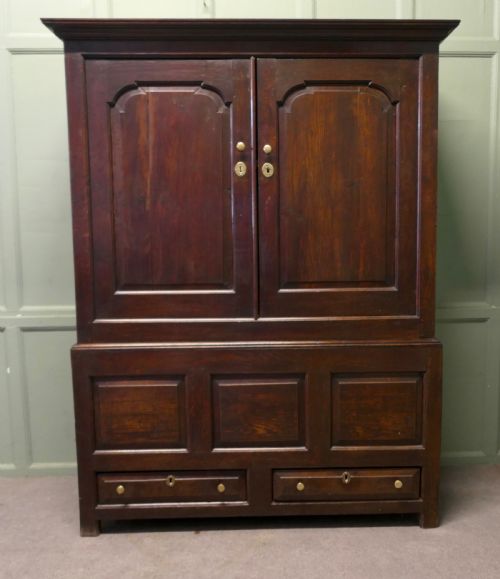
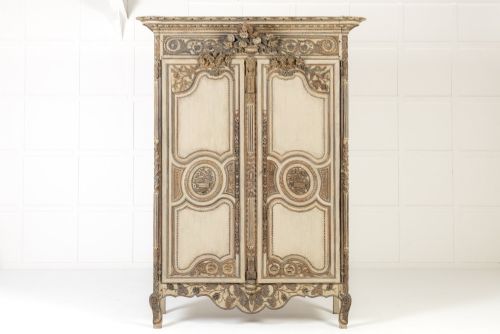
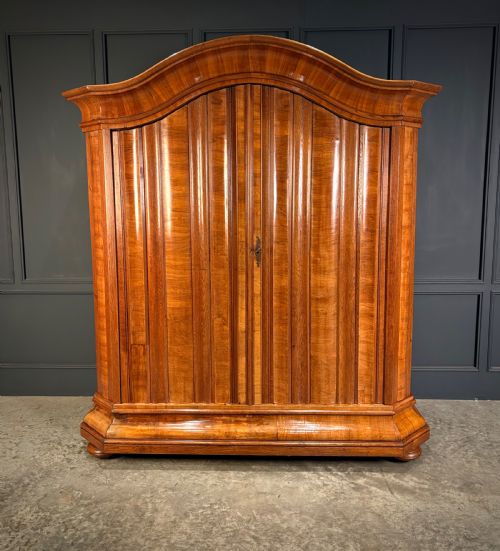


Large Oak Press Cupboard
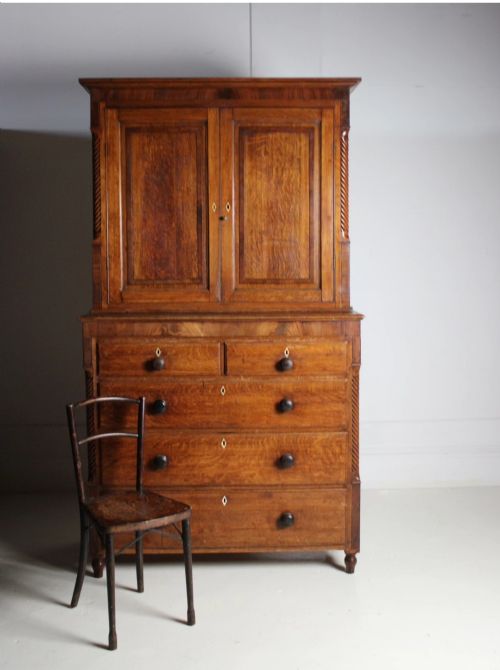
A large oak press cupboard provides substantial historic storage, combining deep panelled doors and upper shelving with lower drawer banks for serious room presence.
Large Oak Press Cupboard
A large oak press cupboard represents substantial utilitarian furniture built to store folded textiles, garments, and household stores in traditional domestic settings. These monumental storage pieces appear primarily in eighteenth and nineteenth-century forms, alongside revival interpretations from later decades.
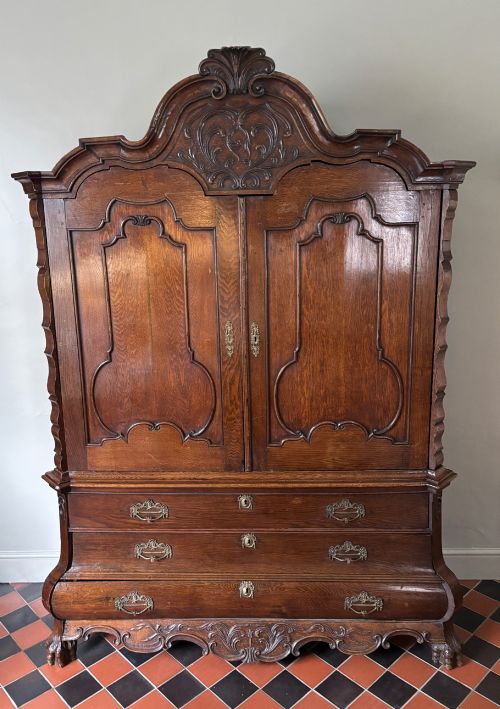
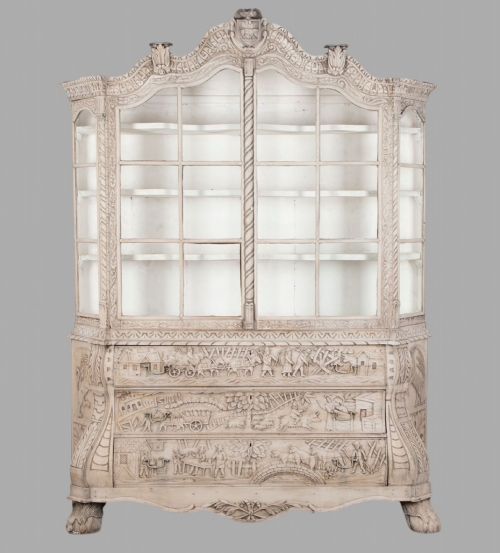
The version most commonly met on this page is the regional English or Welsh housekeeper's cupboard or linen press, alongside Continental armoires and Dutch storage furniture. These large storage forms combine upper cabinet space with lower drawer sections, constructed to anchor a substantial room.
Makers utilised heavy timber frameworks, panelled doors, and robust brass or iron hardware to ensure these storage cupboards survived centuries of domestic use. The surviving examples display regional vernacular traits, from plain Georgian utility to deeply carved Jacobean revival motifs.
What varies in quality
The architecture of the cornices and the depth of the mouldings separate standard utilitarian cupboards from finer architectural examples made for major estates. Crisp hand-carved detailing and well-balanced proportions elevate specific regional pieces above plain workshop production.
Timber selection dictates the overall visual weight, with straight-grained quarter-sawn oak holding greater historic appeal than later utility grades. Original brass hardware, panel integrity, and undisturbed interior shelving define the survival standard across these storage forms.
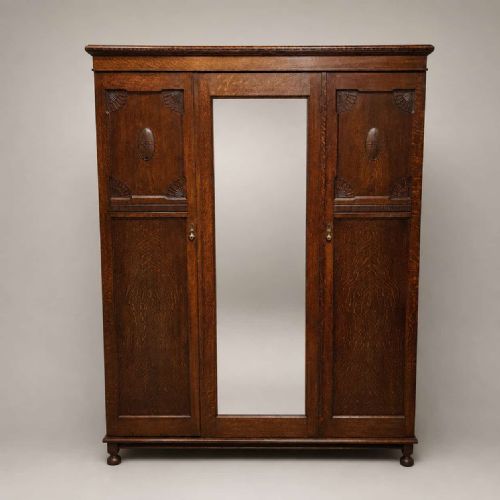
Listings feature oak storage forms spanning the seventeenth century through the nineteen-thirties, including walnut, brass, and painted finishes.
Maple & Co
The Large Oak Press Cupboard Glossary
- Housekeeper's cupboard
- A large utility storage form designed for domestic service areas to hold household provisions and linens. These pieces prioritise functional interior space over elaborate decorative carving.
- Quarter-sawn
- A method of cutting oak logs radially to reveal distinctive medullary ray flecks across the timber surface. This cut provides enhanced stability for large panelled doors.
- Cornice
- The decorative moulded projection finishing the top edge of a tall cupboard. Fine examples feature dentil moulding or carved friezes.
- Panelling
- Wooden framework constructed with stile and rail members surrounding fitted floating panels. This technique accommodates natural wood movement in large pieces.
Large Oak Press Cupboard: Frequently Asked Questions
What is a large oak press cupboard?
A large oak press cupboard is a tall historic storage furniture piece designed to hold folded linens, garments, and household goods. These substantial items combine upper cabinet doors with lower drawer sections to provide maximum interior capacity.
Built primarily from solid timber, these pieces served as central storage hubs in historic domestic interiors, country houses, and farmhouses.
How do you date an antique oak press cupboard?
Dating relies on examining construction techniques, joinery methods, timber preparation, and surface patination. Hand-cut peg joints, backboard thickness, and regional design characteristics help establish the period of manufacture.
Stylistic cues such as fielded panels, cornices, and brass hardware provide further clues to whether a piece originates from the seventeenth, eighteenth, or nineteenth century.
Where were press cupboards used in a house?
These storage pieces historically stood in bedrooms, dressing rooms, long hallways, or estate housekeeper rooms where large volumes of textiles required organisation. Their significant physical presence meant they anchored the walls of major service or family quarters.
In modern interiors, they function effectively as standalone wardrobes, linen stores, or architectural storage in large living spaces.
Can a large press cupboard be dismantled?
Many historic large oak press cupboards feature modular construction with separate upper and lower sections to facilitate transport and placement. Some Continental or vernacular examples were built to break down further into individual panels and frames.
Checking the construction format before moving helps determine whether professional handling or disassembly is necessary for large pieces.