





Dutch Baroque Cupboard
A dutch baroque cupboard brings architectural presence and rich floral marquetry into a room, offering deep storage within dramatic proportions.
Dutch Baroque Cupboard
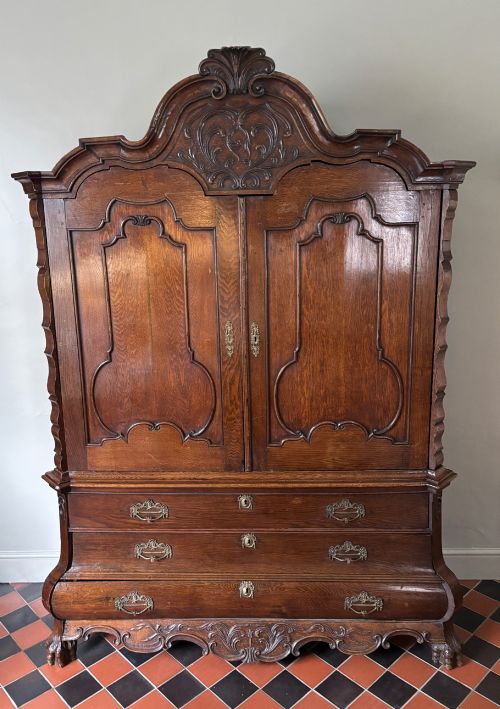
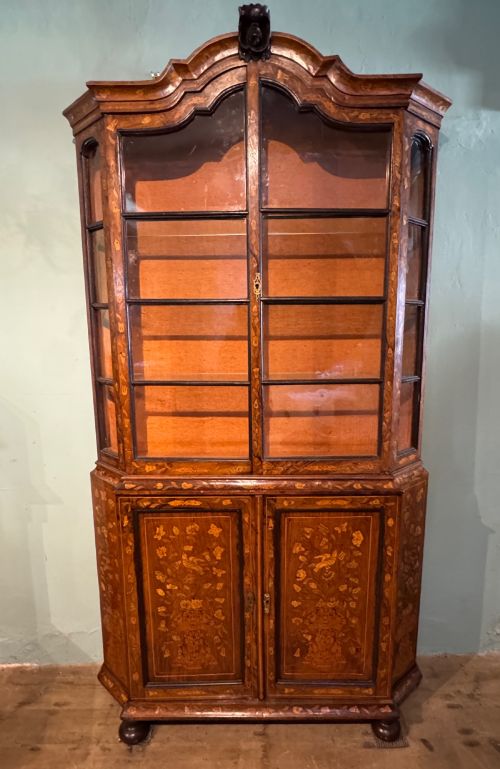
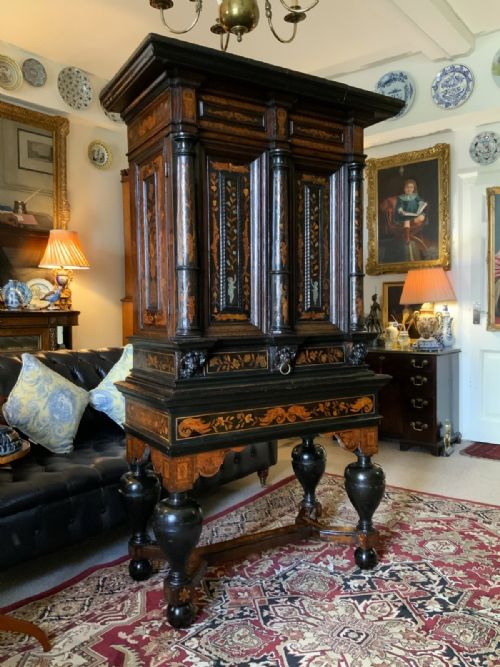
A dutch baroque cupboard is a substantial storage piece defined by architectural moulding, deep cornices, and frequently elaborate marquetry in walnut, fruitwood, and ebony. These pieces serve as linen presses, display cabinets, armoires, or cabinets on stand, originating predominantly from the seventeenth and eighteenth centuries.
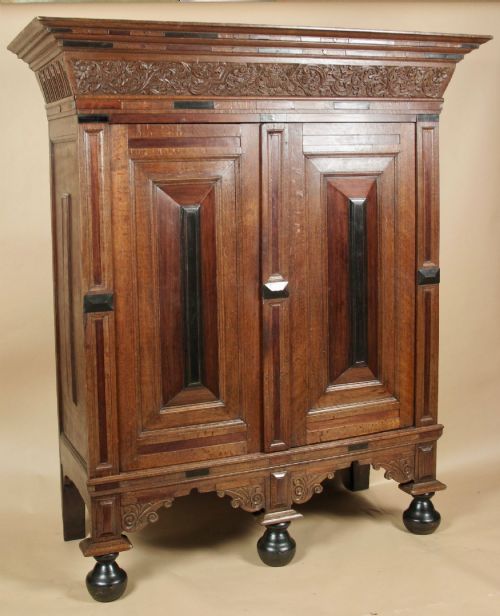
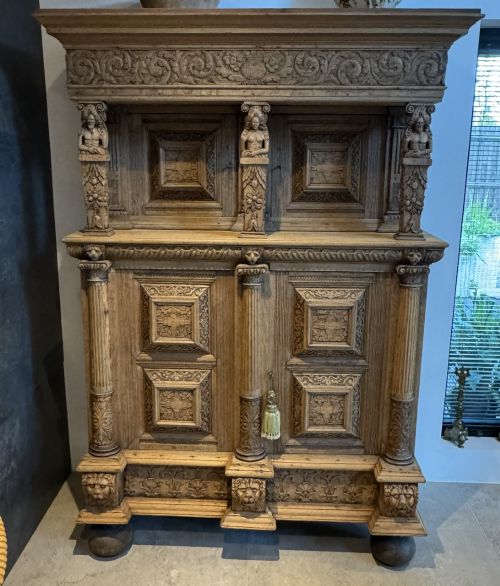
The most common examples encountered on this page are eighteenth-century walnut linen presses and marquetry cabinets featuring floral inlay. Collectors also find seventeenth-century kasten in oak and rosewood, alongside nineteenth-century revivals and smaller apprentice miniature cabinets.
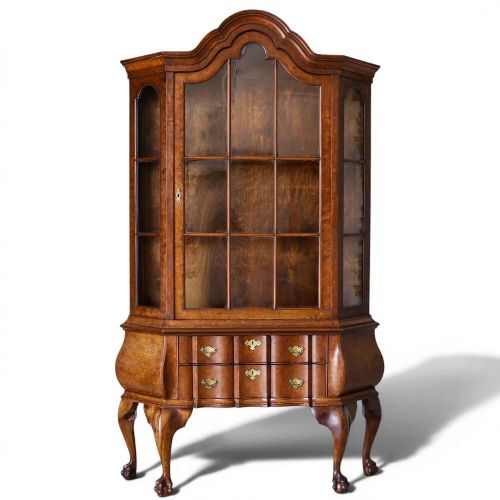
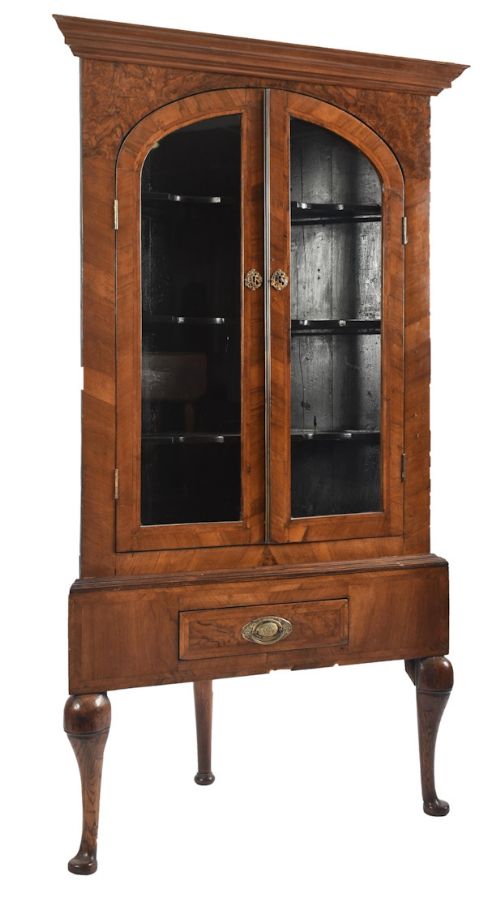
Forms vary from floor-standing corner cabinets and glazed bookcases to bombe cupboards and linen cupboards. Each variation retains the heavy cornice work and figured timber surfaces characteristic of the Continental Baroque style.
Judging quality and execution
Quality rests primarily on the depth and complexity of the marquetry and the choice of burl or figured veneers on the primary surfaces. Finer examples display meticulous floral inlay spanning entire door panels, combined with dense ebony or pewter stringing.
The architectural integrity of the cornices, the proportion of the mouldings, and the selection of secondary timbers such as oak indicate the standard of workshop production. Well-preserved original brass mounts and untouched patination elevate the standing of seventeenth and eighteenth-century pieces.
Listings feature items spanning four centuries, from seventeenth-century oak kasten to twentieth-century revival bookcases.
The Dutch Baroque Cupboard Glossary
- Kasten
- A large, architectural wardrobe or linen cupboard originating from the Netherlands and Flanders. These heavy storage pieces typically feature deep paneling and substantial cornices.
- Marquetry
- The art of applying decorative veneer pieces in wood, pewter, and fruitwood to a structure. Floral and geometric designs are the most frequent motifs on these cabinets.
- Bombe
- A swollen or bulging serpentine profile found on the lower sections of certain eighteenth and nineteenth-century cupboards. This curved shaping requires advanced woodworking skill.
- Apprentice miniature
- A small-scale model of a full-sized cabinet produced to demonstrate a craftsman's skill. These portable pieces replicate the exact joinery and marquetry of larger kasten.
- Linen press
- A tall cupboard featuring sliding trays or shelves behind doors, designed for storing textiles. Eighteenth-century versions often incorporate extensive walnut and marquetry veneers.
Dutch Baroque Cupboard: Frequently Asked Questions
What is a kasten?
A kasten is a large, traditional Dutch or Flemish wardrobe built with heavy timber and deep architectural mouldings. These substantial pieces served as primary storage for household linen and garments in prosperous homes.
They often feature panelled doors and robust cornices, sometimes elevated on bun feet or stands. The interior typically contains adjustable shelving or hanging space.
How do I date a marquetry cabinet?
Dating relies on examining the timber species, veneer thickness, and the complexity of the floral inlay. Seventeenth and eighteenth-century examples utilise solid oak carcases with hand-cut walnut and fruitwood veneers.
Later nineteenth-century revivals display different construction methods and secondary woods beneath the veneer. The style of the brass hardware and the lock mechanisms also provide chronological clues.
Where should I place a large linen press?
A large linen press requires a room with sufficient ceiling height and wall space to accommodate its heavy architectural proportions. Hallways, large bedrooms, and formal dining rooms suit their imposing scale.
Keep these cabinets away from direct sunlight and strong heat sources to protect the fragile walnut and fruitwood veneers from drying out or splitting.
What is the difference between a corner cabinet and a standard cupboard?
Corner cabinets are constructed with angled sides specifically designed to fit snugly into room corners, maximising floor space. Standard cupboards feature flat, rectangular profiles intended for placement against a flat wall.
Both forms utilise similar decorative treatments, including glazed upper doors, marquetry inlay, and walnut veneers.