

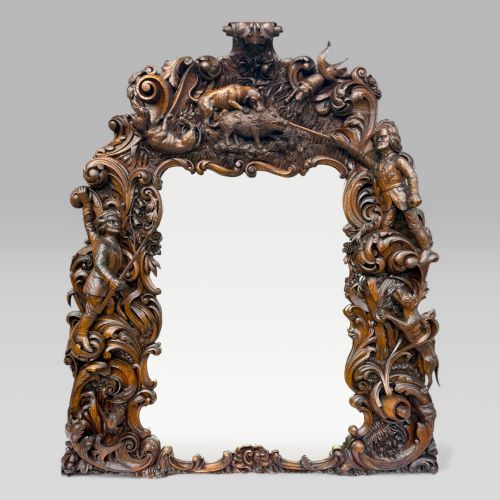
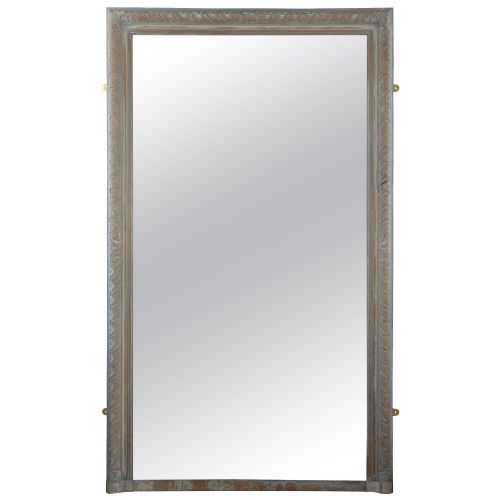


Large Oak Frame Mirror
A large oak frame mirror anchors a room with substantial weight, bringing solid timber grain and reflective depth to a period interior.
Large Oak Frame Mirror
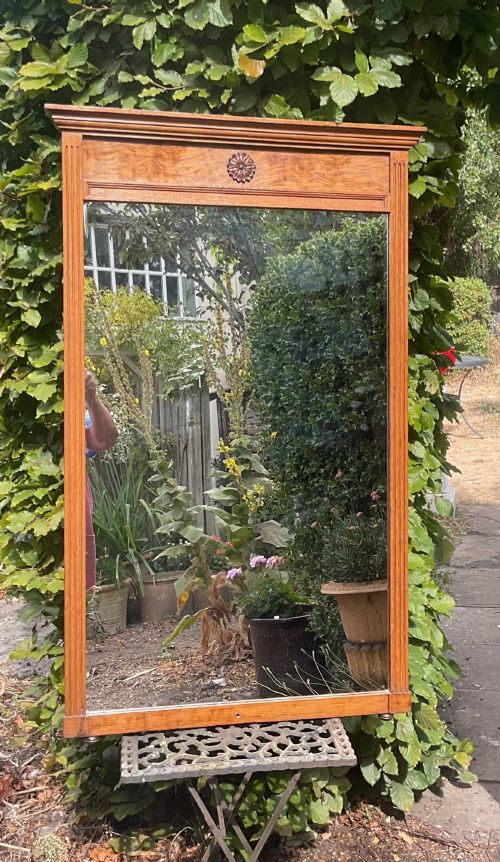
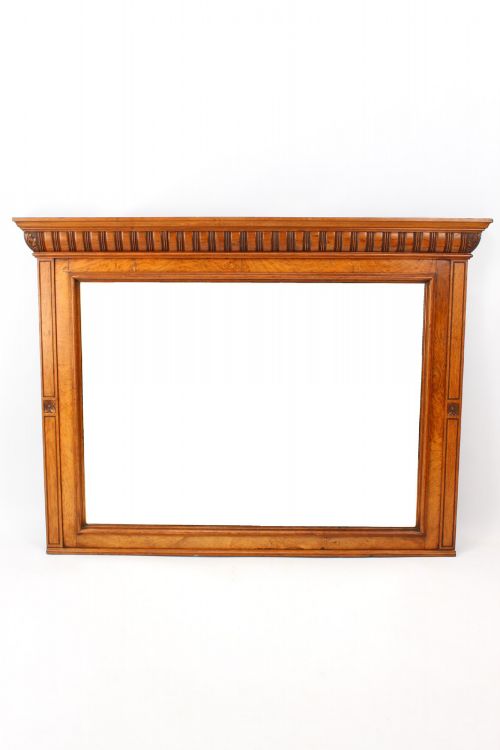
A large oak frame mirror serves as a dominant architectural element, frequently encountered in Victorian, Edwardian, and nineteenth-century domestic spaces. These pieces span wall-hanging formats, broad overmantels designed for chimneypieces, and substantial leaner mirrors intended for upright floor placement.
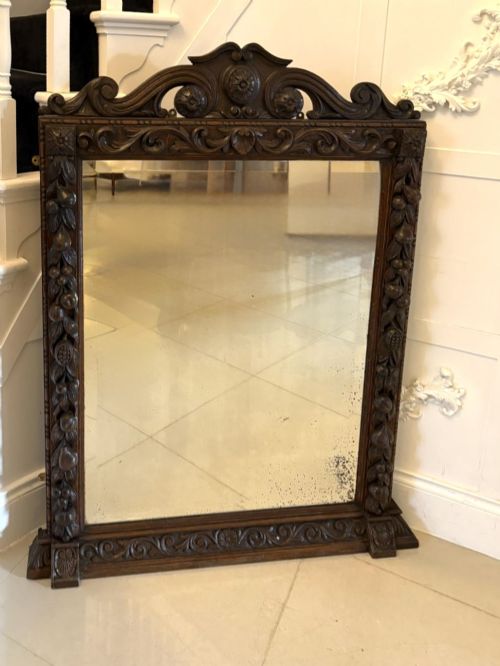
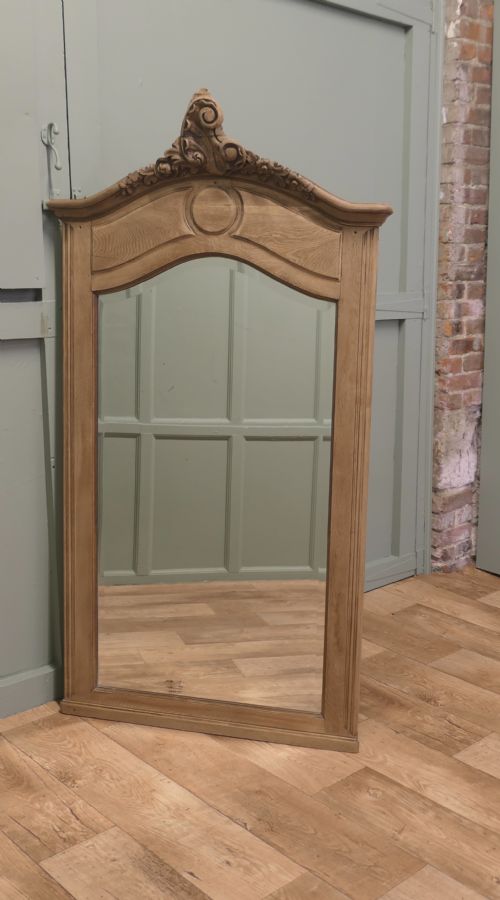
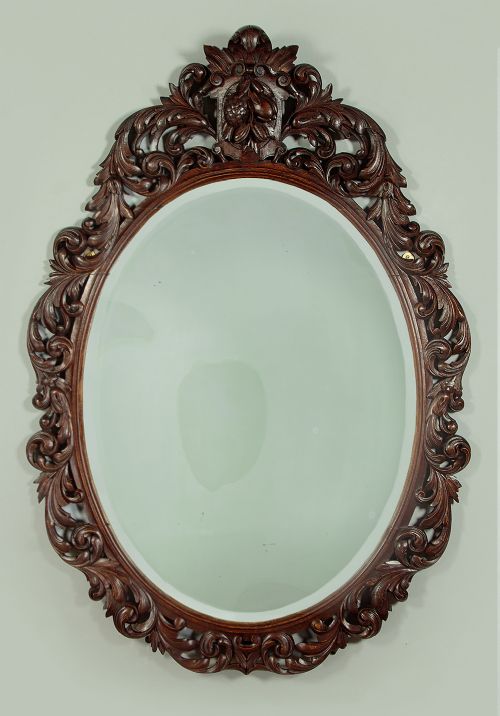
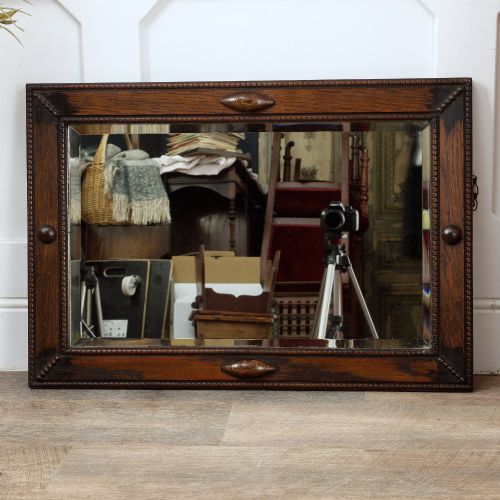
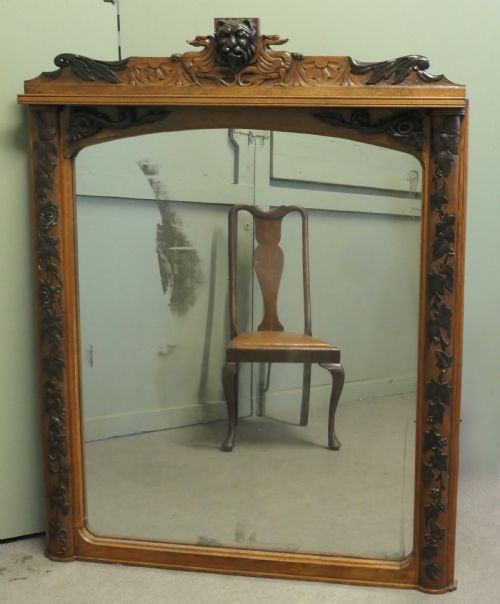
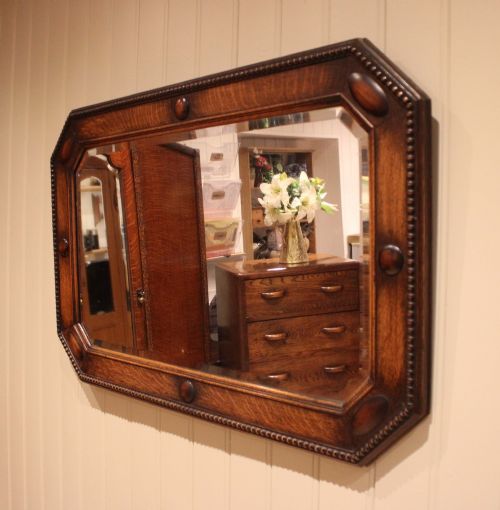
The selection ranges from austere rectangular timber surrounds to heavily carved Gothic, Renaissance-style, and French provincial iterations. Many incorporate bevelled mirror glass held securely within thick oak housings that display visible growth rings and deep patination.
How they were made
Cabinetmakers constructed these heavy frames using solid oak timbers, frequently utilising traditional joinery such as mitred corners and robust rear backing boards. Carved enrichment, including foliage, scrolling strapwork, and cushion moulding, was executed directly into the dense wood by hand.
Surface treatments recorded across the evidence include scrubbed natural timber, bleached oak, ebonised wood accents, and occasional parcel-gilt detailing. Reflective plates were secured behind the timber rebate, sometimes accompanied by secondary brass fittings or ornamental ormolu.
One exceptional nineteenth-century piece originates directly from the hunting lodge of the King of Bavaria.
What varies in quality
The standard of a large oak frame mirror depends heavily on the depth and crispness of the timber carving. Superior examples exhibit undercut relief work executed with architectural precision rather than shallow, mechanical stamping.
Proportion and material selection also dictate standing, with dense, figured oak and original bevelled mirror glass separating standard utility pieces from exceptional country house or drawing-room furnishings.
The Large Oak Frame Mirror Glossary
- Overmantel mirror
- A wide mirror specifically proportioned to sit above a fireplace mantelpiece. These pieces often feature horizontal emphasis to balance the hearth below.
- Cushion frame
- A convex, outwardly sloping wooden frame profile popular in seventeenth-century revival designs. This volumetric shape draws the eye inward toward the reflective glass.
- Scrubbed oak
- Timber that has been thoroughly washed and cleaned of old varnishes to reveal the pale, matte grain beneath. This finish highlights the raw tactile quality of the wood.
- Parcel-gilt
- Partially gilded woodwork where gold leaf is applied only to specific raised carved details. The contrast between the warm metallic leaf and dark oak creates visual depth.
- Bevel edge
- A sloping perimeter ground into the margin of the mirror glass. This historic technique catches ambient light and creates a distinct prismatic refraction.
Large Oak Frame Mirror: Frequently Asked Questions
Where should an overmantel mirror be hung?
An overmantel mirror traditionally rests directly above a fireplace mantel, anchored securely to the wall to support its substantial timber weight. This placement reflects light around the principal living space and anchors the vertical volume of the chimney breast.
In modern interiors, similar positioning works effectively above low sideboards or console tables to create a strong focal point. The expansive glass brightens darker corners while the heavy oak surround grounds the arrangement.
How do I identify a Victorian oak mirror?
Victorian oak mirrors typically display dense, dark timber, robust joinery, and deep relief carving influenced by Gothic or Renaissance revival styles. Look for heavy structural proportions and traditional hand-cut construction visible from the reverse.
Later Edwardian iterations often lean toward lighter blonde oak finishes or simpler oval formats with restrained decoration. Examining the backing boards and glass silvering helps confirm the nineteenth-century timeline.
What is the difference between French and English styles?
English oak mirrors from the nineteenth century tend to emphasise dark, heavy timbers, geometric cushion mouldings, and robust architectural overmantel proportions. They reflect the domestic tastes of country houses and urban townhouses alike.
French regional examples frequently incorporate lighter bleached oak, side columns, or provincial motifs inspired by Gothic and regional furniture traditions. These pieces often favour softer, scrubbed surface treatments.