


Carved Oak Overmantel
A carved oak overmantel anchors a room above the hearth with deep relief, rich grain and centuries of domestic presence.
Carved Oak Overmantel
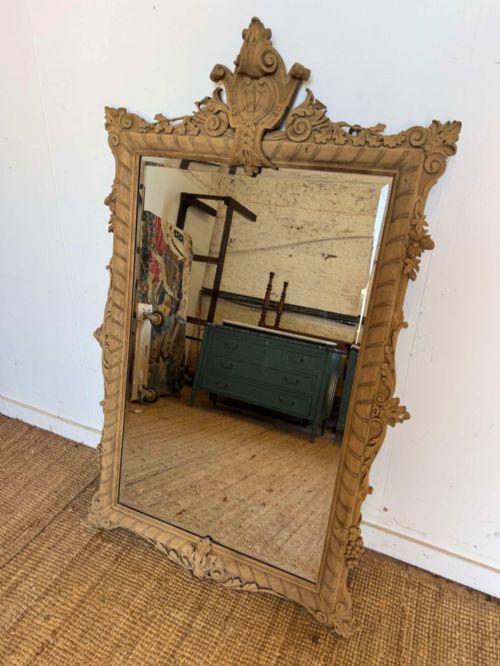
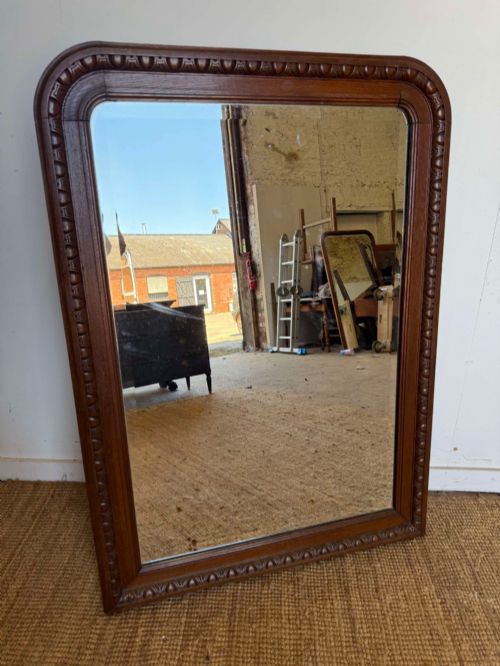
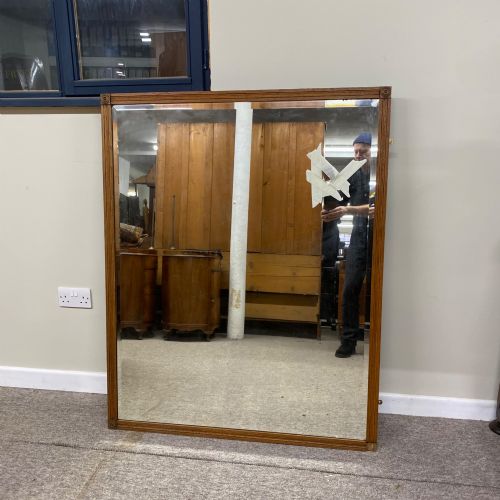
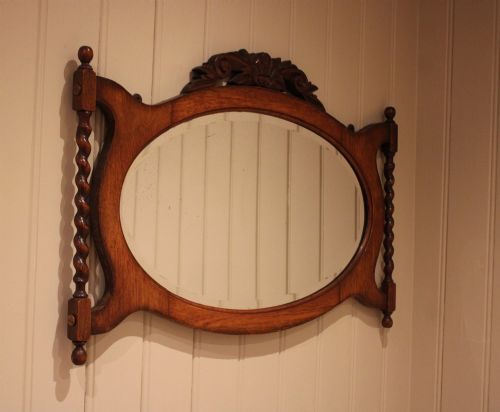
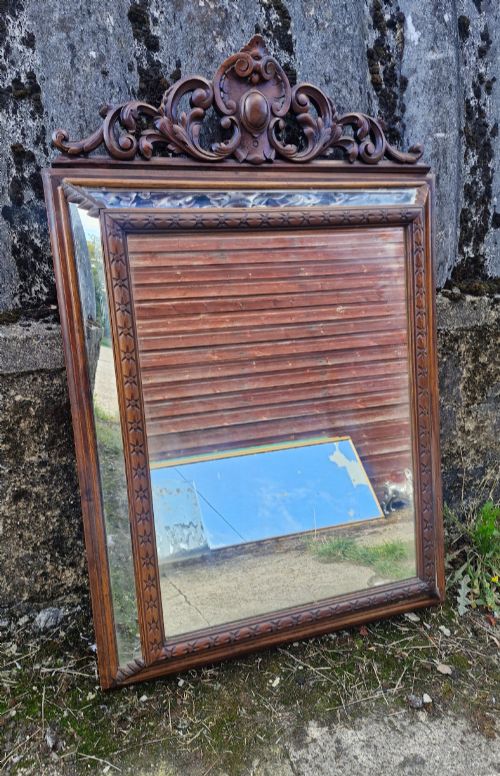
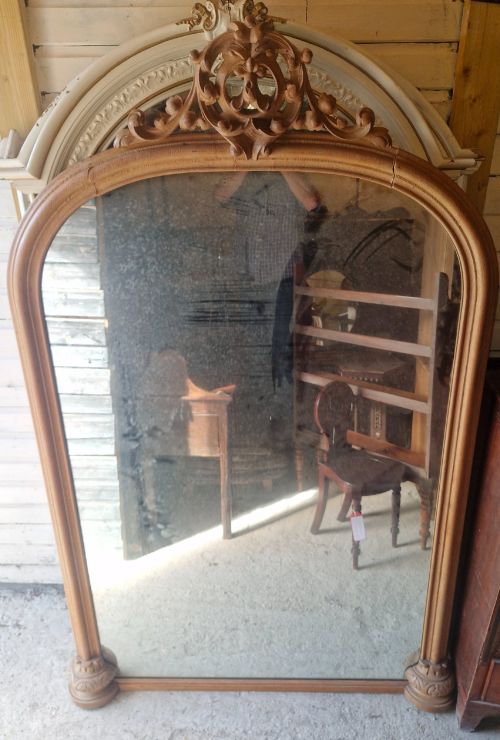
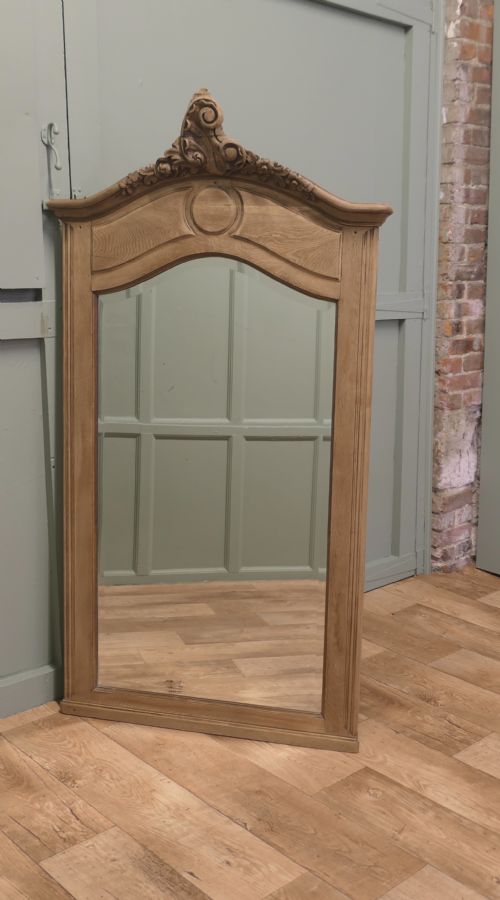
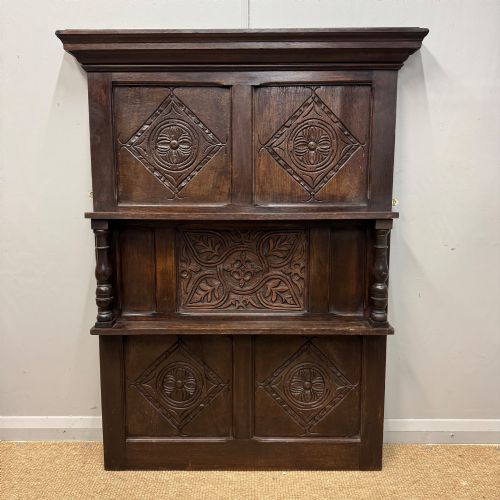
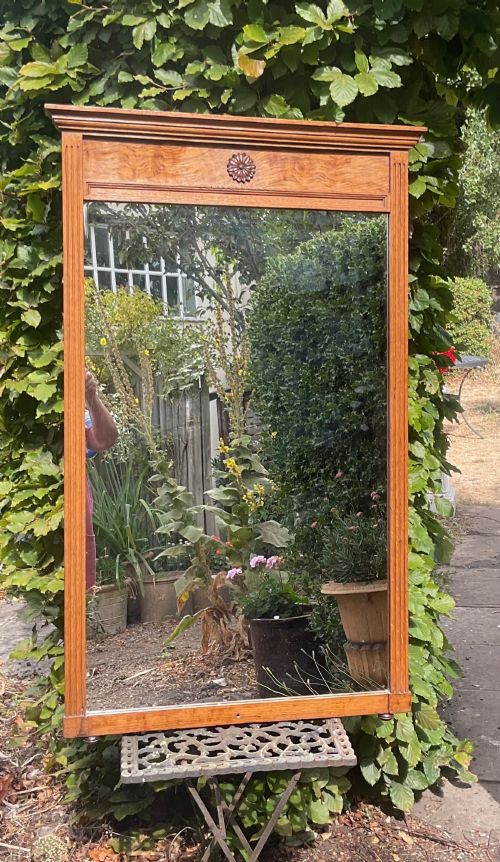
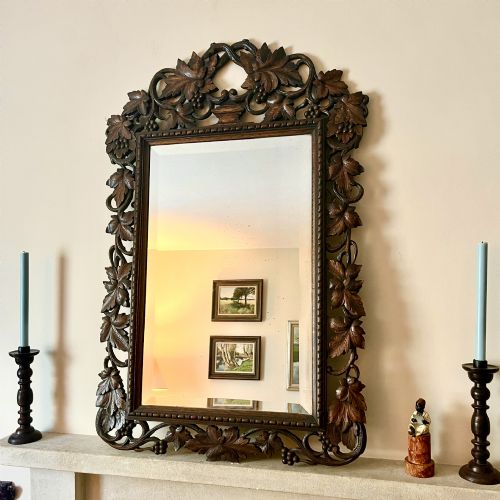
A carved oak overmantel serves as a substantial architectural focal point designed to sit directly above a fireplace mantel. These pieces primarily manifest as heavy wooden wall mirrors or intricate carved panels depicting heraldry, mythical beasts, and floral motifs.
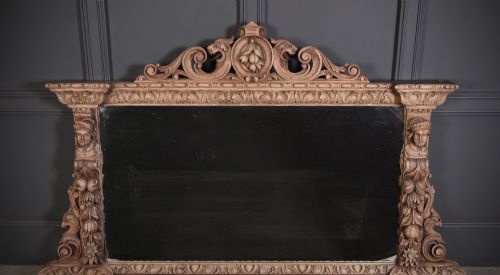
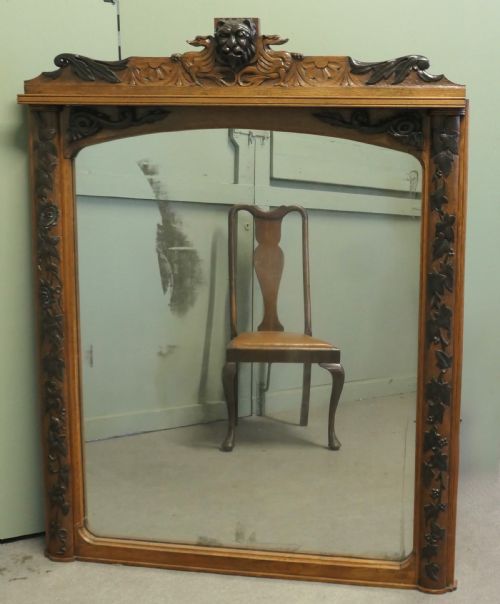
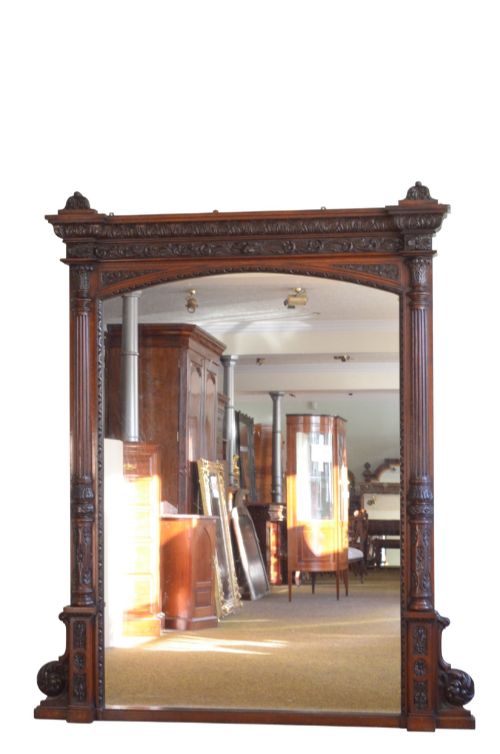
The selections available range from sturdy Victorian and Edwardian examples to earlier 17th-century panels and French provincial designs. Buyers frequently encounter large mirror frames flanked by columns, alongside horizontal panels bearing intricate carvings of griffins, lions, and Green Men.
Origins stretch across English country houses, French chateaux, and Gothic revival workshops. The dominant forms rely on solid oak timbers, often displaying deep bevelled mirror glass or dark patinated relief work suited to grand interiors.
Materials and construction
Carpenters utilised dense heartwood oak, sometimes treated as pollard oak, bleached oak, or scrubbed oak to achieve varied surface tones. Timber frames were constructed using traditional joinery methods to support the heavy weight of large glass plates and deep relief carvings.
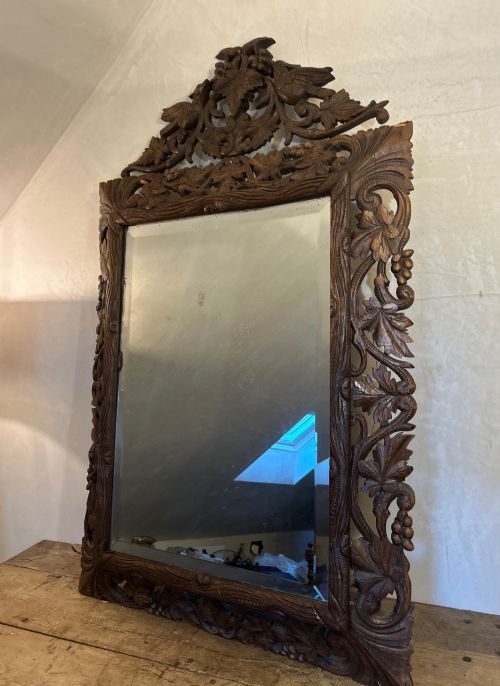
Hand-carving formed the central decorative technique, employing chisels and gouges to create three-dimensional motifs such as serpents, cherubs, and armorial bearings directly into the solid wood. Secondary materials include mirror glass, occasional walnut accents, and painted highlights.
Structural elements frequently incorporated side columns, pediments, and cushion frames to add architectural depth. The integration of glass involved secure rebates behind heavy wooden mouldings, ensuring stability for expansive wall installations.
Carved Oak Overmantel Retail Price Guide 2026
Typical asking prices for carved oak overmantel among the pieces listed under this phrase on Sellingantiques today, from the lower quarter to the upper quarter. They describe what is for sale here now, not the wider market.
Keep watch for mythical beasts and serpents lurking within the oak foliage, ready to guard your mantelpiece from mundane interior design.
Markers of distinction
Depth and clarity of the hand-carving separate standard production from master craftsmanship. Superior pieces exhibit crisp relief work on figures such as griffins and foliage, whereas lesser examples rely on shallow or mechanical stamping.
The integrity of the timber and the originality of the mirror glass dictate overall merit. Older silvered plates with natural foxing complement authentic 19th-century and earlier frames far better than modern replacements.
Proportion and architectural balance define the most desirable items. Grand proportions with integrated side columns or intact pediments command greater presence than plain, unadorned rectangular surrounds.
Liberty and Co·Rowley Gallery
The Carved Oak Overmantel Glossary
- Overmantel
- A mirror or decorative panel specifically scaled to hang on the wall directly above a fireplace mantelpiece. These fixtures often incorporate wide frames and heavy cornices.
- Green Man
- A sculptural motif depicting a human face carved with leaves, vines, or branches sprouting from the mouth. This ancient symbol frequently appears on Gothic and Victorian woodwork.
- Cushion Frame
- A convex, rounded wooden frame profile that swells outward toward the outer edge. This style creates a strong sense of volume around central mirror plates.
- Pediment
- The triangular or decorative architectural crown situated at the top of an overmantel. It draws the eye upward and adds a formal classical structure to the piece.
- Pollard Oak
- Timber harvested from trees that have been pollarded, producing a heavily knotted and highly figured grain pattern. Cabinetmakers prized this wood for decorative veneer and solid panels.
Carved Oak Overmantel: Frequently Asked Questions
How do I hang a heavy overmantel safely?
These pieces possess substantial weight due to dense oak timbers and thick mirror glass. Secure the frame directly into wall studs using heavy-duty brackets rated for the load.
Professional installation remains essential to prevent movement and protect both the plaster and the antique timber frame over time.
Were these always meant for above fireplaces?
Many examples were specifically built as overmantels to unify the fireplace wall with the rest of the room's woodwork. Their horizontal proportions and decorative pediments matched the scale of domestic hearths.
Others functioned equally well as grand wall mirrors or architectural salvage panels within hallway spaces and dining rooms.
How do I care for antique oak?
Maintain the timber by applying a neutral beeswax sparingly to nourish the dry grain and preserve the patina. Avoid modern silicone sprays or harsh chemical polishes that damage historic finishes.
Keep the piece away from direct heat sources such as active radiators to prevent the solid oak from splitting or warping.
What indicates a 17th-century panel?
Early panels display distinct tool marks from hand axes and chisels rather than modern mechanical saws. The oak exhibits deep oxidation, shrinkage cracks, and heavy grain patterns developed over centuries.
Motifs from this period often include stark geometric strapwork, armorial bearings, and stylized flora rather than Victorian gothic revival excesses.