

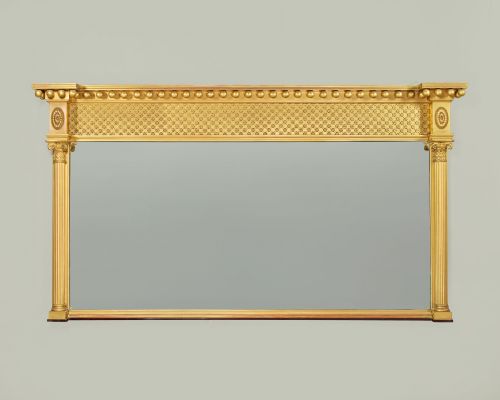


Carved Column Wall Mirror
A carved column wall mirror brings architectural weight and reflective depth to a room, drawing the eye with vertical lines.
Carved Column Wall Mirror
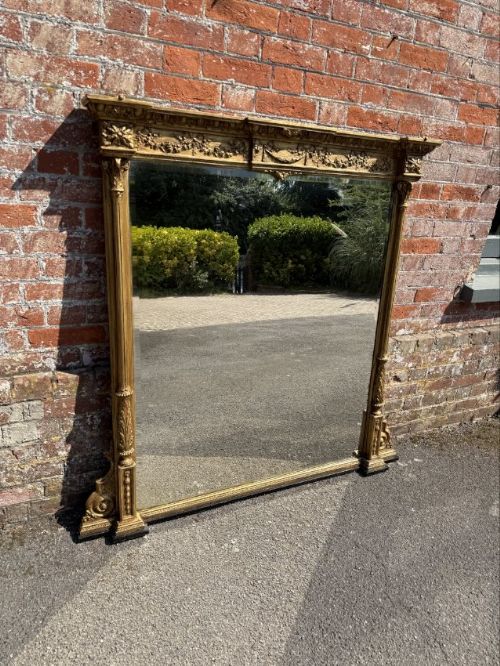
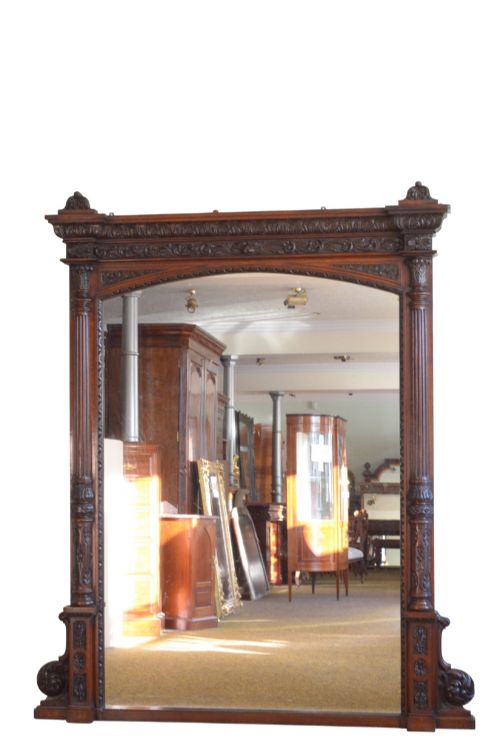
A carved column wall mirror unites structural framing with reflective glass, appearing frequently on this page as grand overmantels, pier mirrors, and vertical wall hangings. These pieces span the Georgian, Regency, Victorian, and Edwardian eras, encompassing both English workshops and nineteenth-century French designs.
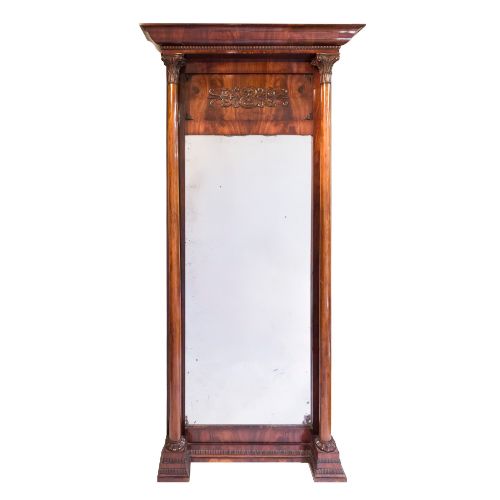
The primary forms on this page divide into expansive overmantels intended for fireplaces and tall pier mirrors designed for spaces between windows. Solid timbers such as mahogany and oak sit alongside gilded gesso surfaces and painted wood frames.
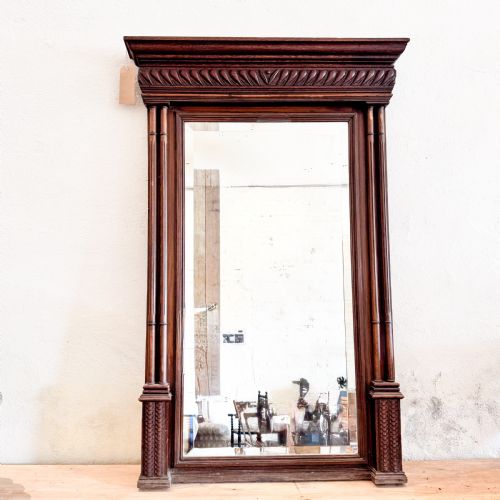
Makers utilised architectural vocabulary including half columns, ribbed columns, and Egyptian Revival details to structure the wooden or gilt frames. These mirrors function equally well above console tables or as standalone focal points in a hallway.
How they were made
Makers constructed these frames from solid timbers including mahogany, walnut, and oak, alongside softwoods built up with gesso for water gilding. Craftsmen carved fluted, ribbed, or plain columns directly into the wood or moulded them in gesso over a wooden base.
Surface decoration relied on gold leaf applied over bole, oil gilding, or traditional paint finishes on wood. Many mirrors retain original mercury glass plates, showing the subtle ageing and foxing characteristic of period manufacture.
What varies in quality
The distinction between ordinary and superior pieces rests on the crispness of the hand-carving and the depth of the gilding. High-quality examples display sharp acanthus leaf details, well-defined column capitals, and substantial timber frames rather than thin applied ornamentation.
Proportion and architectural balance separate standard items from exceptional ones. Finer mirrors maintain harmonious relationships between the column width, the frame moulding, and the original glass plate.
The Carved Column Wall Mirror Glossary
- Gesso
- A plaster-like mixture applied to wood frames as a base for carving and gilding. It provides a smooth surface that takes fine detail before gold leaf application.
- Pier mirror
- A tall vertical mirror designed to hang on the narrow wall space between windows, often placed above a console table.
- Overmantel mirror
- A wide horizontal mirror built to sit on the chimney breast above a fireplace mantelpiece.
- Mercury plate
- A glass mirror silvered using a tin and mercury amalgam before modern chemical silvering processes became common. It produces a distinctive reflective depth.
- Giltwood
- Timber that has been coated with gold leaf. It forms the primary finish for many formal nineteenth-century frames.
Carved Column Wall Mirror: Frequently Asked Questions
Where should I hang a pier mirror?
A pier mirror suits narrow wall spaces, particularly between two windows or above a console table where its vertical shape draws the eye upward.
Positioning it opposite a light source maximises the reflective surface and brightens darker corners of a room.
How do I identify a Regency mirror?
Regency mirrors often incorporate classical architectural motifs such as columns, acanthus leaves, and ball-decorated cornices. The framing frequently uses bright water gilding over gesso.
Proportions tend to follow strict neoclassical lines, distinguishing them from later heavily ornamented Victorian interpretations.
What is an overmantel mirror used for?
An overmantel mirror rests directly on the mantelpiece above a fireplace to reflect light and fill the large wall expanse. Historically, these wide horizontal pieces anchored the decorative scheme of a formal reception room.
They work equally well in modern interiors when secured safely to the wall above a sideboard or low chest.
Are original mirror plates common?
Many period pieces retain their original glass plates, which often display light foxing, minor speckling, and gentle distortions. These subtle signs of age confirm the historical integrity of the mirror.
Replacement glass appears in some pieces where the original silvering degraded beyond functional use.
How do I care for a gilded frame?
A gilded frame requires gentle dusting with a soft dry brush to protect the delicate gold leaf and gesso surface. Avoid liquid cleaners, modern polishes, and moisture, which can lift the historical finish.
Keeping the mirror away from direct heat sources prevents the underlying wood and gesso from expanding and cracking.