
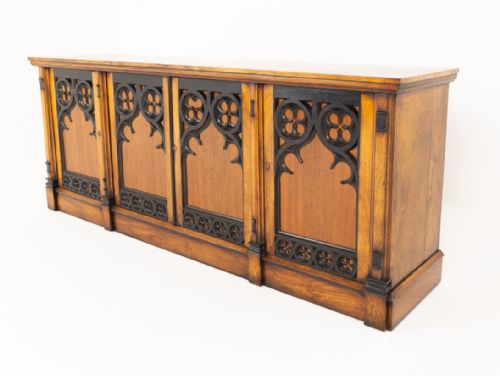


Large Oak Buffet
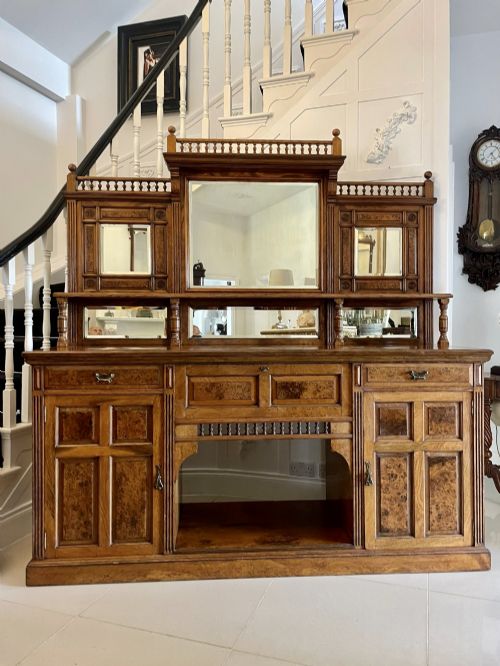
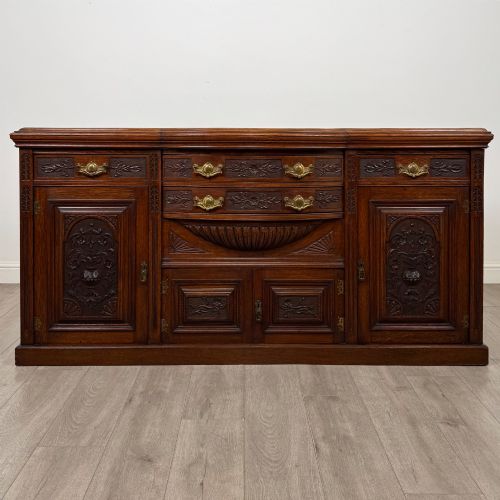
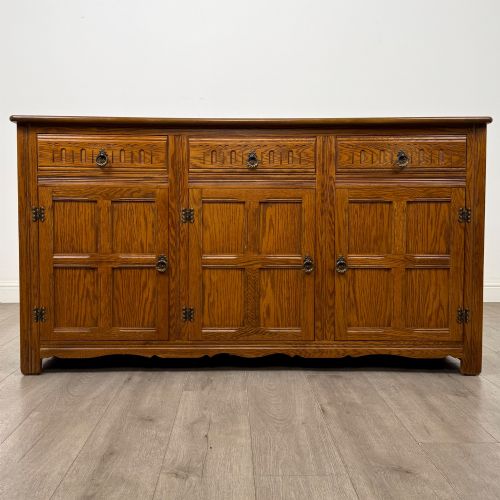
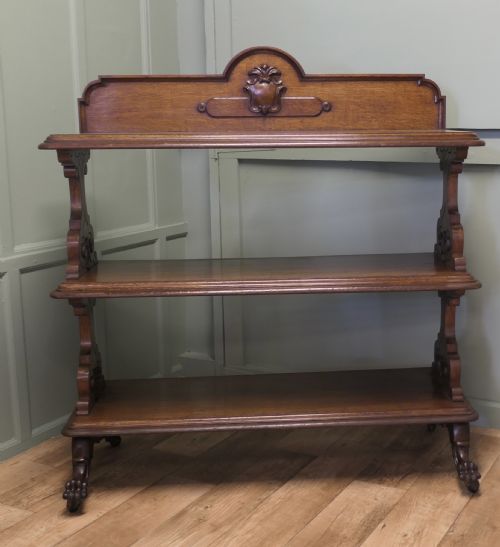
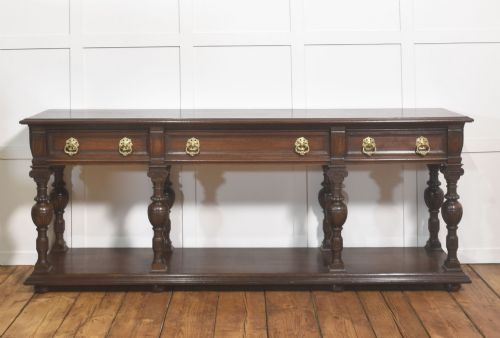
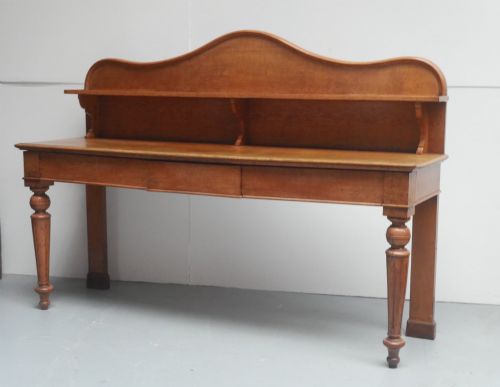
A large oak buffet anchors a dining room with substantial storage and heavy timber presence, spanning formal Victorian mirror-backed server designs to vernacular 18th-century country pieces.
Large Oak Buffet
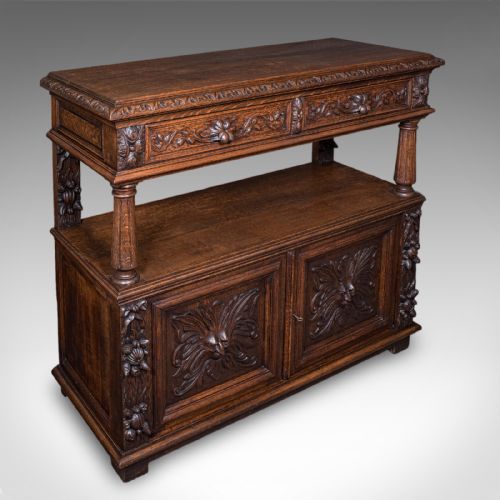
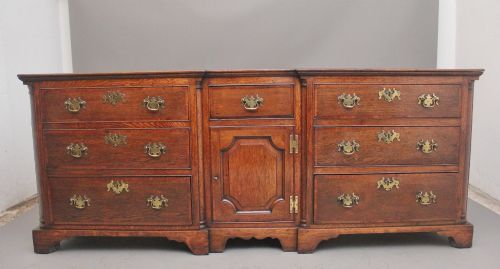
A large oak buffet encompasses substantial serving tables, mirror-backed Victorian sideboards, pedestal formats, and rustic 18th-century dresser bases found across British, Scottish, and French origins.
The pieces appearing most frequently on this page combine deep-toned timber, heavy proportions, and functional cupboard or drawer storage intended for formal dining rooms.
Makers and regional workshops throughout the nineteenth century adapted these server forms into Gothic Revival, Jacobean style, and Arts and Crafts aesthetics to suit changing domestic interiors.
Materials and construction methods
Carpenters utilised solid oak alongside distinctive veneers like pollard oak, applying hand-carved panels, linenfold details, and applied mouldings to large structural carcases.
Hardware frequently incorporated brass pulls, hinges, and occasional mirrored glass inserts, while bleaching or ebonising treatments altered the natural timber tone in specific Victorian and later periods.
Carved Green Man masks peer out from dense foliage across several Victorian panels, watching over the dining room.
Judging the standard of a buffet
Quality rests upon the depth and crispness of hand-carved ornament, the careful selection of figured oak grain, and the structural integrity of heavy panelled doors and drawers.
Superior examples display balanced proportions, original brass hardware, and integrated architectural elements such as mirrored backboards or tiered serving ledges rather than later additions.
Edwards and Roberts
The Large Oak Buffet Glossary
- Pollard oak
- Timber taken from the pollarded tree head, producing a dense, highly swirled grain pattern prized by Victorian cabinet makers for prominent door panels.
- Dresser base
- A low utilitarian table form featuring cupboards or rows of drawers beneath a solid top, frequently serving as an alternative to formal dining sideboards.
- Mirror back
- An upright wooden superstructure incorporating a bevelled mirror plate, designed to sit atop a sideboard base and reflect light within a dining space.
- Jacobean style
- A revival aesthetic drawing on 17th-century motifs, characterised by geometric paneling, strapwork, and heavy turned supports.
- Enfilade
- A long cabinet form originating in France, featuring a continuous run of doors and deep serving space across the front.
Large Oak Buffet: Frequently Asked Questions
How do I style a large oak buffet?
Pair the substantial timber weight with simple ceramic tableware, silver trays, or crystal decanters to balance the heavy presence of the piece.
Position the buffet against a plain wall in a dining room or spacious hallway where its proportions can command the room without crowding the circulation space.
What is the difference between a buffet and a sideboard?
Buffets traditionally emphasise serving space and tiered storage for food and drink service, whereas sideboards often incorporate more enclosed cupboards and drawers for cutlery and linen.
In practice, Victorian and Edwardian cabinet makers used these terms interchangeably depending on regional terminology and the inclusion of mirrored superstructures.
How do I date an oak buffet?
Examine the construction of the drawer linings, the style of the hardware, and the presence of revival motifs such as Gothic tracery or Jacobean strapwork.
Victorian pieces frequently feature heavy mirror backs and pollard oak veneers, while 18th-century dresser bases display simpler hand-planed board construction and peg joints.
Are these buffets suitable for modern kitchens?
The deep timber surfaces and extensive cupboard storage provide functional utility as freestanding kitchen islands or server units in contemporary open-plan spaces.
Ensure you measure both floor clearance and ceiling height, as mirror-backed and grand Victorian formats require substantial vertical and horizontal space.