

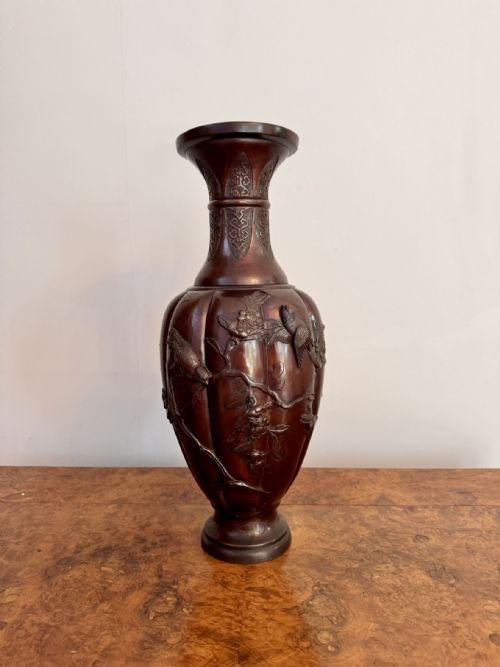
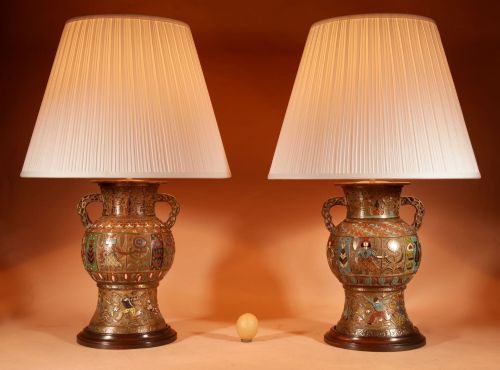
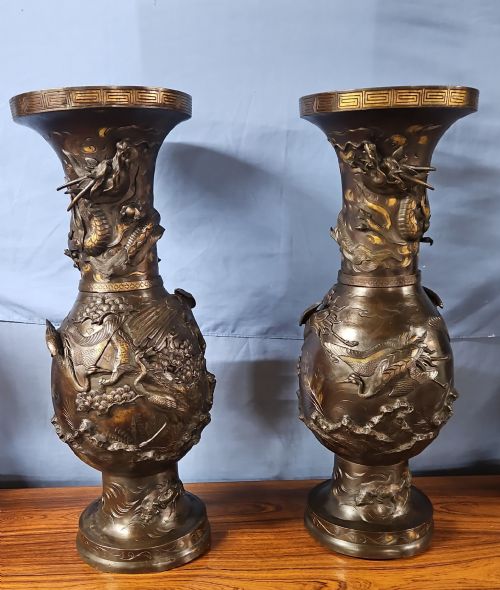


Large Meiji Bronze Vase
A large meiji bronze vase brings substantial weight and intricate metalwork into a room, serving as a striking focal point with its deep patination and cast ornamentation.
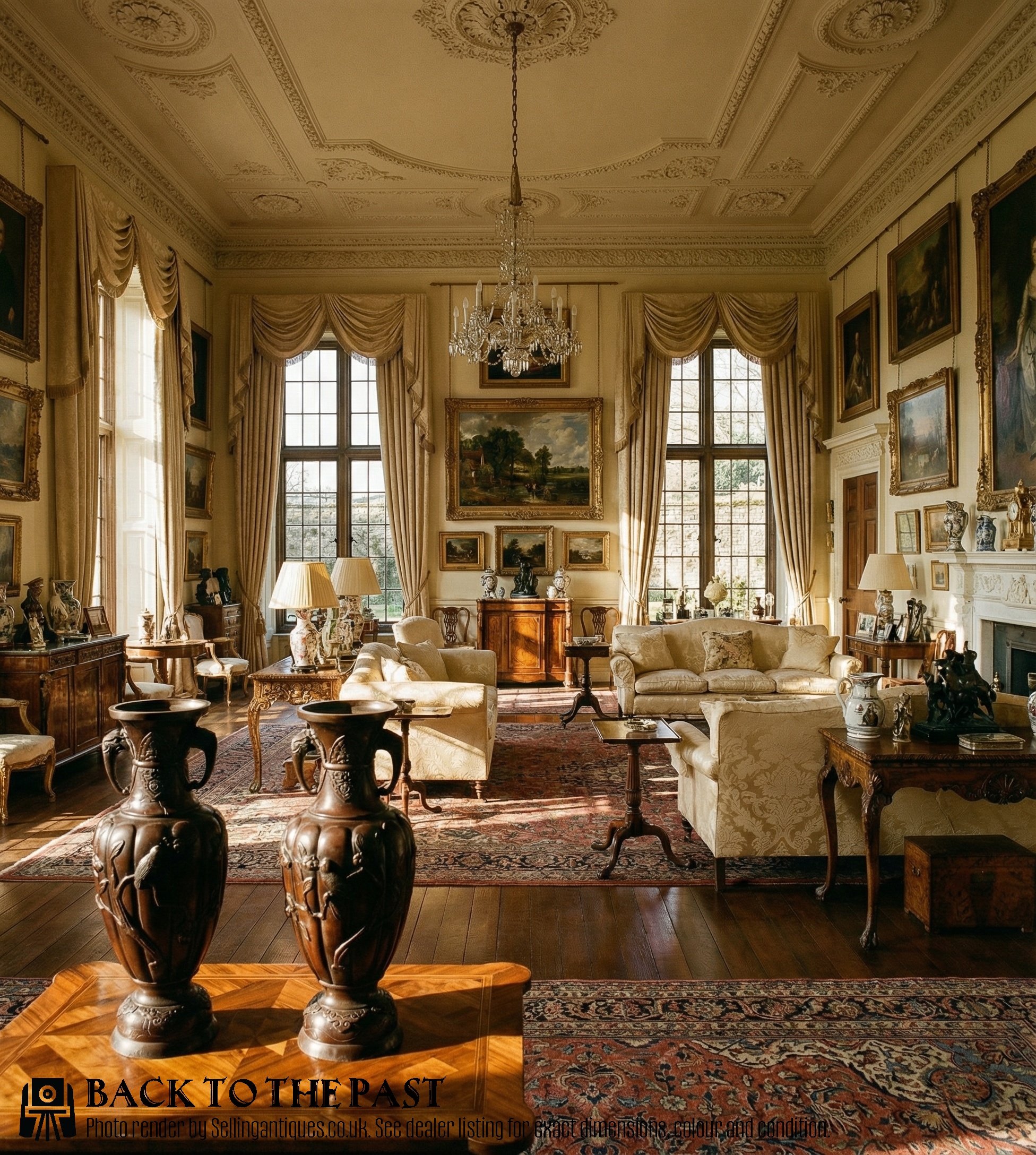
Large Meiji Bronze Vase
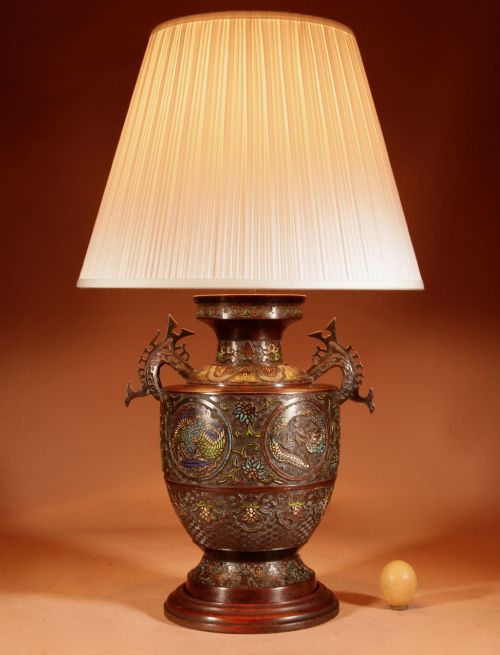
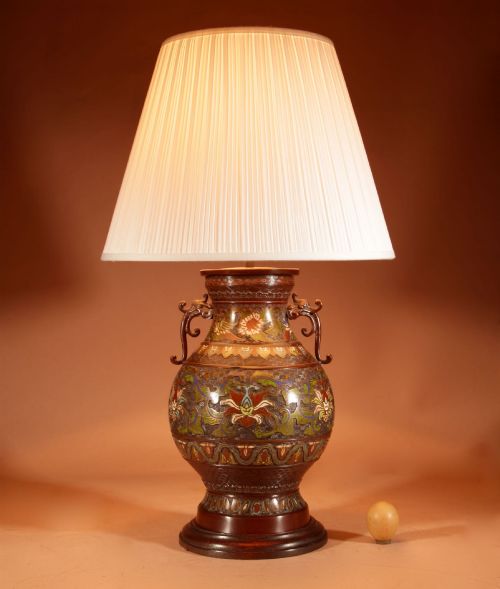
When searching for a large meiji bronze vase, collectors encounter substantial vessels originating from Japan during the late nineteenth and early twentieth centuries. These pieces span standard vases, urns, jardinieres, and table lamps that reflect the output of the Meiji period.
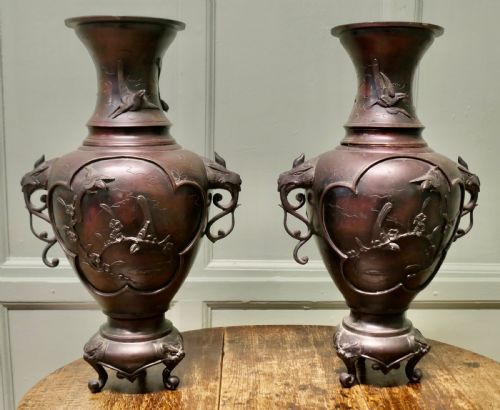
The selections available here range from single decorative vases to monumental pairs designed for garden or interior display. Many examples date from the 1890s and 1900, bearing the distinct aesthetic of the Meiji era through sculptural form and decorative surface work.
How they were made
Artisans utilised traditional casting methods in bronze, copper, and brass, creating sturdy vessels with considerable heft. These metal bodies frequently received dark patination treatments to accentuate the contours of the casting.
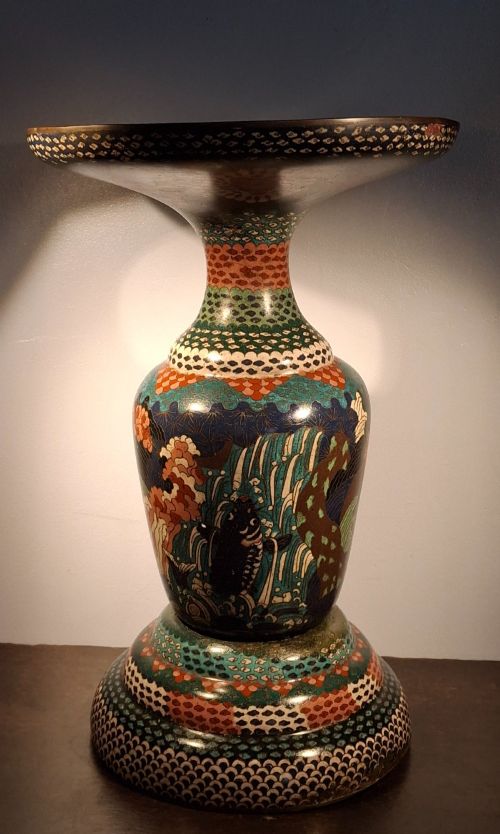
Surface ornamentation often incorporates mixed metal elements, gilt highlights, and champlevé or cloisonné enamel work. Selected pieces integrate wood components or display intricate inlays that complement the primary metal structure.
Large Meiji Bronze Vase Retail Price Guide 2026
Typical asking prices for large meiji bronze vase among the pieces listed under this phrase on Sellingantiques today, from the lower quarter to the upper quarter. They describe what is for sale here now, not the wider market.
Koi fish swim permanently across enamel surfaces, defying water and time alike.
What varies in quality
The upper tier of these vessels is distinguished by the crispness of the cast details and the depth of the patination. Master metalworkers achieved superior definition in floral, animal, and geometric motifs, whereas lesser examples show softer edges and simpler surface treatment.
Integration of mixed metals and enamel work also separates standard production from exceptional pieces. Skilled execution in cloisonné or champlevé requires precise compartment creation and smooth enamel finishes that elevate the overall presence of the vase.
Genryusai Seiya·Takusai Honma·Kanaya Gorosaburo XI
The Large Meiji Bronze Vase Glossary
- Meiji Period
- The era in Japanese history spanning from 1868 to 1912, characterised by openness to international trade and a surge in decorative arts production. Works from this time display high technical proficiency in metalwork.
- Patinated Bronze
- A bronze surface treated with chemicals or heat to produce a specific colouration, commonly deep brown or black. This finish protects the metal and highlights sculptural relief.
- Champlevé
- An enamelling technique where troughs or cells are chiselled directly into the metal surface and filled with enamel paste before firing. The surrounding metal lines remain visible as part of the design.
- Cloisonné
- A method of decorating metalwork objects using vitrified enamel held within compartments formed by soldered flat wires. Artisans apply multiple layers of coloured paste to achieve a smooth, vibrant finish.
- Usubata
- A specific form of bronze vessel traditionally used for ikebana flower arrangement, featuring a broad basin at the top and a columnar body. These objects provide stable footing for large botanical displays.
Large Meiji Bronze Vase: Frequently Asked Questions
How were large meiji bronze vases used?
These large vessels served primarily as decorative objects within domestic interiors, temples, and gardens. Many were manufactured specifically for export to Western markets during the late nineteenth century.
Some examples functioned as jardinieres for plants or were later converted into table lamps. Their heavy construction allowed them to hold substantial floral arrangements or stand independently as sculptural ornaments.
How do I date a meiji bronze vase?
Dating relies on stylistic markers, historical records, and occasionally inscribed signatures or dates on the base. Pieces from the Meiji period generally fall between the late nineteenth century and 1912.
Victorian import records and registration marks can help narrow down the period of arrival in Britain. Stylistic shifts from archaic revival designs to naturalistic motifs also provide chronological clues.
How do I care for antique bronze?
Dusting with a soft, dry cloth prevents the accumulation of particulate matter on the patinated surface. Avoid liquid cleaners or abrasive polishes that can strip the historic finish.
Maintaining stable indoor humidity protects any enamel inlays or wooden components associated with the vessel. Gentle handling is necessary due to the significant weight of these pieces.