





Large Mahogany Server Table
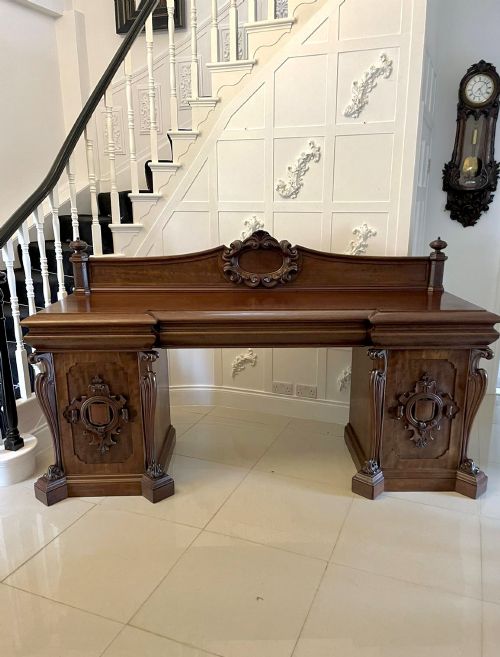
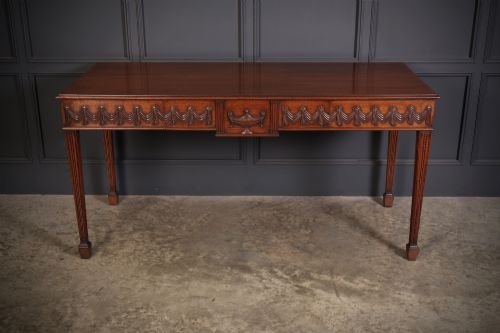
A large mahogany server table stands ready for dining rooms, built from dense tropical timbers to hold silver and service dishes.
Large Mahogany Server Table
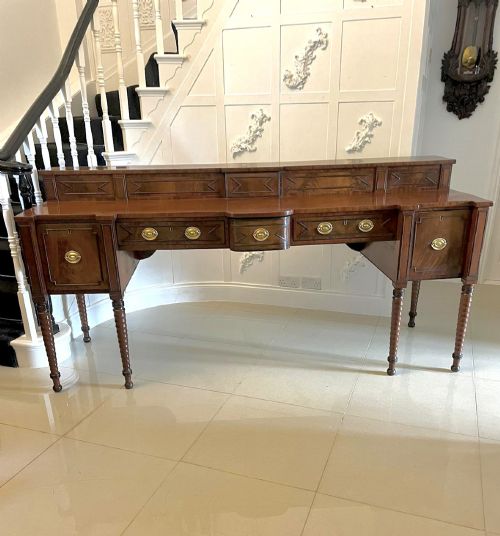
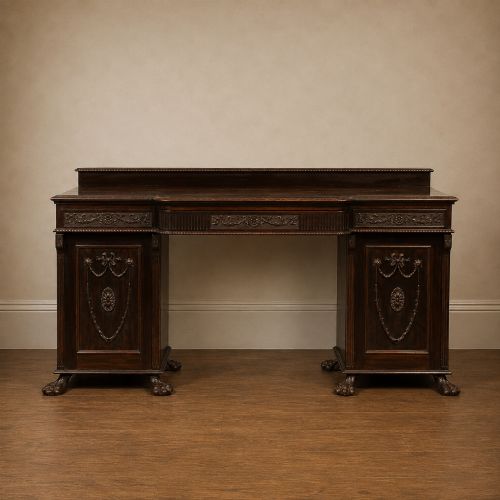
A large mahogany server table encompasses grand serving tables, sideboard servers, and console tables designed for substantial dining spaces. You will encounter pieces spanning the Georgian, Regency, and Victorian periods, alongside later Edwardian revivals.
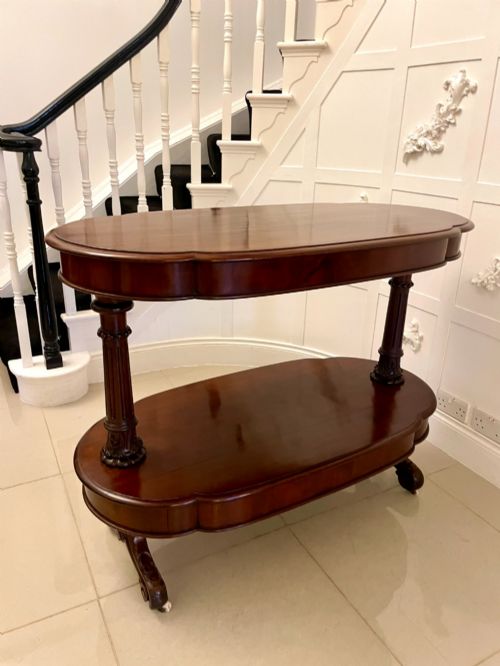
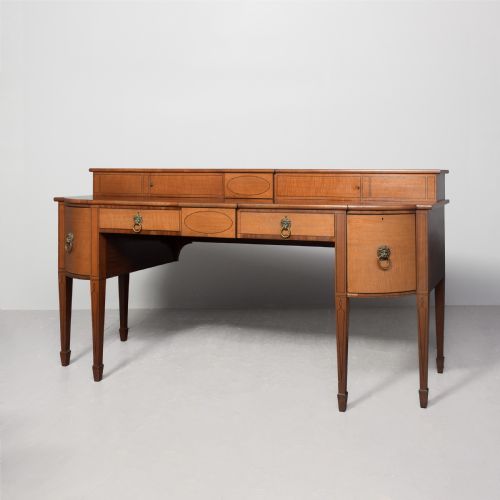
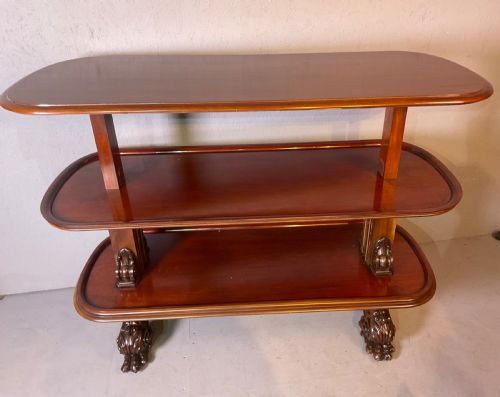
The selection ranges from stage-back sideboards and bow-fronted cabinets to freestanding oval console tables and multi-tiered dumb waiters. Whytock and Reid examples and Scottish pieces appear alongside English country house furniture.
These forms served the functional demands of large dining rooms, offering expansive top surfaces and deep storage carcases. The prevalence of George III and Victorian examples defines the core of what you see here.
Markers of distinction
Superior examples distinguish themselves through the choice of timber, particularly highly figured flame mahogany veneers and crisp satinwood or boxwood inlay. The depth and precision of hand-carved details, such as those found on Chinese Chippendale or Adam revival pieces, separate standard production from exceptional work.
Proportion and structural integrity govern the standing of a server table. Pieces retaining their original brass hardware, stable timber movement, and uncompromised structural frames represent the higher tier of cabinetmaking.
Large Mahogany Server Table Retail Price Guide 2026
Typical asking prices for large mahogany server table among the pieces listed under this phrase on Sellingantiques today, from the lower quarter to the upper quarter. They describe what is for sale here now, not the wider market.
Forms span sideboards, console tables, serving tables, and multi-tiered dumb waiters.
Whytock and Reid·Robson & Sons
The Large Mahogany Server Table Glossary
- Mahogany
- A durable tropical hardwood prized for its deep reddish-brown colour and stability in large furniture carcases. It accepts fine finishes and holds intricate carved details exceptionally well.
- Flame mahogany veneer
- A thin slice of wood cut from the fork of the mahogany tree to produce a flickering, flame-like grain pattern. Cabinetmakers applied this to prominent drawer fronts and door panels.
- Bow front
- A convex curved cabinet front that softens the linear geometry of a dining room wall. This shape required specialist joinery to bend or construct the framing timbers accurately.
- Dumb waiter
- A tiered freestanding serving stand used to hold dishes and utensils without requiring constant servant attendance. Examples range from revolving two-tier tables to large metamorphic designs.
- Stringing
- Thin inlaid lines of contrasting light timber, such as boxwood or satinwood, set into darker mahogany surfaces. This technique outlines drawers, borders, and table edges.
Large Mahogany Server Table: Frequently Asked Questions
How do I date a large mahogany server table?
Dating relies on observing structural characteristics, timber selection, and stylistic details tied to periods like the Georgian era or the Victorian age. Leg shapes, drawer construction methods, and inlay motifs provide reliable clues to the decade of manufacture.
Later Edwardian revival pieces often imitate earlier George III or Chippendale styles. Comparing the secondary woods and interior drawer construction helps clarify the true age of the piece.
Where were these tables placed in a home?
These large serving tables stood against dining room walls to hold heavy silver platters, serving dishes, and wine coolers during meals. Their substantial proportions anchored grand dining spaces and country house interiors.
Freestanding oval console tables and dumb waiters were positioned near dining tables for accessible service. Hallways and large reception rooms also accommodated these long console and side table formats.
How do I care for mahogany surfaces?
Maintenance involves dusting with a soft, dry cloth and applying traditional beeswax periodically to nourish the timber and preserve the polished finish. Avoiding direct sunlight and extreme temperature shifts prevents the mahogany from drying out.
Moisture should be wiped away promptly to protect the polish and underlying wood. Natural oils in the wax enhance the deep reddish tones of the mahogany over time.