
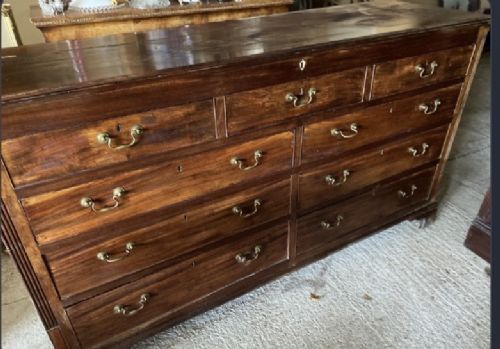
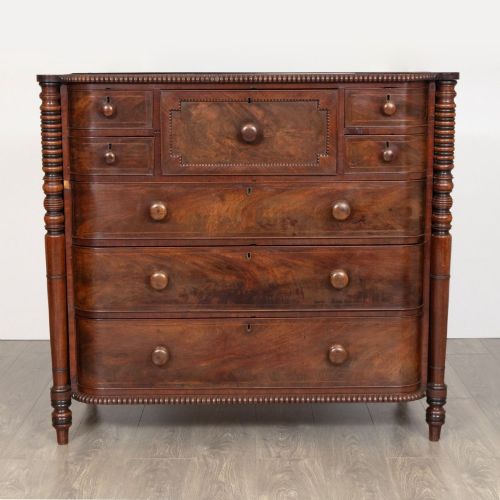
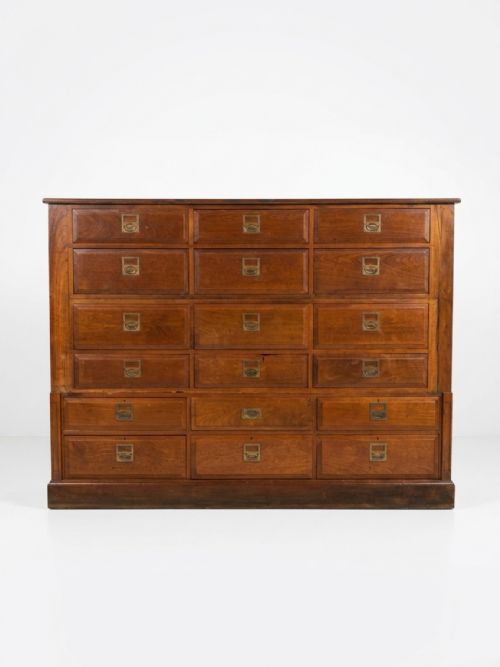
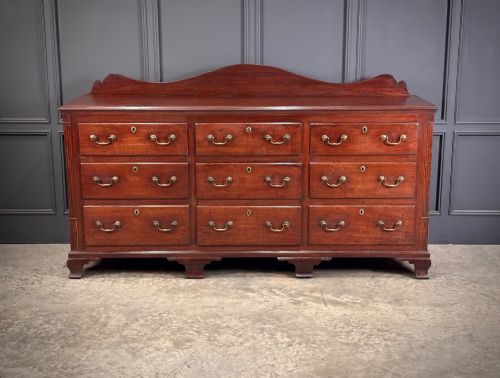



Large Mahogany Chest Drawers
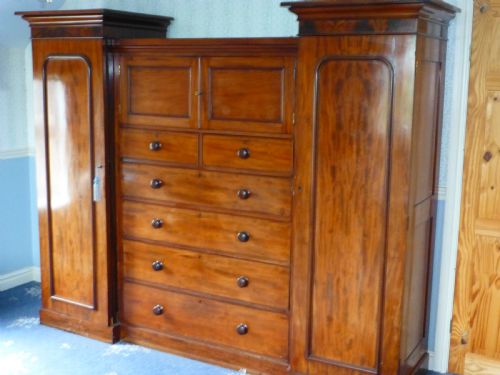
Large mahogany chest drawers offer substantial storage and commanding presence, forming the core of traditional bedroom and study furniture.
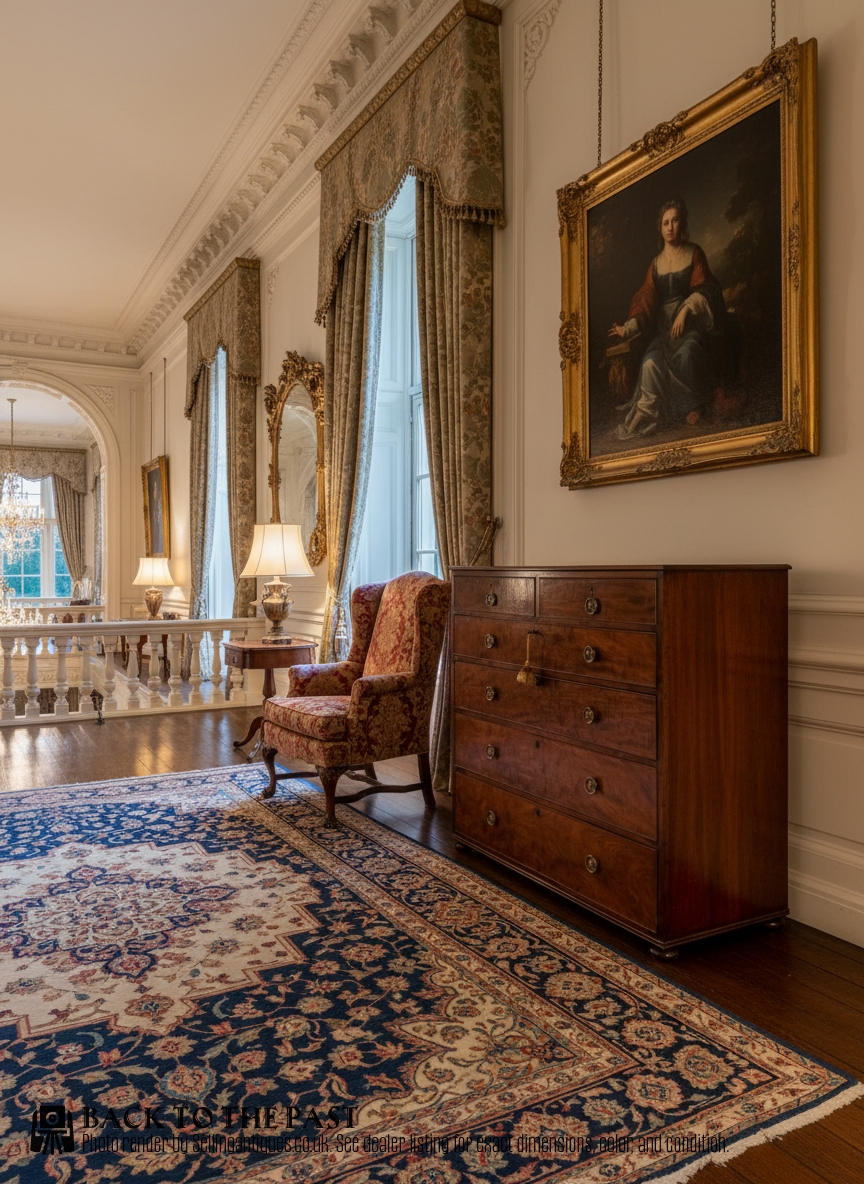
Large Mahogany Chest Drawers
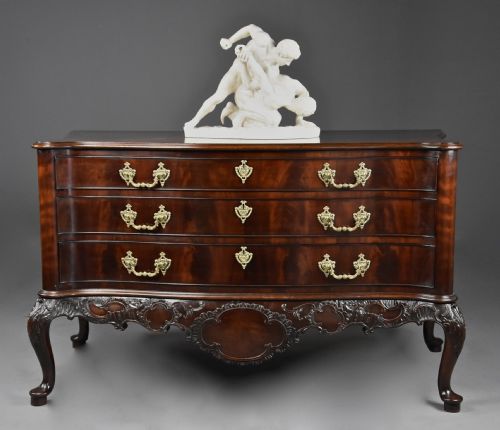
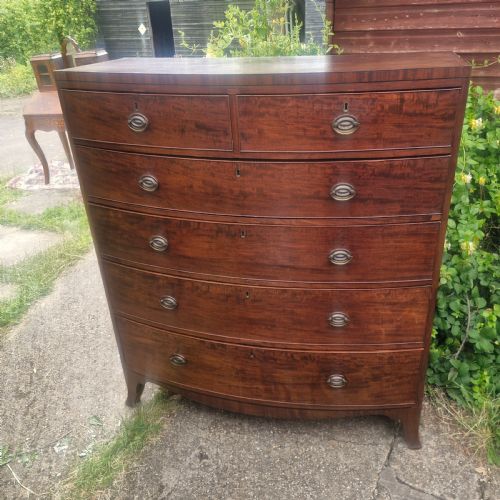
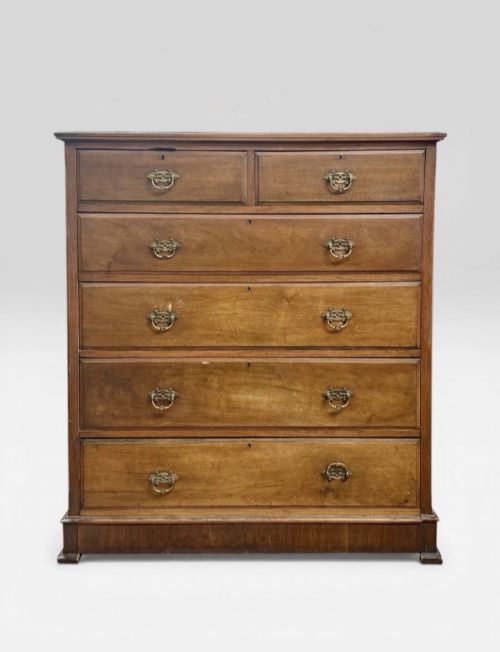
A large mahogany chest drawers serves as a principal storage item, built with deep proportions to hold substantial quantities of clothing or domestic goods. Buyers searching this phrase will find a high concentration of Victorian and Georgian examples, ranging from simple upright carcases to bow-fronted and serpentine shapes.
The dominant form met on this page is the Victorian chest, often featuring generous drawer arrangements alongside Scotch variations and tallboys. Pieces span from the eighteenth century through the Regency period and into the early twentieth century, showing both vernacular build and formal cabinet-making.
Beyond standard drawer configurations, related forms appear frequently, including mule chests, gentleman's chests, compactums, and specialist banks of drawers. These variations reflect the diverse domestic and commercial uses these large timber units fulfilled across different eras.
Materials and construction methods
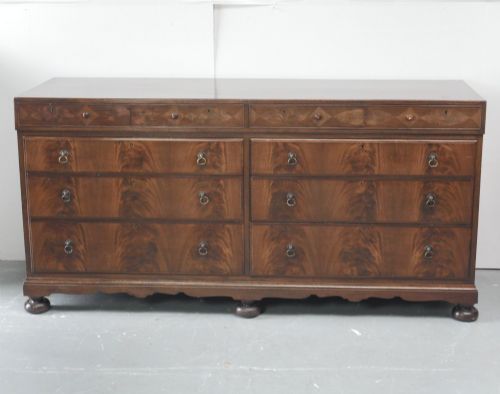
Makers utilised solid mahogany and flame mahogany veneer laid over secondary timbers such as pine and oak to build the structural carcase. Grain selection mattered deeply, with figured veneers matched across drawer fronts to create visual symmetry and depth.
Cabinet-makers incorporated brass handles, escutcheons, and occasional wood inlay to finish the exteriors. Drawers relied on hand-cut dovetail joints, ensuring durability under heavy daily use, while secondary woods lined the internal compartments.
Materials recorded across the archive include solid mahogany, flame mahogany veneer, brass hardware, pine, oak, and glass.
Distinctions in construction and finish
Quality rests in the handling of the timber and the precision of the joinery rather than mere scale. Superior pieces display carefully chosen flame mahogany veneers that wrap seamlessly around the drawer fronts and carcase sides.
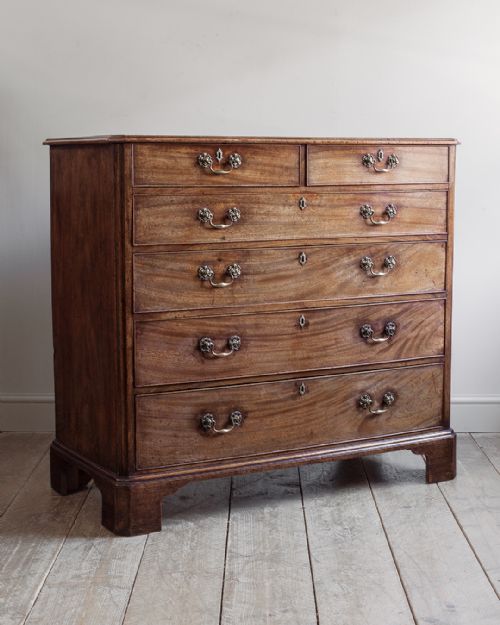
Finer examples retain original brass hardware, smooth-running dovetailed drawers with oak linings, and well-proportioned bracket or plinth feet. Lesser pieces may show heavy alterations, replaced hardware, or careless timber matching.
Whytock & Reid·Gillows
The Large Mahogany Chest Drawers Glossary
- Mahogany
- A durable, reddish-brown tropical hardwood prized for its stability and rich grain. It formed the primary exterior material for quality case furniture from the eighteenth century onwards.
- Bow-front
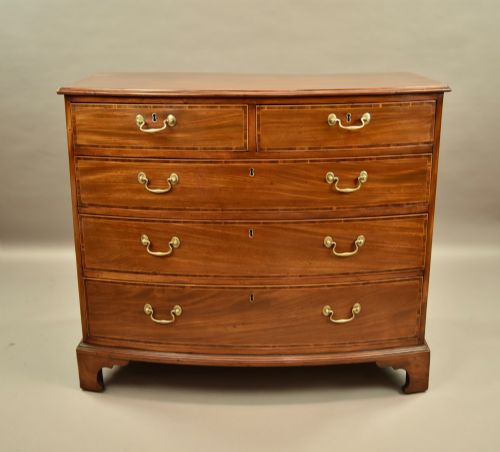
- A convex curved cabinet front that projects outward in the centre. This shape required advanced joinery to curve both the drawers and the supporting carcase frame.
- Flame mahogany
- A veneer cut from timber where the grain creates a distinctive, flickering flame pattern. Cabinet-makers reserved this expensive cut for prominent drawer fronts.
- Serpentine
- A horizontally undulating front shape featuring a convex centre flanked by concave curves. This sophisticated contour indicates high-status Georgian and revival furniture.
- Tallboy
- A tall chest of drawers, often constructed as one chest stacked upon another chest or base. This form maximised vertical storage space in bedrooms.
- Dovetail
- A traditional interlocking joint used to connect drawer sides to drawer fronts. Hand-cut dovetails indicate age and superior craftsmanship.
Large Mahogany Chest Drawers: Frequently Asked Questions
What is a Scotch chest?
A Scotch chest is a regional variation of the traditional storage unit, known for large proportions and frequently featuring a deep cushion drawer above standard tiers. These pieces often display striking flame mahogany veneers.
Originating in Scotland during the nineteenth century, they provide substantial capacity and command significant floor space in a bedroom setting.
How do I date a mahogany chest?
Dating relies on examining construction methods, timber choices, and hardware styles across the carcase. Eighteenth-century examples often feature fine hand-cut dovetails and bracket feet, while Victorian pieces tend to be heavier with plinth bases.
Secondary woods like oak point towards earlier periods, whereas pine backing and drawer linings become more common in nineteenth-century production.
What is a mule chest?
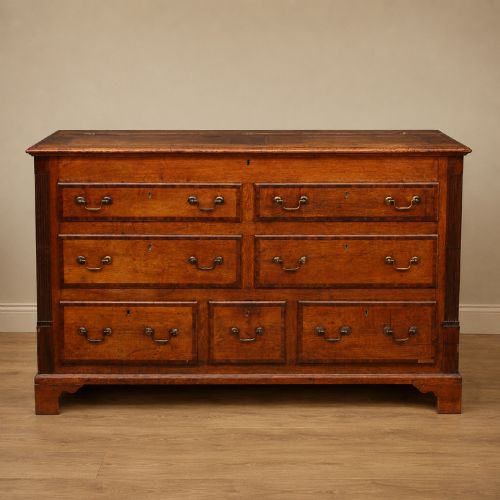
A mule chest combines the deep storage space of a traditional blanket chest with one or more working drawers built into the base. This hybrid form bridges the gap between coffer storage and drawer units.
Examples often incorporate crossbanding in oak and mahogany, reflecting transitional styles from the Georgian era.
How do I care for mahogany furniture?
Maintenance requires keeping the timber away from direct heat sources and strong sunlight to prevent the mahogany and its veneers from drying out or fading. Regular dusting with a dry, soft cloth preserves the polished surface.
Occasional application of appropriate wax feeds the wood and maintains the natural lustre of the grain without building up heavy residue.
What is a Wellington chest?
A Wellington chest is a tall, narrow set of drawers secured by a hinged locking side-bar that fastens with a key. This design protected the contents from unauthorized access.
Originating in the nineteenth century, these heavy units offer deep storage within a compact footprint, frequently constructed from highly figured mahogany.