
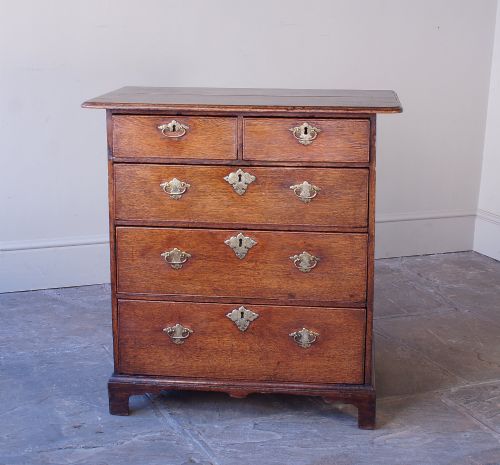
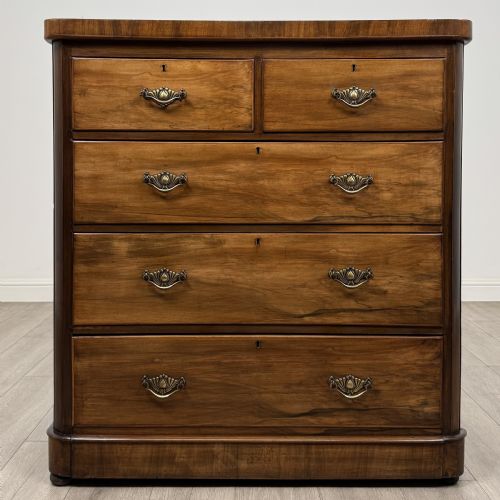
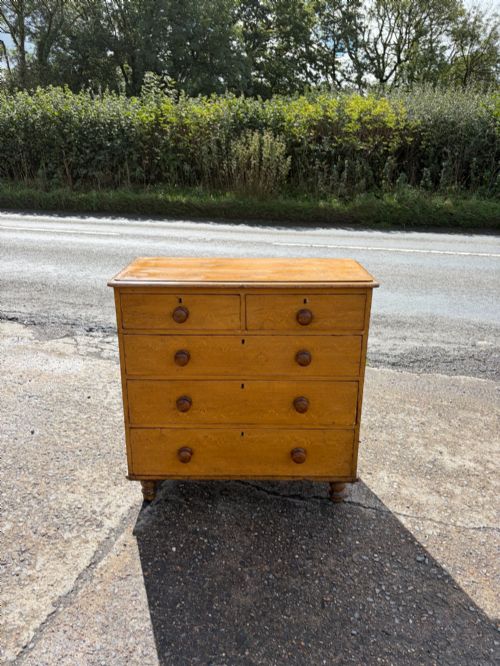
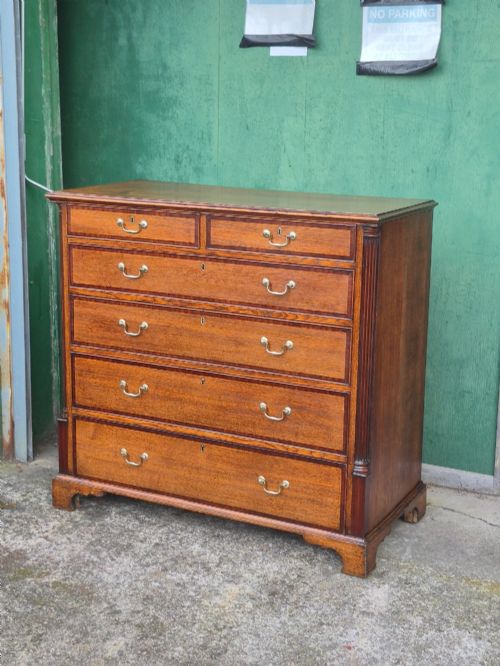


Two Short Three Long Drawers
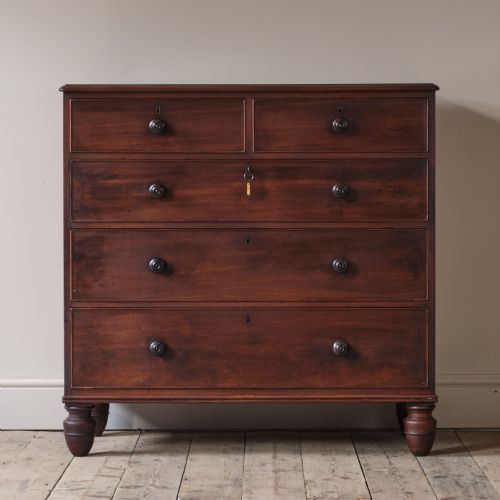
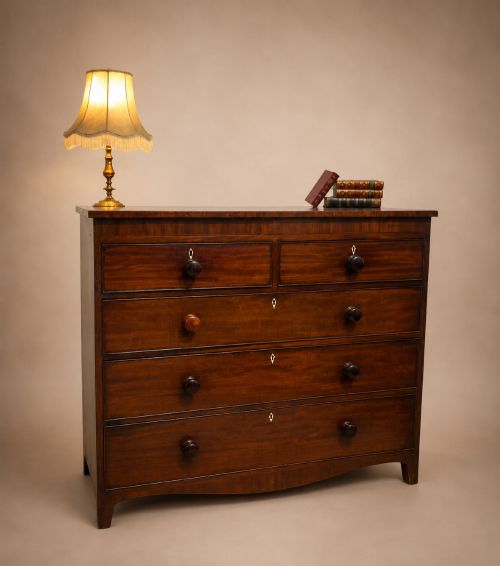
These two short three long drawers pieces are classic chests of drawers built in timber to hold your belongings in style.
Two Short Three Long Drawers
When you search for two short three long drawers, you find traditional chests of drawers arranged with a top row of two smaller compartments above three larger ones. This configuration appears across several centuries, offering a practical division for storing smaller items alongside bulky garments.
The pieces on this page span the Georgian, Regency, and Victorian eras, alongside earlier oak examples and later walnut designs. You will encounter forms constructed from solid timbers as well as figured veneers, reflecting the changing tastes of domestic furniture makers over time.
Most entries function as bedroom storage or hallway focal points, varying in proportion from compact country pieces to large urban examples. Oak and mahogany dominate the selection, often featuring graduated storage tiers that shrink in depth toward the top.
How They Were Made
Cabinet makers built these chests using solid hardwoods like oak, mahogany, and walnut, frequently applying fine flame mahogany or burr veneers to the primary display surfaces. Pine and secondary softwoods appear on interior drawer linings and backboards, joined using traditional methods.
Drawer construction relies on hand-cut dovetails to ensure strength at the corners, while brass handles and escutcheons secure the operational fronts. Selected examples incorporate turned wood feet or bracket supports to elevate the carcass from the floor.
Some chests hide secret compartments inside, designed to guard family fortunes from wandering hands.
What Varies in Quality
The quality of these chests rests on the selection of timber and the precision of the cabinet work, particularly in the figuring of the mahogany or walnut veneers. Superior examples display carefully matched grain patterns across the drawer fronts and tight, precise dovetail joints.
Hardware choice and foot design also distinguish finer pieces from simpler utilitarian items, with original brass drop handles and well-proportioned bracket feet indicating higher craftsmanship. The graduation of the drawer depths and the neatness of internal linings show the maker's attention to detail.
T & G Seddon
The Two Short Three Long Drawers Glossary
- Graduated drawers
- Drawers that decrease in depth progressively from bottom to top. This arrangement creates a balanced visual hierarchy on the facade of the chest.
- Bracket feet
- Small architectural supports positioned at the bottom corners of a piece. They lift the base off the floor and provide a stable foundation.
- Flame mahogany
- A veneer cut from timber where the grain creates a distinctive flickering, flame-like pattern. It was prized for decorative drawer fronts during the Georgian and Regency periods.
- Escutcheon
- A protective metal plate surrounding a keyhole. It prevents the surrounding wood from wearing down through repeated use of the key.
- Dovetail joint
- An interlocking woodworking joint formed by interlocking wedge-shaped fingers. It provides exceptional tensile strength for drawer construction.
Two Short Three Long Drawers: Frequently Asked Questions
How do I date a chest of drawers?
Dating relies on observing the timber species, construction methods, and overall style characteristics visible in the piece. Earlier examples often utilise solid oak or walnut, while later Regency and Victorian versions frequently introduce mahogany veneers and pine secondary woods.
Details such as foot design, handle hardware, and internal drawer joinery help narrow the period. Comparing the carcass proportions to known stylistic eras provides further confirmation.
Where should I place these chests?
These chests suit bedrooms, living rooms, and large hallways where substantial storage and surface space are required. Their vertical orientation makes them efficient for rooms with limited floor space.
Keep them away from direct heat sources and strong sunlight to protect vulnerable wood veneers and polished finishes. Proper placement ensures the timber remains stable over time.
Are these drawers suitable for daily use?
These cabinets function well for daily storage when handled with reasonable care and regular maintenance. The solid construction of historical drawers allows them to hold everyday items securely.
Ensure drawers are pulled evenly from the centre to prevent binding within the runners. Periodic waxing helps maintain the smooth operation of the timber components.