




Mahogany Bow Front Bureau
A mahogany bow front bureau offers refined storage and a practical writing surface, combining curved fronts with rich timber grains.
Mahogany Bow Front Bureau
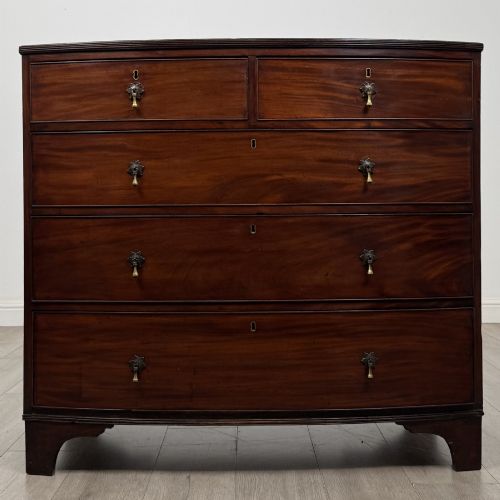
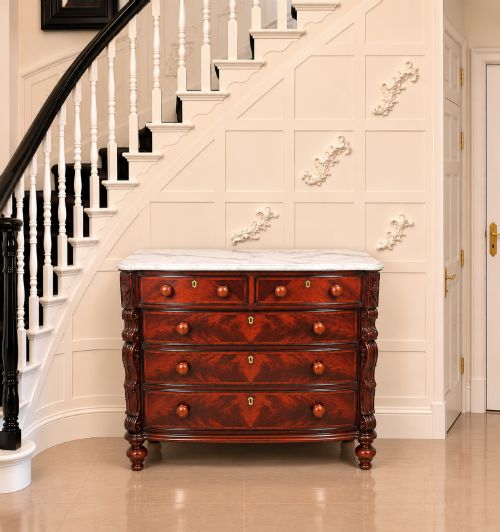
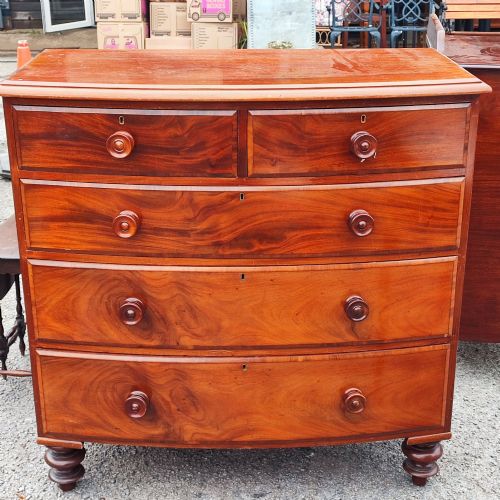
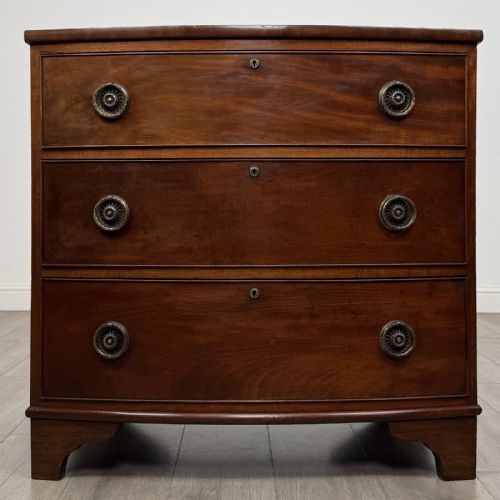
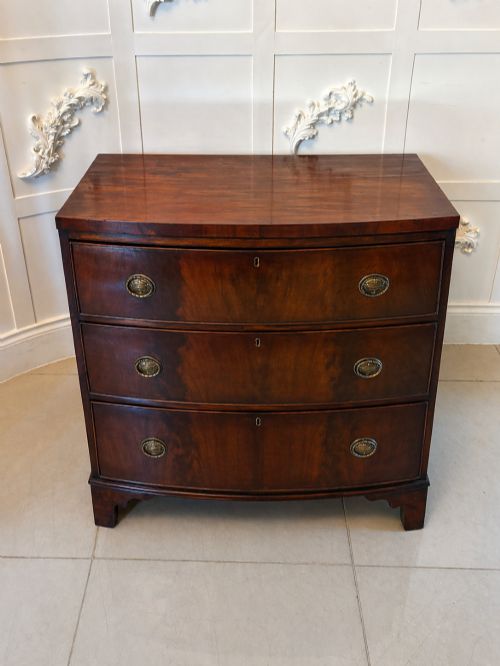
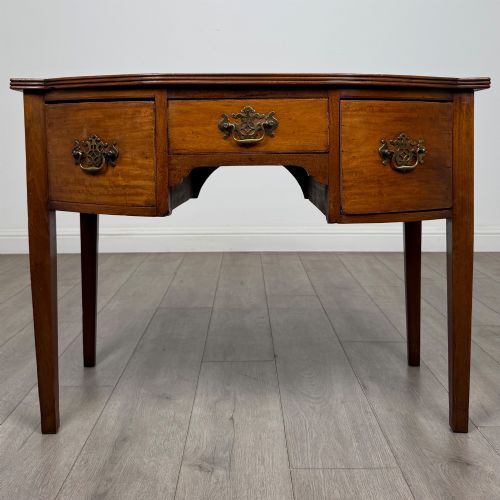
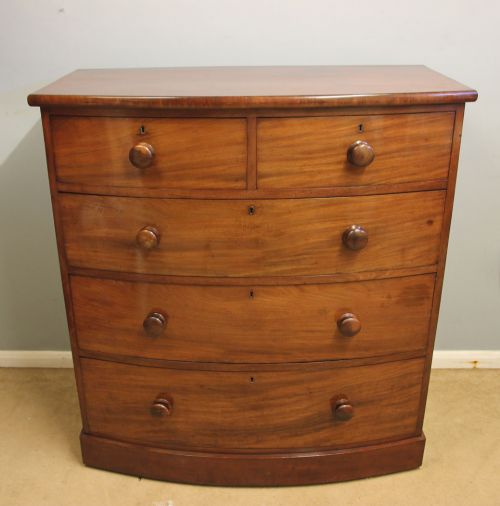
When you search for a mahogany bow front bureau, you are looking for case furniture featuring a convex curved front that projects outward, often housing a fitted writing compartment alongside multiple drawers. The pieces seen on this page span Victorian, Georgian, and Regency periods, appearing in forms such as chests of drawers, writing desks, and secretaire bookcases.
You are most likely to encounter Victorian and Georgian examples built from solid timber and rich veneers. These items combine domestic storage with functional writing surfaces, maintaining the signature curved profile that defines the category across the nineteenth century.
Quality variations
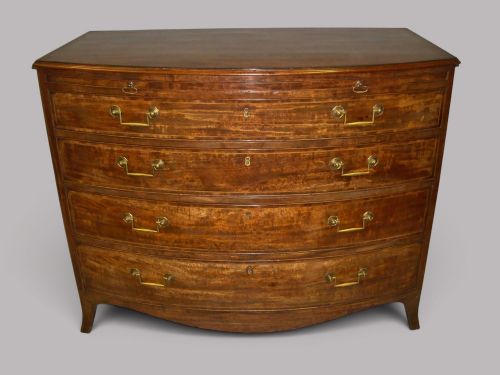
The standard of a piece depends heavily on the selection of the mahogany veneer, where highly figured flame grain or precise satinwood inlay elevates the visual impact. Superior examples display meticulous attention to the curved drawer construction and the seamless alignment of the timber grain across the front.
Original hardware, such as brass handles and intact interior fittings, contributes significantly to the integrity of the piece. The finesse of the edge banding and the crispness of any inlaid decoration distinguish workshop production levels.
Mahogany Bow Front Bureau Retail Price Guide 2026
Typical asking prices for mahogany bow front bureau among the pieces listed under this phrase on Sellingantiques today, from the lower quarter to the upper quarter. They describe what is for sale here now, not the wider market.
Every secret drawer hides past secrets.
Edwards and Roberts
The Mahogany Bow Front Bureau Glossary
- Bow front
- A convex curved front that projects outward from the centre, softening the geometric lines of a case piece. This curved profile requires skilled joinery to execute properly.
- Flame mahogany
- A highly figured veneer derived from the branch junctions of the mahogany tree, displaying characteristic flickering patterns. Cabinet makers prized this timber for its dramatic visual movement.
- Secretaire
- A piece of furniture incorporating a pull-down writing flap that conceals small drawers and pigeonholes. It merges the storage of a chest with the utility of a desk.
- Inlay
- The technique of embedding contrasting woods such as satinwood into the primary mahogany surface to create decorative borders. This ornamental detail marks more ornate cabinet work.
Mahogany Bow Front Bureau: Frequently Asked Questions
What is a bow front chest?
A bow front chest is a storage unit featuring a convex curved front that gracefully projects outward. This design softens the profile of traditional case furniture.
Such pieces typically provide multiple graduating drawers and were produced extensively during the Georgian and Victorian periods.
How do I use a bureau desk?
A bureau desk usually incorporates a hinged flap that folds down to create a horizontal writing surface. Inside, you find a collection of small pigeonholes and letter drawers.
When not in use, the flap closes to conceal your papers and maintain a tidy appearance in the room.
How do I date mahogany furniture?
Dating mahogany furniture involves examining the construction methods, secondary timbers used inside the drawers, and overall style characteristics. Georgian pieces often display hand-cut dovetails and simpler interior framing.
Later Victorian and Regency examples introduce heavier proportions, different handle styles, and more varied veneer selections like flame mahogany.
Where does flame mahogany come from?
Flame mahogany is cut from specific sections of the mahogany tree where the grain twists and turns, creating a fiery pattern. Craftsmen slice this wood into thin veneers to display the dramatic figuring across broad drawer fronts.
This decorative technique became a hallmark of high-quality cabinet making in the Regency and Georgian eras.