


Large Japanese Urns
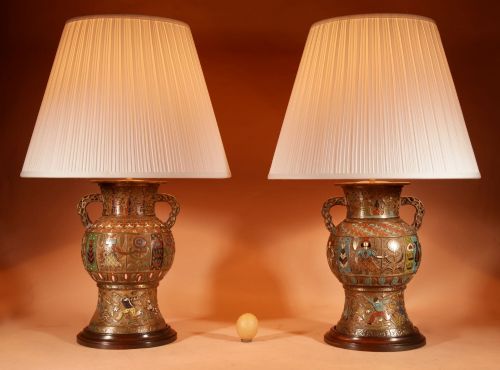
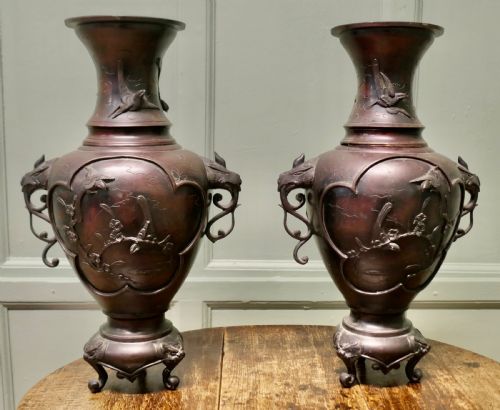
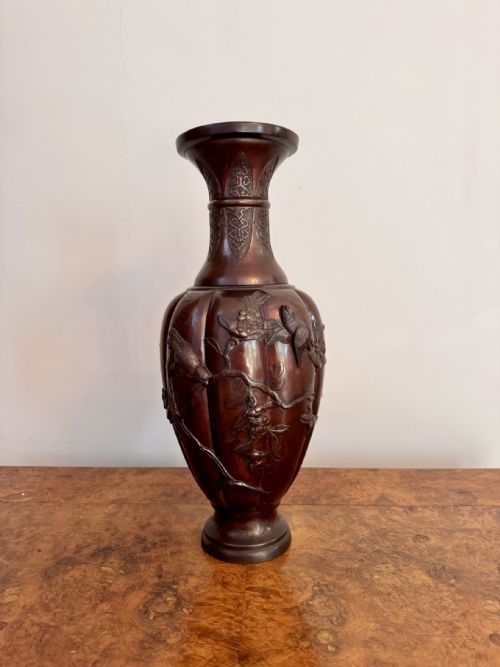
Large Japanese urns bring monumental presence and intricate artistry to a room, spanning bronze, porcelain, and cloisonné enamel from the nineteenth and early twentieth centuries.
Large Japanese Urns
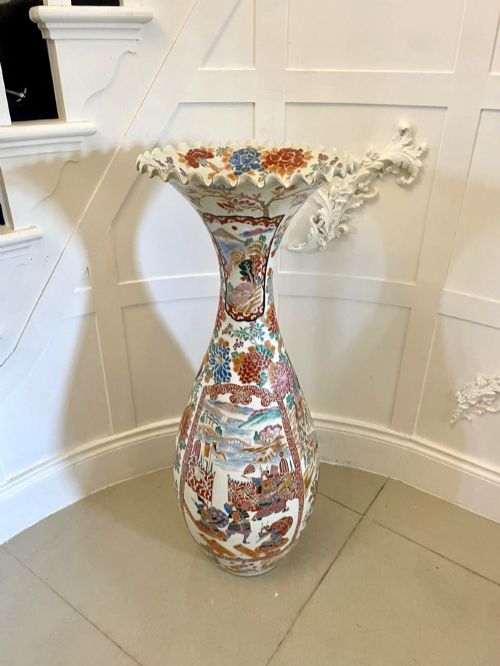
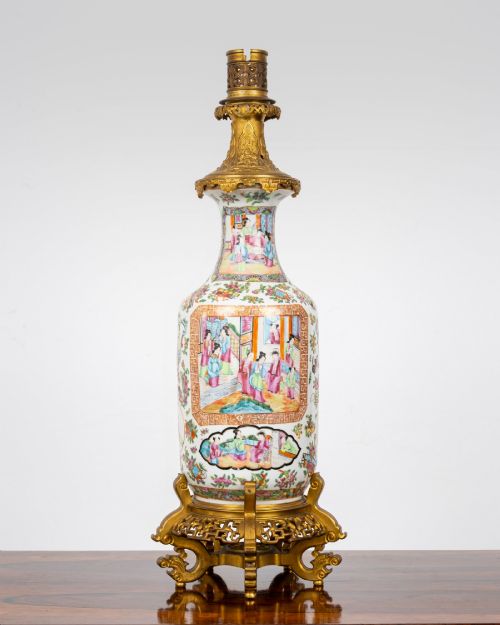
When you search for large Japanese urns, you encounter substantial vessels created primarily during the Meiji period, alongside Victorian-era imports and later Showa pieces. These objects take the form of floor-standing vases, garden planters, lidded temple jars, and palace vessels designed for grand display.
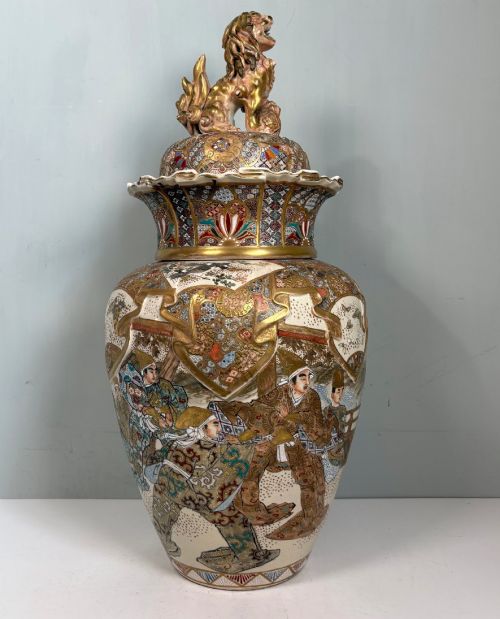
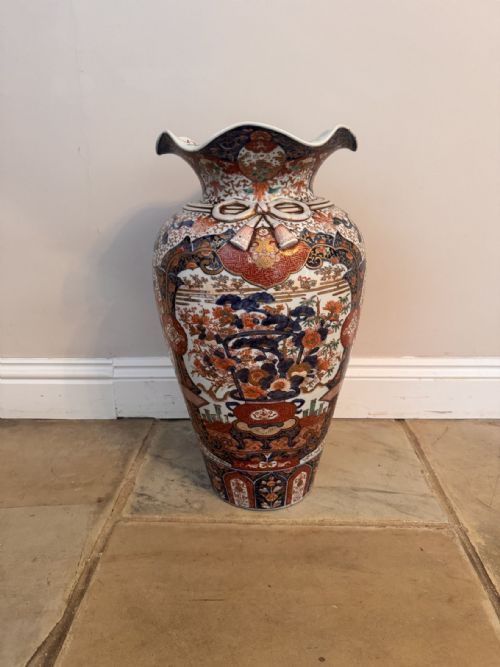
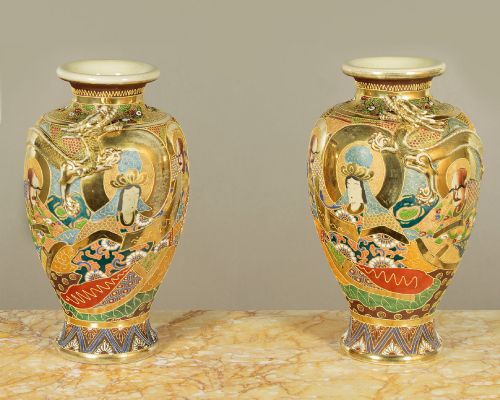
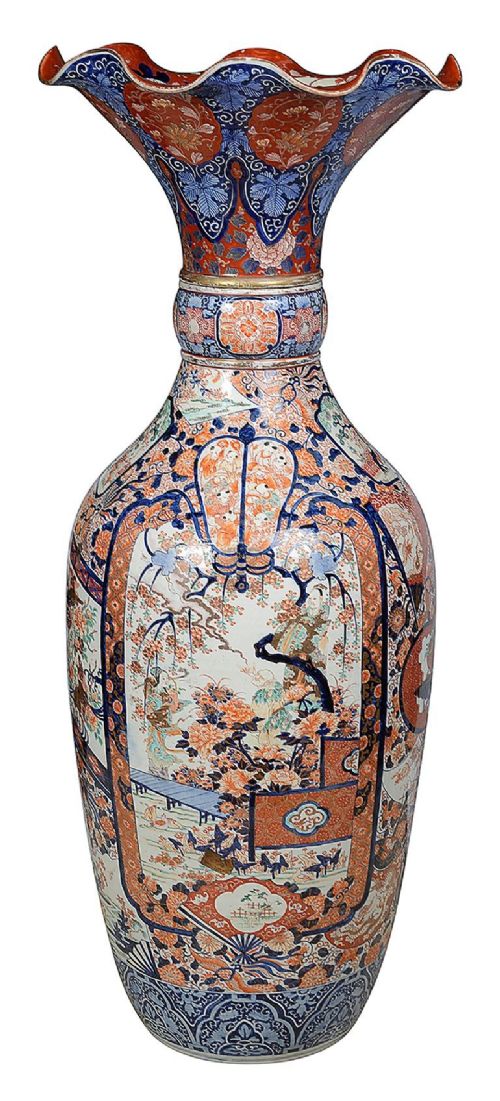
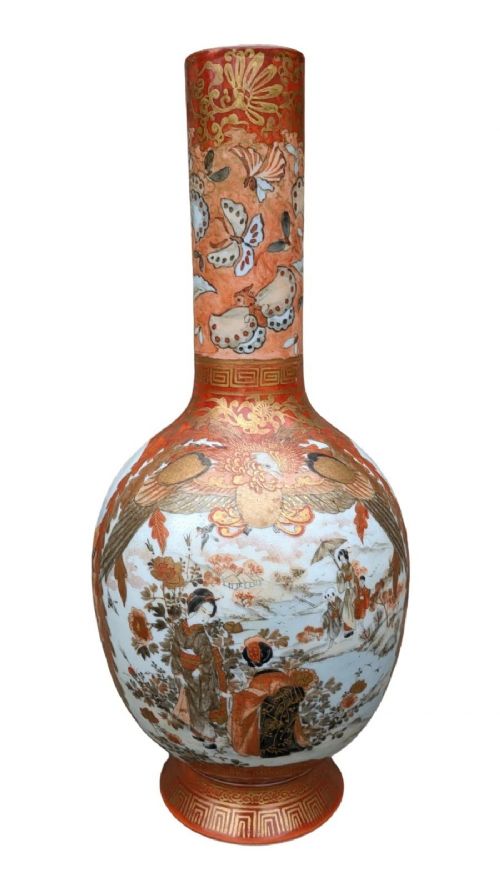
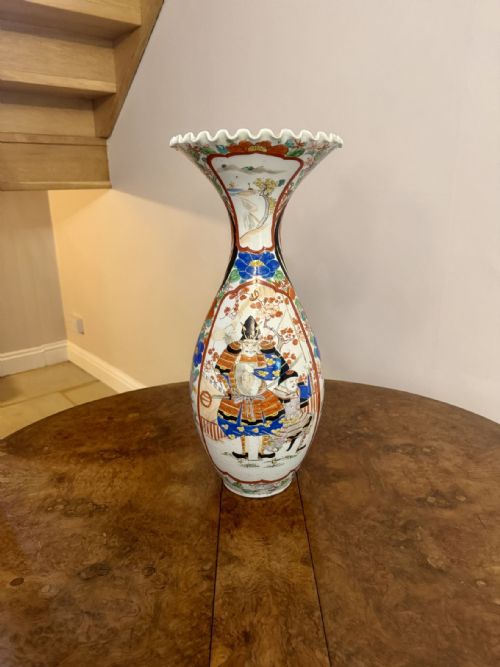
The versions you meet most frequently on this page are Imari and Satsuma ceramics, often standing alongside cast bronze and cloisonné enamel works. Many examples arrive as matched pairs, reflecting the symmetrical aesthetic favoured for interior decoration in the nineteenth century.
Makers and studios utilised diverse forms, ranging from hexagonal Satsuma bodies to towering Arita Imari floor vases and heavy bronze Usubata garden urns. These pieces bridge decorative arts and architectural scale, serving as focal points within traditional and contemporary spaces alike.
How they were made
Craftsmen shaped these vessels from high-fired porcelain, earthenware, and heavy bronze, frequently incorporating mixed metal elements, wood stands, and elaborate gilt mounts. Ceramic pieces required precise kiln control, particularly for complex Satsuma earthenware and iron-red and blue Imari glazes.
Decoration involved meticulous hand-painting with enamel and gold leaf, alongside raised moriage relief work and intricate cloisonné wirework. Bronze and mixed metal urns utilised sophisticated casting and patination techniques, while certain porcelain bodies incorporated detailed lacquer panels.
Kiln techniques allowed for monumental heights, requiring expert structural support during drying and firing to prevent collapse. Artisans then applied detailed pictorial narratives, depicting figures such as arhats, dragons, and phoenixes across the curved surfaces.
What varies in quality
The standard of painting and the precision of the glaze distinguish exceptional examples from standard production pieces. Superior works display confident brushwork, rich gilding, and finely controlled enamel colours that retain their vibrancy and depth.
Sculptural execution separates ordinary vessels from those bearing artist signatures or workshop attributions. The crispness of cast bronze details, the complexity of raised moriage work, and the structural integrity of matching original porcelain stands indicate the maker's mastery.
Scale and ambition dictate distinction, with monumental palace vases and garden temple vessels requiring advanced technical skill in both forming and firing. Complete pairings and original lids further elevate the standing of these large decorative works.
Hotoda·Makuzu Kozan·Kato Sanhei·Seiko-en Chokei·Kinkozan·Hattori
The Large Japanese Urns Glossary
- Imari
- A style of Japanese porcelain featuring a palette of underglaze blue, iron-red, and gilt highlights. This decorative tradition originated in Arita and proved immensely popular for export.
- Satsuma
- A type of earthenware with a characteristic ivory-coloured, crackle-glaze finish. Artisans typically decorated these surfaces with detailed polychrome enamels and extensive gold leaf.
- Cloisonne
- A metalwork technique where thin wire partitions are soldered to a bronze or copper body to create cells. These compartments are subsequently filled with enamel paste and fired.
- Moriage
- A ceramic decoration method using piped clay trailing to build raised relief patterns. This technique adds tactile depth and texture to Satsuma and Kutani vessels.
- Usubata
- A specific form of bronze vessel featuring a flat basin atop a fluted column and broad base. These pieces were traditionally utilised for formal flower arrangement.
Large Japanese Urns: Frequently Asked Questions
What is the difference between Satsuma and Imari?
Satsuma ware utilises an earthenware body with a fine crackle glaze, typically painted in soft polychrome enamels and extensive gold leaf. Imari consists of a harder porcelain body decorated in a distinctive palette of deep underglaze blue and iron-red.
Satsuma pieces often depict dense narrative scenes with human figures and deities, while Imari relies more heavily on symmetrical floral and geometric motifs designed for bold decorative impact.
How were large bronze urns used originally?
Heavy bronze vessels, such as Usubata, served both practical and decorative functions within Japanese interiors and gardens. They acted as formal containers for ikebana flower arrangements or stood independently as sculptural garden ornaments.
During the export boom of the Meiji period, many of these monumental bronzes found their way into European and American drawing rooms to project an air of exotic grandeur.
Do these urns require special care?
These large vessels require stable environmental conditions away from direct sunlight and extreme humidity fluctuations to protect glazes and delicate gold leaf. Dusting with a soft, dry cloth suffices for routine maintenance.
Heavy bronze and ceramic forms demand secure, level placement on sturdy surfaces or original stands to prevent tipping, given their substantial weight and height.
How can I identify the Meiji period?
The Meiji period spans from 1868 to 1912, a time when Japanese craft production shifted heavily toward international export markets. Pieces from this era often display exceptional technical ambition, combining traditional motifs with Western-scale grandeur.
Signature panels, artist chops, and specific workshop marks frequently appear on the base of Meiji ceramics and bronzes, aiding precise identification.