


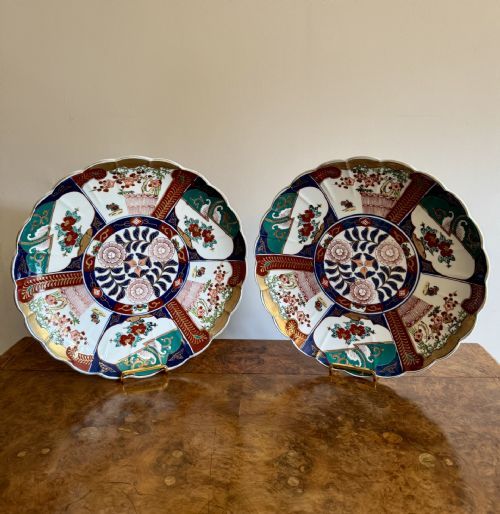


Large Japanese Porcelain Plate
A large Japanese porcelain plate brings bold palettes and commanding scale to a room, drawing the eye instantly to intricate painted detail.
Large Japanese Porcelain Plate
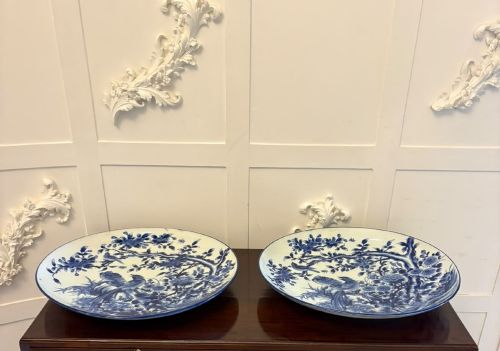
A large Japanese porcelain plate spans substantial diameters, frequently taking the form of decorative chargers, platters, and wall plates designed for prominent display. These pieces arrive primarily from the nineteenth century, including the Meiji and Edo periods, alongside later Victorian and Edwardian examples.
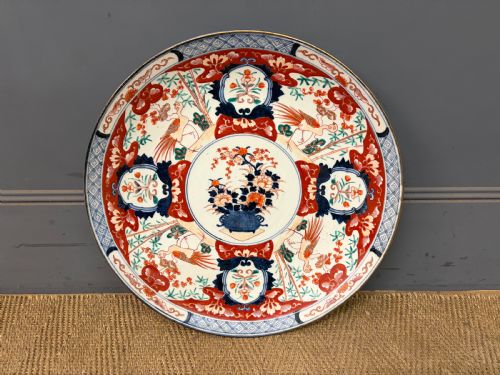
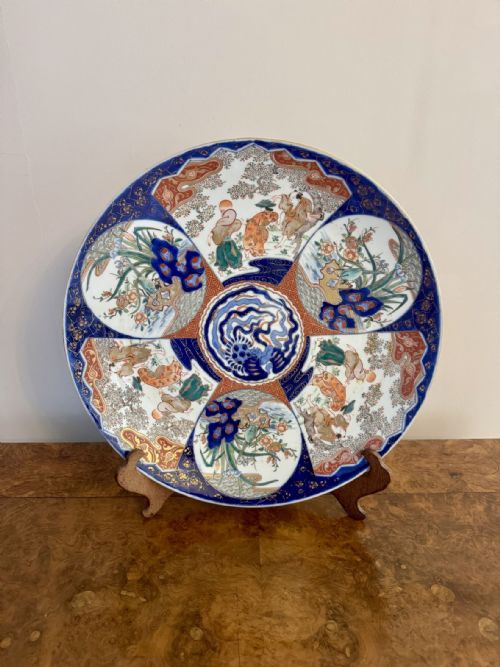
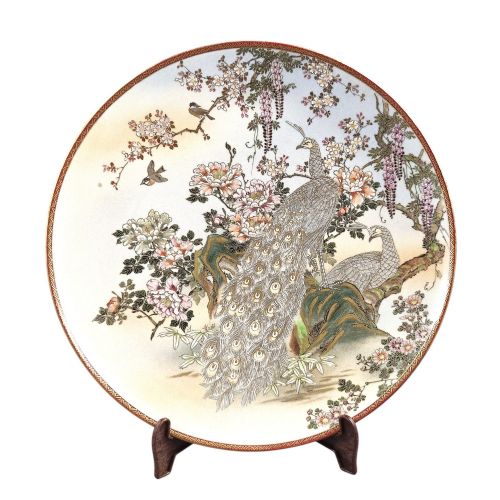
The dominant aesthetic belongs to the Imari tradition, defined by rich cobalt blue and iron red paired with gilt highlights. Alongside these, buyers encounter Satsuma moriage work, Kutani ware, and specialised Totai Shippo cloisonne on ceramic bases.
Forms range from traditional circular chargers with scalloped or smooth edges to square plates and fruit display platters. Most extant examples reflect late nineteenth century production, though earlier seventeenth and eighteenth century Arita pieces occasionally surface.
Materials and techniques
Makers shaped refined ceramic clay into wide plates and fired them to create a durable white porcelain body. Potters then applied cobalt blue underglaze before the initial firing.
Overglaze enamel colours, including iron red, green, and turquoise, were added in subsequent firings to build complex pictorial scenes. Artisans frequently applied gold leaf, gilt, and gold gilt details to accent the painted motifs.
Specialist techniques included moriage, which built up raised enamel relief patterns, and Totai Shippo, combining cloisonne wirework directly onto ceramic or tree bark textures.
Several plates depict koi carp swimming with such conviction that one almost expects a splash from the ceramic surface.
What separates the finest examples
Quality rests in the precision and density of the hand painted brushwork across the surface. Finer plates display crisp cobalt blues, neatly controlled enamel fills, and rich, unrubbed gold leaf details that retain their metallic sheen.
Composition and subject matter dictate the upper tier of the range. Pieces depicting complex figural narratives, such as the Seven Lucky Gods or detailed fauna like koi carp and peacocks, demand greater artistry than repetitive geometric borders.
The potting technique itself contributes to distinction, visible in the weight of the ceramic, the evenness of the glaze, and the presence of artist signatures on the reverse.
The Large Japanese Porcelain Plate Glossary
- Imari
- A traditional Japanese porcelain style originating in Arita, typically characterised by a palette of cobalt blue, iron red, and gold. These pieces were extensively exported to Europe from the seventeenth century onward.
- Charger
- A large decorative plate intended for display on a wall, cabinet, or table rather than for everyday dining. They provide a broad canvas for complex pictorial designs.
- Moriage
- A ceramic decorating technique that applies slip in raised dots or lines to create a tactile, three dimensional surface. It is frequently seen on Satsuma wares.
- Meiji Period
- The era of Japanese history lasting from eighteen sixty eight to nineteen twelve, marked by intense artistic production and increased export to Western markets. Pieces from this time often exhibit meticulous detail.
Large Japanese Porcelain Plate: Frequently Asked Questions
How were large chargers displayed?
Historically, large chargers stood upright on sideboard tables or hung directly on walls using specialised wire plate hangers. Their generous size made them focal points in Victorian and Edwardian dining rooms.
Today, modern collectors use similar methods, often placing them on sturdy metal display stands to showcase both the front painted surface and the reverse markings.
How do I date a Meiji period plate?
Dating relies on stylistic markers, historical export stamps, and sometimes handwritten dealer notes from the period. The Meiji era spanned from eighteen sixty eight to nineteen twelve, coinciding with the peak of European trade.
Earlier pieces from the Edo period often display heavier potting and looser brushwork, while late nineteenth century examples show extreme precision and vibrant export oriented palettes.
Are these plates meant for food use?
Antique chargers and large display plates are generally unsuited for modern culinary use due to their age, delicate overglaze enamels, and potential lead content in historic glazes. Wash them only with a soft, dry cloth.
Their structural integrity remains sound for display, but thermal shock from hot foods or abrasive cleaning can permanently damage the fragile gold leaf and enamel decorations.