

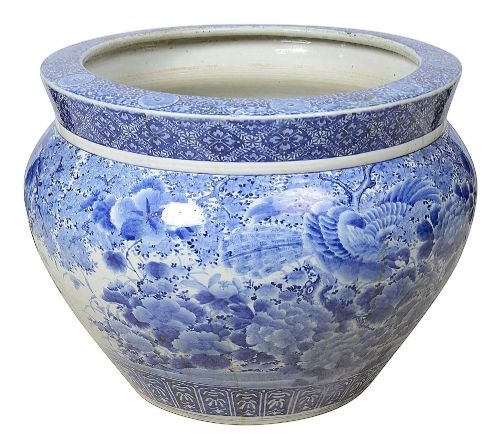
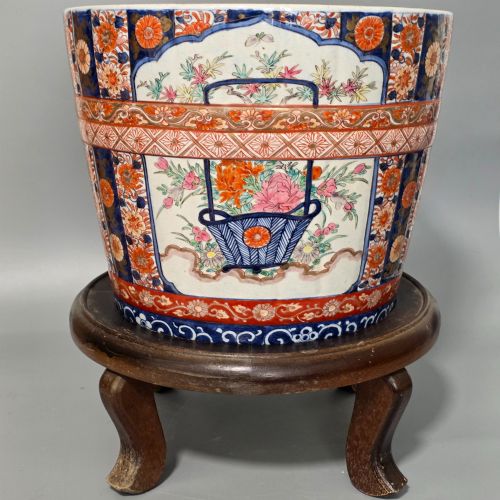


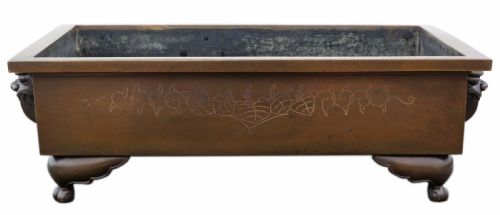


Large Japanese Jardiniere
A large Japanese jardiniere brings sculptural presence to a room, offering a heavy bronze bowl or a vibrant porcelain vessel for indoor planting.
Large Japanese Jardiniere
A large Japanese jardiniere functions as a substantial vessel designed for holding plants, flowers or water, appearing frequently in bronze and porcelain forms. These pieces span centuries of production, taking shape as heavy metal bowls or patterned ceramic planters.
The selections available here emphasise heavy bronze creations from the Meiji and Edo periods alongside porcelain Imari and blue and white pieces. Buyers encounter both standalone bronze bowls and vessels accompanied by associated hardwood stands.
The forms range from deep bronze planters and Buddhist tearai to fish-bowls and zoomorphic designs featuring elephants. Many examples date from the nineteenth century, reflecting the decorative arts exported during the Meiji era.
How they were made
Bronze pieces rely on metal casting, sometimes incorporating patination, champleve enamel details or sculptural zoomorphic elements. Artisans shaped these heavy bowls with precise surface finish and tactile depth.
Porcelain vessels utilise cobalt underglaze, enamel painting and glaze techniques to produce detailed floral or Imari patterns. These ceramic pieces required careful high-temperature firing to achieve durable finishes.
Some bronze jardinieres come shaped like elephants, turning plant pots into miniature menageries.
What varies in quality
The refinement of the casting in bronze examples separates ordinary vessels from exceptional works, visible in the sharpness of relief work and the depth of the patination. Heavier metal weight and intricate surface decoration indicate superior craftsmanship.
In porcelain and ceramic pieces, the clarity of the cobalt underglaze painting and the richness of the enamel colours determine the standard of the work. Controlled glazing and well-preserved surface detail distinguish the finest examples.
Genryusai Seiya
The Large Japanese Jardiniere Glossary
- Meiji Period
- The era in Japanese history spanning from 1868 to 1912, known for fine metalwork and porcelain exported globally. Pieces from this time often feature elaborate bronze casting and distinct decorative motifs.
- Imari
- A style of Japanese porcelain featuring a palette of underglaze blue, iron red and gold. These colourful wares were widely produced for both domestic use and export.
- Champleve Enamel
- A technique where troughs are carved into a bronze surface and filled with enamel before firing. This method creates colourful decorative patterns across metal vessels.
- Suiban
- A shallow Japanese basin traditionally used for arranging cut plants or stones in water. These containers often double as bronze planters.
- Hardwood Stand
- A separate wooden base carved to support the rounded bottom of a jardiniere. These stands elevate heavy ceramic and bronze bowls.
Large Japanese Jardiniere: Frequently Asked Questions
What is a large Japanese jardiniere used for?
These vessels were originally designed to hold potted plants, water arrangements or fish within traditional interiors. Today they serve as prominent decorative objects or floor-standing planters.
Their substantial weight and decorative surfaces allow them to function independently as sculptural centerpieces without needing active planting.
How do I care for a bronze jardiniere?
Bronze vessels require minimal maintenance, needing only gentle dusting with a soft, dry cloth to preserve the patinated surface. Avoid using harsh chemical cleaners or abrasive polishes that might damage the historic finish.
If used for live plants, placing a modern inner plastic liner inside the bronze bowl prevents moisture from sitting against the antique metal.
How do I distinguish Meiji period bronzes?
Meiji period bronzes typically display heavy casting, deep patination, and intricate surface details such as high-relief animals or enamel work. These nineteenth-century pieces reflect the advanced metalworking techniques developed during that era.
Examining the underside and the interior wall often reveals the casting texture and manufacturing methods typical of the late nineteenth century.