




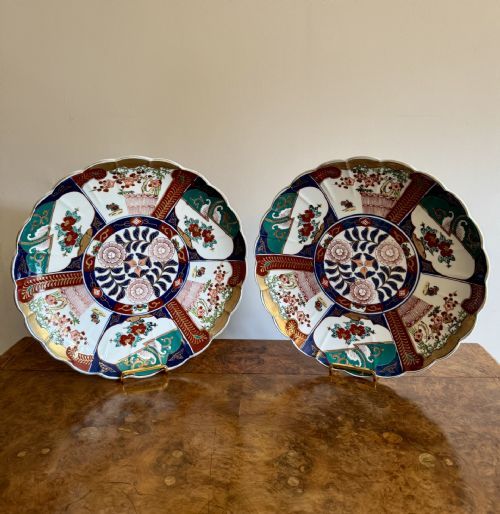
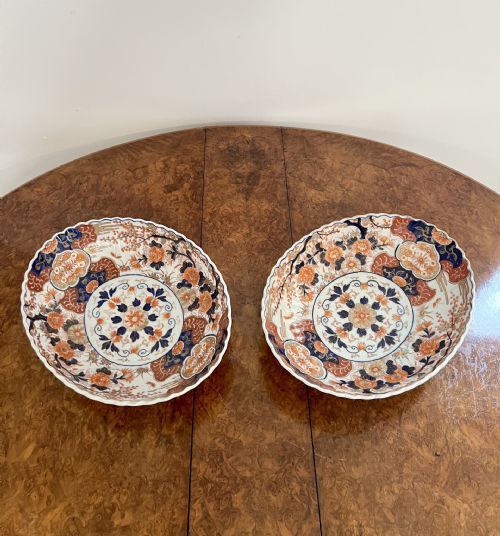


Large Japanese Charger
A large Japanese charger brings centuries of skilled metalwork, cloisonne enamel and porcelain artistry directly into a room as a bold focal point.
Large Japanese Charger
A large Japanese charger represents a broad category of substantial decorative plates, trays, and bowls created for display rather than dining.
The pieces appearing on this page span the Edo, Meiji, and Taisho periods, alongside Victorian and Edwardian cataloguing dates, reflecting significant international trade during the nineteenth and early twentieth centuries.
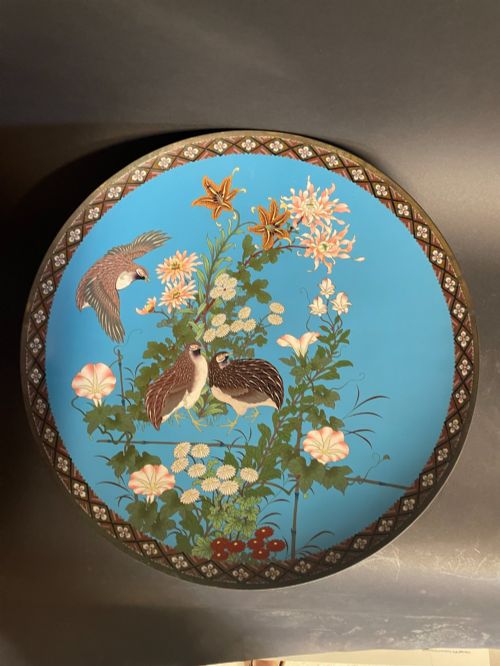
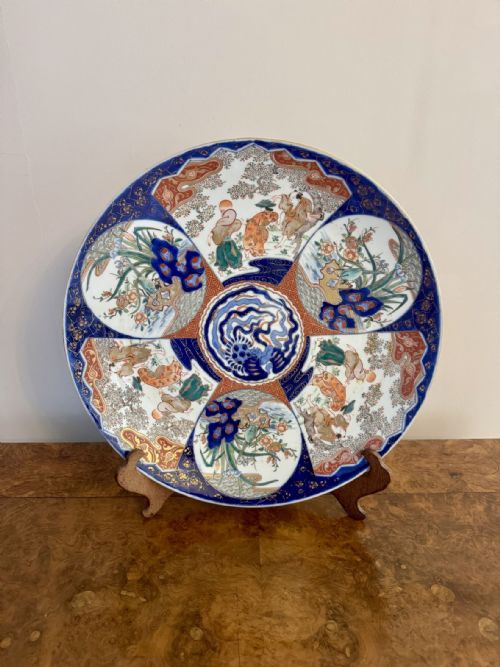
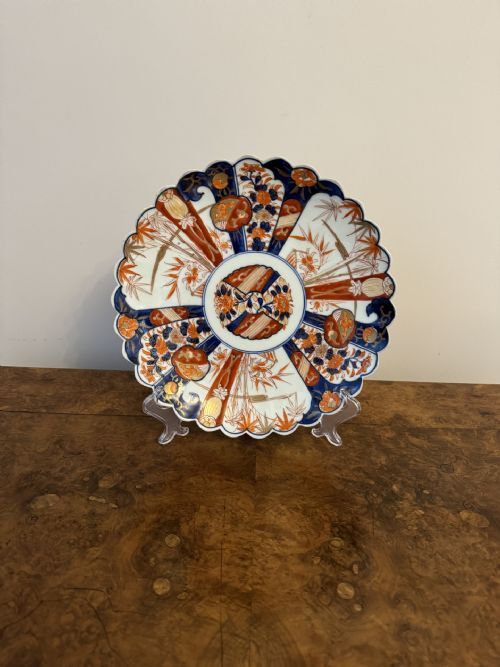
Most examples encountered here are porcelain Imari wares featuring characteristic blue and white or iron-red palettes, alongside substantial copper-bodied cloisonne enamels and bronze display pieces.
How They Were Made
Ceramic pieces are formed from porcelain or pottery clay, painted by hand with cobalt blue, iron red, and gold leaf highlights, then fired at high temperatures.
Cloisonne enamel examples utilise thin metal wires soldered to a copper or brass base to form cellular compartments, which are subsequently filled with coloured enamel pastes and fired repeatedly.
Metal vessels incorporate cast bronze or mixed metals enriched with applied silver inlay, gold details, and patination techniques developed by skilled metalworkers.
Listings show porcelain, copper, brass, bronze, and gold leaf employed across multiple nineteenth-century decorative forms.
What Varies in Quality
The precision and complexity of the hand-painted brushwork or the exactness of the wire placement in cloisonne determine the visual impact of a piece.
Subtlety in the depth of the glaze, the richness of the gilding palette, and the crispness of the underlying ceramic or metal form distinguish finer examples.
Signed works and those retaining elaborate pictorial narratives involving figures, birds, or landscapes demonstrate greater artisan investment.
Fukagawa Seiji Company·Jomi Eisuke
The Large Japanese Charger Glossary
- Imari
- A style of Japanese porcelain decorated in underglaze blue, iron red, and gold, named after the port from which it was shipped to Europe.
- Cloisonne
- A decorative metalwork technique where thin wires are soldered to a body to create compartments filled with enamel paste before firing.
- Satsuma
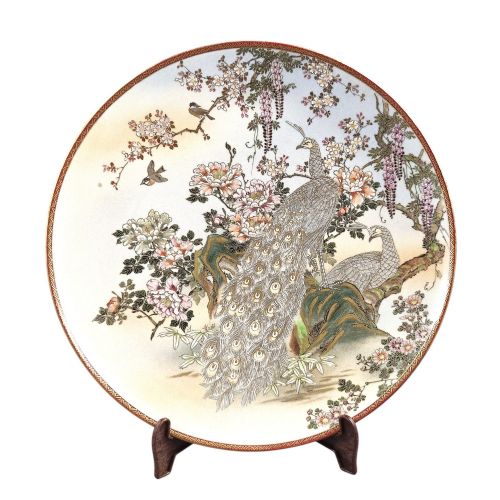
- A type of earthenware pottery with a pale, crackled ivory glaze, typically decorated with polychrome enamels and gilding.
- Totai Shippo
- A specialised type of cloisonne enamel where the body is constructed with a translucent base or over tree-bark textured metal.
- Meiji Period
- The era in Japanese history spanning from 1868 to 1912, characterised by extensive artistic output for export markets.
Large Japanese Charger: Frequently Asked Questions
How were large Japanese chargers used?
These large vessels were primarily created for decorative display on walls, tables, or specialised stands rather than for practical domestic service.
Their substantial scale allowed workshops to showcase complex pictorial narratives, botanical scenes, and traditional motifs to collectors.
How do I hang a large charger safely?
Displaying a heavy porcelain or metal charger requires a properly proportioned spring-loaded wall hanger designed to distribute weight evenly across the rim.
Alternatively, sturdy tabletop display stands support the base securely while keeping the entire decorative surface visible.
How can I tell Meiji period pieces apart?
Meiji period works frequently exhibit dense, highly detailed decoration influenced by international trade demands and Western artistic preferences.
Earlier Edo period pieces often display looser brushwork, simpler compositions, and different potting characteristics.
What is the difference between Imari and Kutani?
Imari porcelain relies heavily on a distinctive palette combining underglaze cobalt blue with iron red and supplementary gilding on white porcelain.
Kutani wares typically feature bolder, highly saturated monochromatic or polychrome enamel schemes dominated by greens, purples, and yellows.