



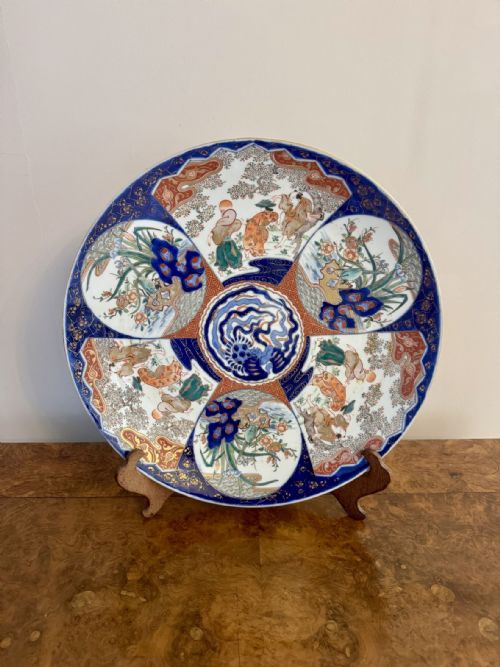
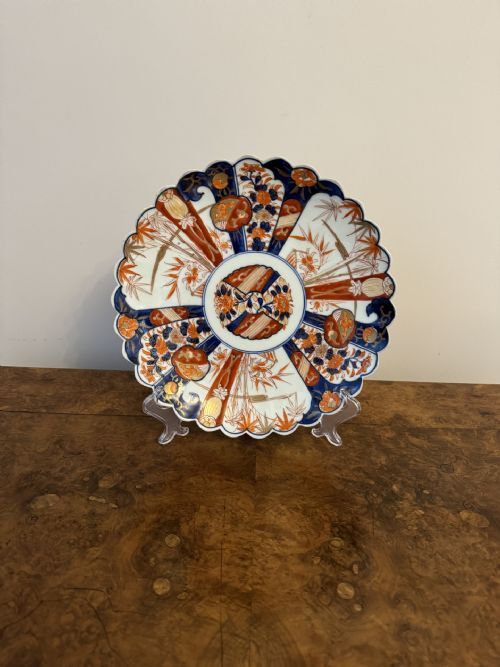
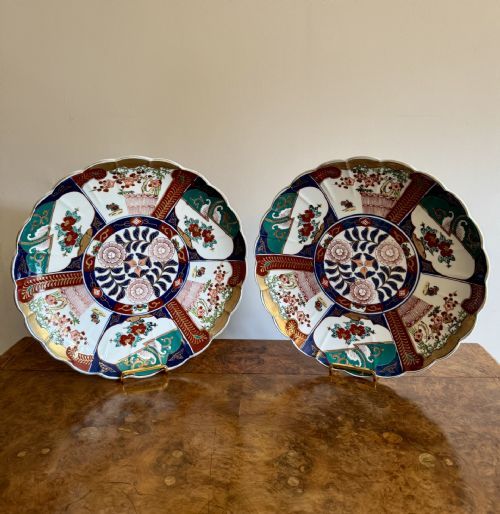


Large Imari Porcelain Platter
A large imari porcelain platter brings bold colour and intricate hand-painted detail to a room, offering a striking centrepiece for a table or wall.
Large Imari Porcelain Platter
A large imari porcelain platter combines decorative presence with historical craftsmanship, taking the form of wide chargers, shallow bowls and fruit display plates. When searching for a large imari porcelain platter, collectors encounter pieces originating primarily from Japanese production centres such as Arita, alongside Victorian interpretations and occasional Chinese variations. These ceramics span periods from the Edo and Meiji eras through to the late nineteenth and early twentieth centuries, reflecting diverse aesthetic influences.
The domestic and decorative roles of these platters remain central to their survival across generations. Many function as wall plates and chargers designed for display, whilst others serve as substantial fruit display plates or centrepieces. The scale of these items allows complex narrative scenes, floral arrangements and geometric motifs to unfold across the surface.
How they were made
Makers shaped porcelain clay into wide plates and chargers before applying cobalt blue underglaze decoration directly to the body. This initial cobalt pigment work provides the deep blue foundation beneath the glaze, defining the primary framework of the design.
Following the first firing, artisans applied overglay enamels, gold leaf and gilt details to the surface before a subsequent firing fixed the vibrant colours. This combination of cobalt blue underglaze and rich overglay enamel creates the characteristic palette associated with imari ware.
Materials recorded across the available pieces include porcelain, cobalt pigment, gold leaf, gilt and overglay enamel.
What varies in quality
The precision and density of the hand-painted brushwork separate standard production from superior examples. Master painters achieved exceptional fineness in floral borders, scrolling foliage and figural depictions, such as the Seven Lucky Gods or koi carp.
The richness of the gilding and the depth of the enamel work also determine distinction. Platters displaying carefully layered gold leaf and well-preserved overglay enamel demonstrate superior craftsmanship compared to simpler decorative output.
The Large Imari Porcelain Platter Glossary
- Imari
- A style of Japanese porcelain originating from Arita and exported through the port of Imari. It is characterised by a distinctive palette of cobalt blue underglaze and red overglay enamel, often accented with gold.
- Charger
- A large decorative plate traditionally used for ceremonial display rather than dining. These substantial pieces provide a wide canvas for intricate painting.
- Meiji Period
- The era in Japanese history lasting from 1868 to 1912, corresponding to a major surge in the production and export of decorative ceramics. Pieces from this time often exhibit elaborate detail.
- Overglay Enamel
- Coloured glass decoration applied over a fired and glazed ceramic surface, then fixed with a low-temperature second firing. It allows for brilliant reds, greens and yellows.
- Cobalt Pigment
- A metallic colourant used under the glaze to produce deep blue tones. It withstands high firing temperatures without losing definition.
Large Imari Porcelain Platter: Frequently Asked Questions
How were large imari platters used?
These large pieces served primarily as decorative chargers displayed on walls, sideboards or tables rather than everyday tableware. Their substantial scale made them focal points in Victorian and Japanese interiors.
Some examples also functioned as fruit display plates or centrepieces for formal dining settings. Their durable porcelain body allowed them to hold heavy fruit whilst maintaining their ornamental appeal.
How do you date an imari platter?
Dating relies on stylistic clues, potting characteristics and associated period markers such as Victorian registration marks or Meiji period aesthetics. Edo period pieces often display heavier bodies and robust cobalt painting.
Later Victorian and Edwardian examples may incorporate Western ceramic marks alongside traditional Japanese motifs. Examining the quality of the enamel and the composition helps narrow down the production era.
Are imari platters Japanese or Chinese?
The majority of imari ware originates from Japan, specifically the Arita kilns that supplied export markets through the port of Imari. These Japanese pieces feature distinct blue and white designs enriched with iron red and gold.
Chinese kilns also produced imari-style export porcelain in response to European demand. These Chinese interpretations often display subtle differences in paste composition and brushwork technique.
How should you display a heavy charger?
Displaying a heavy porcelain charger requires secure wall mountings designed specifically for deep or heavy plates. Spring-loaded hangers distributed evenly around the rim ensure the piece remains safe.
Alternatively, placing a charger in a sturdy wooden stand upon a stable surface highlights the detailed painting of the well and rim. Position the platter away from direct foot traffic to prevent accidental knocks.