
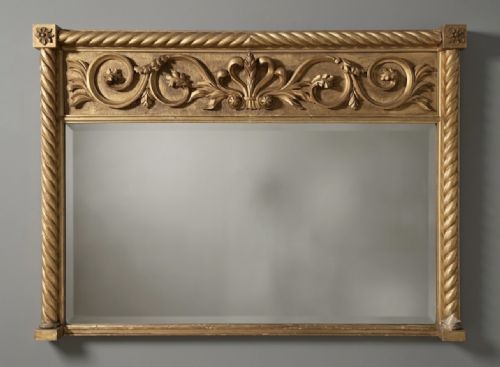
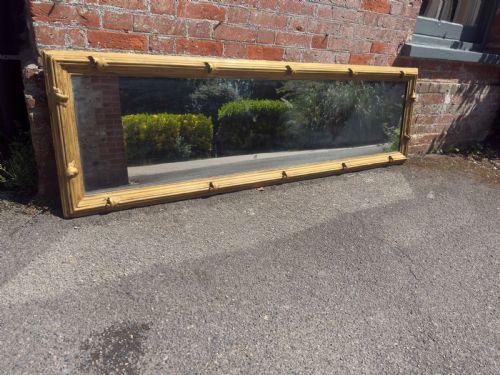
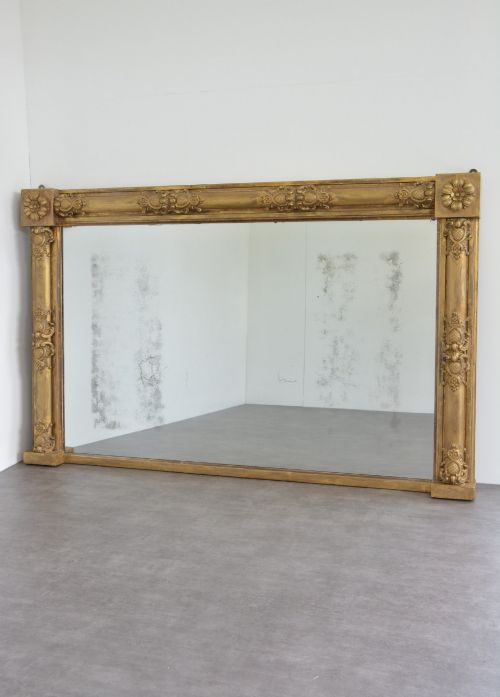
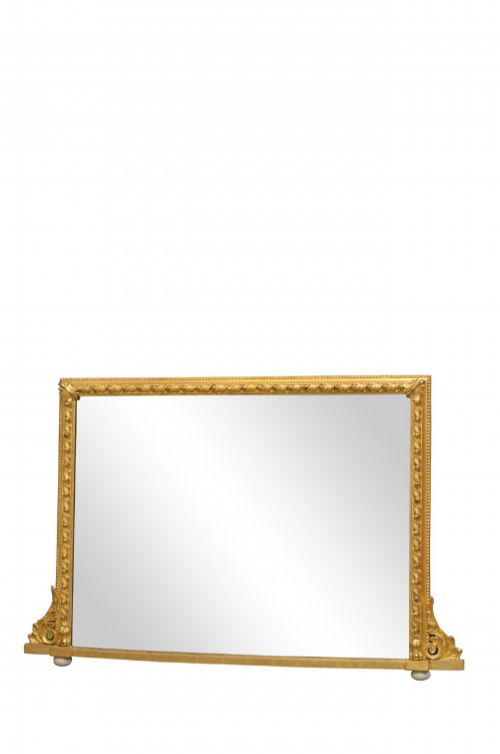



Large Horizontal Gilt Mirror
A large horizontal gilt mirror commands a room, reflecting light and space through layers of historic gold leaf.
Large Horizontal Gilt Mirror
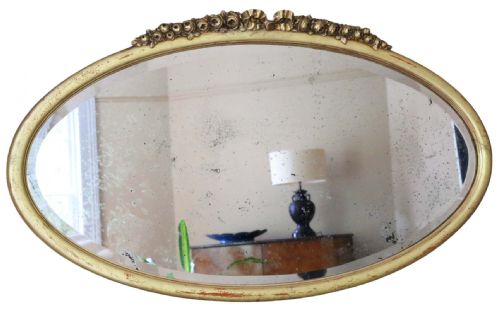
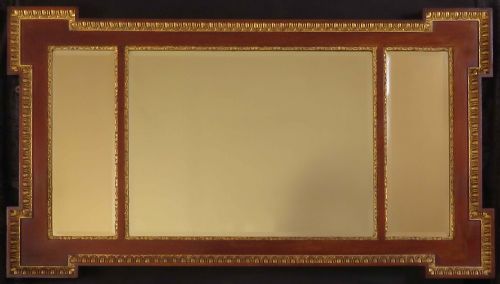
A large horizontal gilt mirror typically takes the form of an overmantel or wide pier glass designed to hang above a fireplace or span a principal wall. These items belong predominantly to the nineteenth century, including the Regency, Victorian, and Edwardian periods.
The format is dominated by overmantel mirrors and wall mirrors that stretch wider than they are tall. Buyers frequently encounter nineteenth-century English interpretations featuring rectangular or triptych configurations.
Makers often shaped these frames from pine or hardwoods before applying decorative finishes. The resulting objects function as architectural focal points within domestic interiors.
Materials and construction
Makers constructed the structural frames primarily from pine, walnut, rosewood, or mahogany. Carved wood and moulded gesso formed the relief ornamentation before gilding took place.
Surfaces received layers of gold leaf or composition applied over gesso grounds. Many mirrors retain original or lightly foxed glass secured within the wooden and composition rebates.
Some nineteenth-century mirrors spent generations reflecting roaring coal fires and candlelight, absorbing a faint, smoky patina that no modern workshop can replicate.
Distinctions in quality
Quality rests upon the depth and crispness of the hand-carved wood details compared to cast composition mouldings. Intricate Regency and Rococo Revival carving demonstrates superior craftsmanship.
The integrity of the original gilt surface dictates value, with untouched gold leaf differing from later painted interventions. Original mirror plates showing light foxing rather than modern replacement glass retain historical character.
The Large Horizontal Gilt Mirror Glossary
- Giltwood
- Wood carved and covered with gold leaf. It provides the lustrous metallic finish seen on formal nineteenth-century frames.
- Gesso
- A plaster mixture applied to wood frames to create a smooth surface for gilding. It accepts deep relief carving and moulding.
- Overmantel
- A mirror specifically proportioned to hang above a fireplace mantelpiece. These pieces stretch horizontally to match the hearth width.
- Foxed glass
- Mirror plate displaying aged spots and discoloration caused by atmospheric degradation behind the silvering. Collectors prize authentic antique foxing for its gentle obscurity.
- Triptych
- A mirror divided into three distinct vertical panels within a single frame. Regency examples often use this layout to balance wide expanses.
Large Horizontal Gilt Mirror: Frequently Asked Questions
Where should I hang a large horizontal gilt mirror?
These pieces traditionally anchor a living room or dining room above the fireplace mantelpiece. Their wide format also suits placement across a long sideboard or low console table.
Ensure the wall construction supports the substantial weight of wood, gesso, and glass. Professional fixings tied to structural studs are essential for safe installation.
How do I clean an antique gilt mirror?
Dust the carved frame gently with a soft, dry brush to protect the delicate gold leaf and gesso surface. Avoid chemical sprays and abrasive cloths entirely.
Clean the glass plate using a minimal amount of window cleaner applied to a cloth rather than sprayed directly. This prevents liquid from seeping behind the silvering and causing further foxing.
Are the mirror plates original?
Many nineteenth-century pieces retain their original glass, which often exhibits light foxing, minor warping, or small blemishes. These optical imperfections confirm age and authenticity.
Replacement glass appears clean and perfectly uniform without the wavy distortions characteristic of older manufacturing methods. Inspect the backing boards and silvering edge to determine the glass history.
What is the difference between Regency and Victorian styles?
Regency mirrors often display Neoclassical restraint, featuring clean architectural lines, ball-accented cornices, and triptych divisions. They emphasise classical proportion and understated elegance.
Victorian and Rococo Revival examples embrace exuberant, ornate ornamentation with deep relief scrolling and asymmetrical floral motifs. These later pieces showcase heavier carved wood and elaborate composition work.