
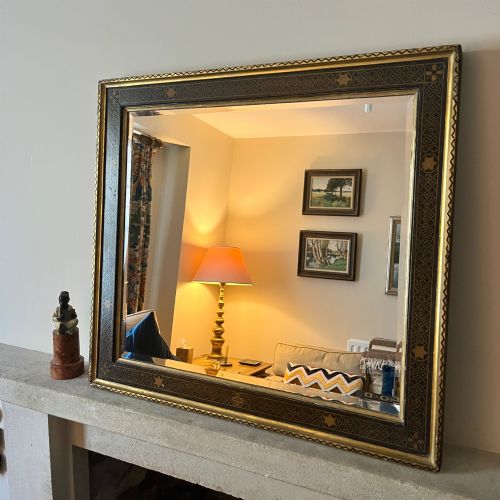
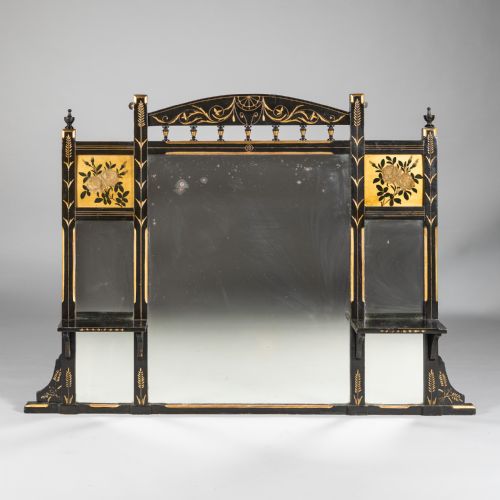


Black Painted Gilt Mirror
A black painted gilt mirror brings a striking balance of dark painted surfaces and bright gilded detail into a room.
Black Painted Gilt Mirror
A black painted gilt mirror combines dark painted finishes with gilded highlights, creating a distinct visual contrast that suits various interiors. The examples available include wall mirrors, overmantel mirrors, dressing tables, and cabinets spanning the nineteenth and twentieth centuries.
The pieces appearing most frequently on this page are nineteenth century overmantel mirrors in the Victorian aesthetic movement style, typically featuring ebonised wood alongside gold leaf or gilt highlights. Alongside these, buyers will find oval wall mirrors from the early twentieth century and Chinese export pieces.
Origin and period styles dictate the exact character of each piece, ranging from English aesthetic movement ebonised mahogany to French carved wood and gesso arched top forms. Chinoiserie lacquered dressing tables and side cabinets also appear, demonstrating the broader application of black and gilt decoration across different furniture types.
Materials and construction methods
Craftsmen utilised wood such as mahogany, alongside carved wood and gesso, to build the foundational structures of these mirrors and cabinets. These bases were then finished with black paint or ebonised treatments to achieve a dark, uniform background.
Gold leaf, gilt highlights, and occasional silver gilt were applied to carved details, mouldings, and incised patterns to create the signature metallic contrast. Mirror glass, including Chinese reverse painted glass, was fitted into these frames to complete the pieces.
Listings feature periods from the late eighteenth century through the 1930s, encompassing Victorian aesthetic movement and Chinoiserie styles.
Factors that distinguish individual pieces
The refinement of the carved wood and gesso work separates standard production from superior examples, particularly visible in the crispness of moulded details on nineteenth century overmantel frames. Original surfaces and gilding that have survived intact retain more character than later interventions.
The depth and execution of decorative styles, such as hand-painted Chinoiserie motifs or intricate aesthetic movement ebonised finishes, dictate the overall distinction of a piece. Structural integrity in larger items like overmantel mirrors and side cabinets also influences the lasting quality.
The Black Painted Gilt Mirror Glossary
- Ebonised wood
- Timber treated with a stain or finish to imitate ebony, giving a deep black appearance common in Victorian aesthetic pieces.
- Gesso
- A plaster-like mixture applied to wood frames and carved to create raised decorative details before gilding.
- Overmantel mirror
- A large mirror designed to hang specifically above a fireplace mantelpiece.
- Aesthetic Movement
- A late nineteenth century design style emphasising visual beauty over narrative subject matter, often featuring ebonised surfaces and gilt highlights.
- Chinoiserie
- European decorative art reflecting Chinese artistic styles, frequently seen in lacquered black furniture and mirrors.
Black Painted Gilt Mirror: Frequently Asked Questions
Where should I hang an overmantel mirror?
These large mirrors are traditionally placed directly above a fireplace mantelpiece to reflect light and anchor the room's proportions.
They also work effectively mounted on principal living room walls where their substantial frames can act as a primary focal point.
How do I care for ebonised and gilt surfaces?
Dust the frames gently with a dry, soft cloth to prevent accumulation without disturbing the delicate gold leaf or painted finish.
Avoid liquid cleaners, chemical sprays, and direct sunlight, which can damage both the ebonised wood and the original gilding over time.
What is the difference between aesthetic movement and Chinoiserie mirrors?
Aesthetic movement mirrors from the nineteenth century typically feature ebonised wood with restrained geometric or incised gilt highlights.
Chinoiserie pieces incorporate lacquered black surfaces adorned with painted Chinese-inspired motifs, scenes, or figures.
How can I tell the period of a black painted gilt mirror?
Examine the construction methods, backing materials, and the composition of the wood and gesso frame for period-specific indicators.
Stylistic cues such as Victorian aesthetic ebonising or French carved wood details help narrow down the decade or century of manufacture.