
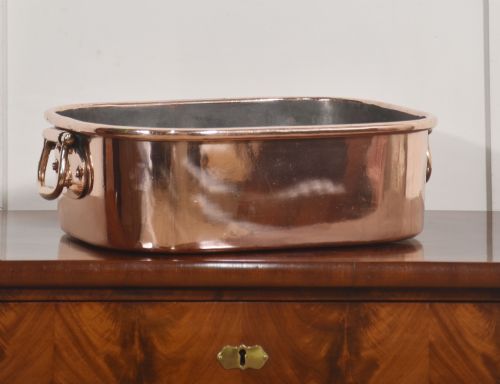


Large Heavy Copper Pan
A large heavy copper pan brings functional warmth and centuries of robust culinary history straight into a modern kitchen.
Large Heavy Copper Pan
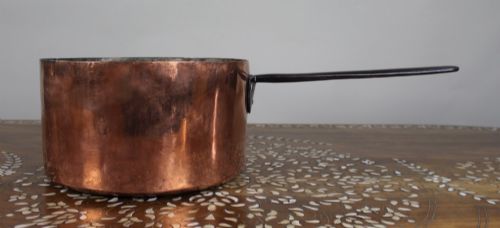
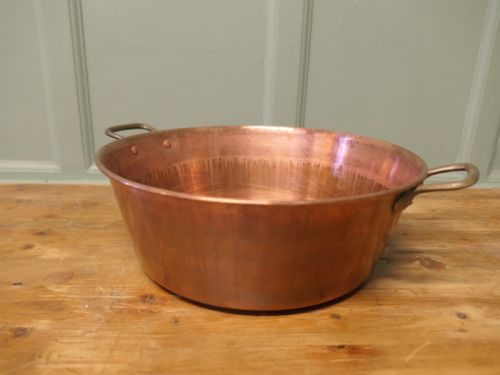
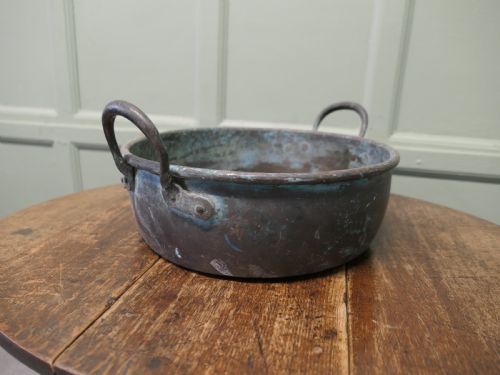
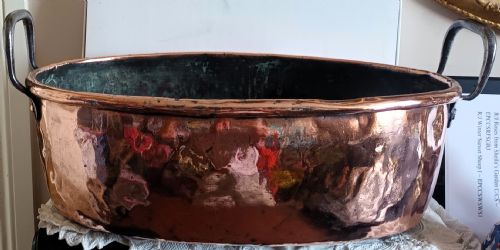
A large heavy copper pan encompasses hardworking vessels built for historic kitchens, dairies and laundries, spanning George III, Georgian, and Victorian periods. Buyers frequently encounter preserving pans, jam pans, saucepans, and fish kettles alongside dairy pans and cauldrons designed for serious culinary tasks.
The selection ranges from deep lidded saucepans to expansive two-handled vessels and heavy grain measures or bowls. These items originate predominantly from nineteenth-century workshops and country houses, carrying the unmistakable patina of active daily use.
Victorian and Georgian examples dominate the selection, offering substantial weight and genuine utilitarian purpose. Each piece reflects the specific domestic or agricultural requirement of its era, from cream setting to large-scale jam making.
Materials and construction methods
Master craftsmen hammered heavy gauge copper sheets into shape, often joining seams with meticulous dovetailing and riveting. Iron, wrought iron, and cast iron appear on handles and swing bails, providing the structural strength needed to lift heavy loads.
Interiors typically received a protective lining of tin to prevent direct contact between acidic foods and the reactive copper beneath. Brass fittings and secure handles complete the construction, ensuring durability under intense heat.
Listings feature copper combined with brass, iron, wrought iron, and cast iron across nineteenth-century periods.
Distinguishing quality and craftsmanship
The gauge of the metal dictates the structural integrity, with thicker copper sheets offering superior heat distribution and resistance to warping over open flames. Heavier walls and robust base plates indicate commercial or high-end domestic commission rather than light household use.
The finesse of the dovetail joints, the weight of the iron handles, and the presence of maker stamps elevate certain pieces above standard utilitarianware. Original surfaces with undisturbed historical patina distinguish pieces that retain their authentic character.
Hodges & Sons·Liptons·Helvetia England
The Large Heavy Copper Pan Glossary
- Preserving pan
- A wide, open vessel designed for boiling fruit and sugar, featuring sloped sides to encourage rapid evaporation. These often include a single long handle or dual brass grips for manoeuvring.
- Dovetail seam
- An interlocking method of joining copper plates together before hammering them flush and smooth. This technique provides immense tensile strength along the body of the vessel.
- Fish kettle
- An elongated oblong vessel equipped with a perforated internal drainer tray for poaching whole fish. They represent specialised Victorian kitchen equipment built for grand dining.
- Cream setting pan
- A wide, shallow basin utilised in dairies to allow cream to rise to the surface of milk. These feature generous diameters to maximise the surface area exposed to the air.
- Patina
- The deep, oxidized surface layer accumulated through age, use, and cleaning over many decades. It serves as a visual record of the object's history.
Large Heavy Copper Pan: Frequently Asked Questions
Can I cook with a vintage copper pan?
Many of these vessels remain entirely usable provided the interior tin lining is intact and healthy. Professional retinning allows historic cookware to perform reliably in modern kitchens.
For decorative display or heavy service, the thick copper construction conducts heat with exceptional speed and evenness.
How do I clean heavy copper?
Gentle proprietary copper cleaners remove tarnish without stripping away the historical character of the metal. Avoid abrasive scouring pads that scratch the heavy gauge surface.
Maintaining a soft polish preserves the warm metallic glow while respecting the accumulated patina of the past.
How do I date a copper pan?
Look closely at the construction methods, such as hand-cut dovetails, heavy iron handle attachments, and the specific weight of the metal. Georgian and early Victorian pieces often display distinct hammer marks and robust utilitarian forms.
Maker stamps and regional design variations also help narrow down the period of manufacture.
What were cauldrons used for?
Large copper cauldrons with wrought iron swing handles served heavy-duty boiling and brewing tasks in large country houses and farmhouses. Their deep bodies held substantial volumes of liquid over open hearths.
The sturdy iron bails allowed heavy vessels to be suspended safely above flames.