




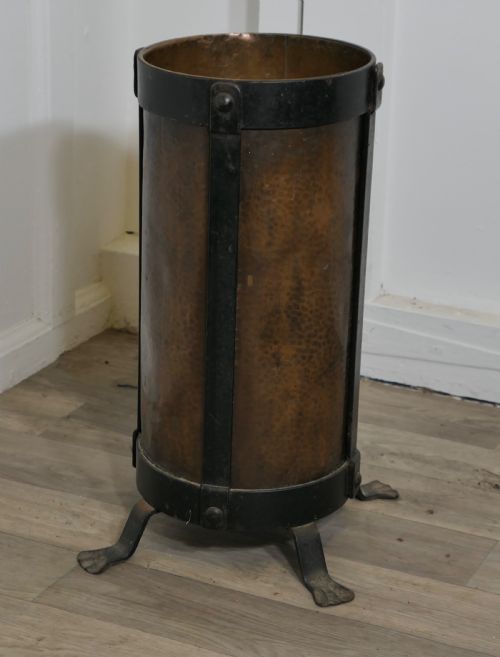


Large Hall Stick Stand
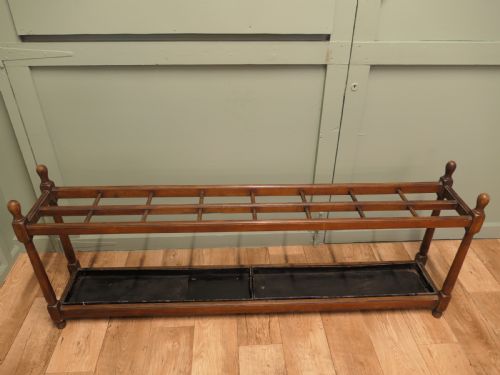
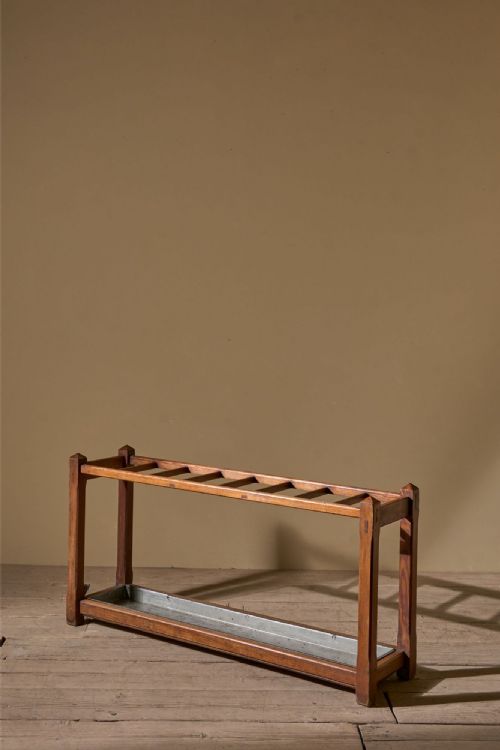
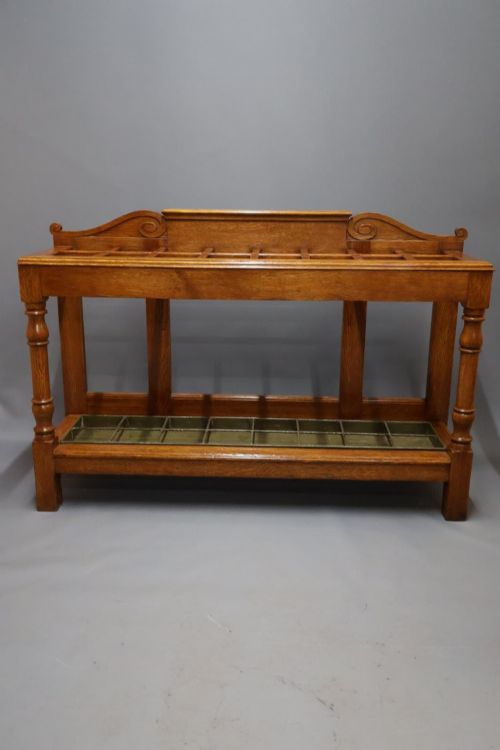
These large hall stick stand examples anchor a hallway with solid presence and practical design.
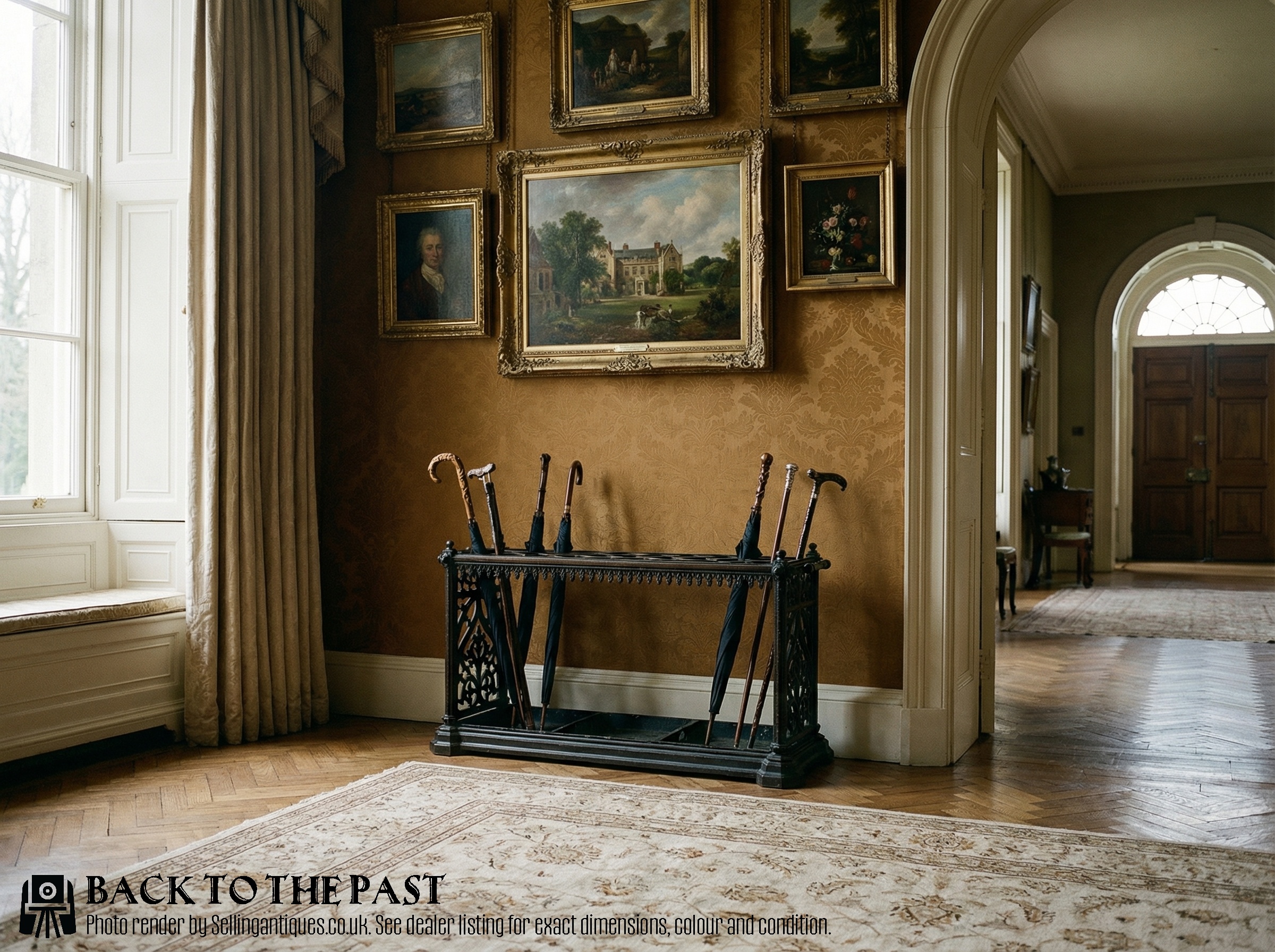
Large Hall Stick Stand
A large hall stick stand provides a designated vessel for walking canes, umbrellas and coats within entrance spaces. The items seen here span the nineteenth century, including Victorian, 1880, 1890, 1900 and 1870 periods.
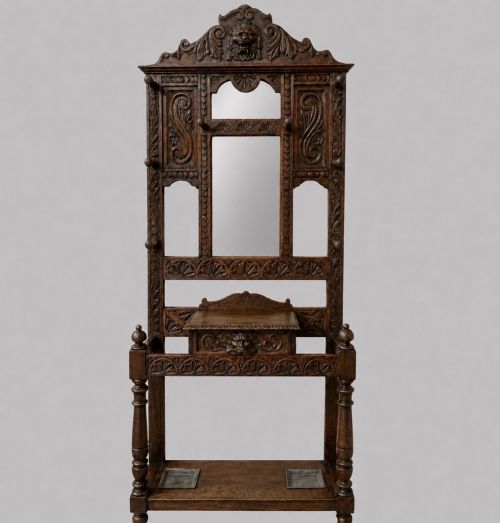
Buyers meet forms ranging from cast iron frames and saltglaze stoneware barrels to carved oak and mahogany hall stands featuring mirrors and coat hooks. Many examples reflect Victorian Gothic, Jacobean Revival, Black Forest and Arts & Crafts styles.
Country house and hotel proportions dominate the selection, offering substantial capacity for multiple sticks and golf club bags. These pieces function as both heavy-duty furniture and decorative focal points for large entryways.
How they were made
Maker construction relies heavily on durable hardwoods like oak, mahogany and pitch pine, shaped with barley twist turnings or carved details such as Green Man motifs and Black Forest bears. Coopered timber methods build barrel and tub forms bound with iron or copper bands.
Foundries cast heavy metals into intricate twenty-four and thirty-six hole umbrella stands, utilising zinc liners to catch water runoff. Glass and saltglaze stoneware provide waterproof vessels for damp sticks within ceramic and iron configurations.
Large Hall Stick Stand Retail Price Guide 2026
Typical asking prices for large hall stick stand among the pieces listed under this phrase on Sellingantiques today, from the lower quarter to the upper quarter. They describe what is for sale here now, not the wider market.
Materials across these listings include cast iron, oak, metal, glass, zinc, mahogany, pine and saltglaze stoneware.
What varies in quality
Quality shows in the depth and crispness of carved woodwork, from Black Forest animal figures to Gothic architectural tracery on oak panels. Heavy cast iron castings display cleaner lines and more complex geometric ring arrangements in superior examples.
The integration of secondary materials defines the build standard, such as intact copper bands on coopered oak barrels or original zinc drip pans beneath iron frames. Completeness of mirrors, coat hooks and matching pairs elevates the standing of an item.
Coalbrookdale
The Large Hall Stick Stand Glossary
- Cast Iron
- A tough iron-carbon alloy poured into moulds to create heavy, decorative frames and umbrella rings. It resists the weight of wet walking sticks and provides stable ground placement.
- Saltglaze Stoneware
- Pottery fired at high temperatures with common salt thrown into the kiln to produce a glossy, textured orange-peel surface. It forms durable waterproof barrel bodies for holding umbrellas.
- Barley Twist
- A turning technique resembling a spiralling rope or helix carved into wooden furniture legs and columns. This decorative feature appears frequently on nineteenth-century country house stands.
- Coopered
- Construction using wooden staves joined side by side and bound by metal hoops, similar to barrel making. This method creates cylindrical umbrella and stick containers from oak.
- Bergere
- A wooden framed piece inset with woven cane panels. It appears on country house frames to add textural contrast to the woodwork.
Large Hall Stick Stand: Frequently Asked Questions
What is a large hall stick stand?
A large hall stick stand is a piece of entrance furniture designed to hold walking canes, umbrellas and sometimes hats and coats. They serve as central organisational hubs in country houses, hotels and large hallways.
These items combine structural timber or heavy metal frames with waterproof liners to manage wet weather gear. Their substantial size allows them to anchor grand entranceways.
How do I date a stick stand?
Dating relies on observing material choices, manufacturing techniques and stylistic clues such as Gothic Revival or Arts & Crafts details. Nineteenth-century pieces often feature hand-carved oak, cast iron frameworks or saltglaze stoneware.
Makers' marks, construction methods like coopered staves and specific period motifs help narrow down the decade of production. Comparative examination of listed nineteenth-century examples provides a reliable baseline.
Where should I place it?
These stands belong in an entrance hall, vestibule or boot room where people enter and remove outdoor wear. Their scale requires adequate wall space or floor area to avoid crowding narrow passageways.
Positioning them near the main entrance allows visitors and residents to easily store and retrieve walking sticks and umbrellas upon arrival.
How do I care for the wood and metal?
Wooden frames require gentle dusting and occasional waxing to maintain the finish without building up heavy residues. Metal and iron components benefit from keeping drip pans dry to prevent moisture damage.
Inspecting removable zinc liners ensures that standing water does not compromise surrounding timber or floor surfaces over time.