
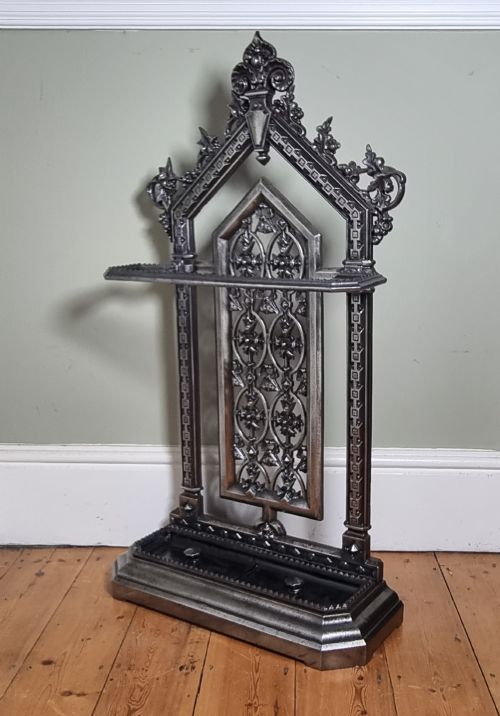
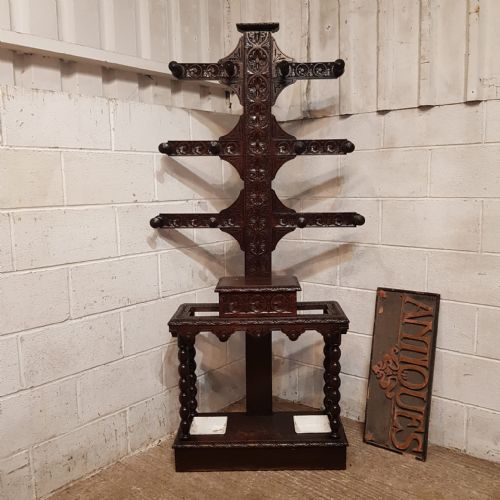


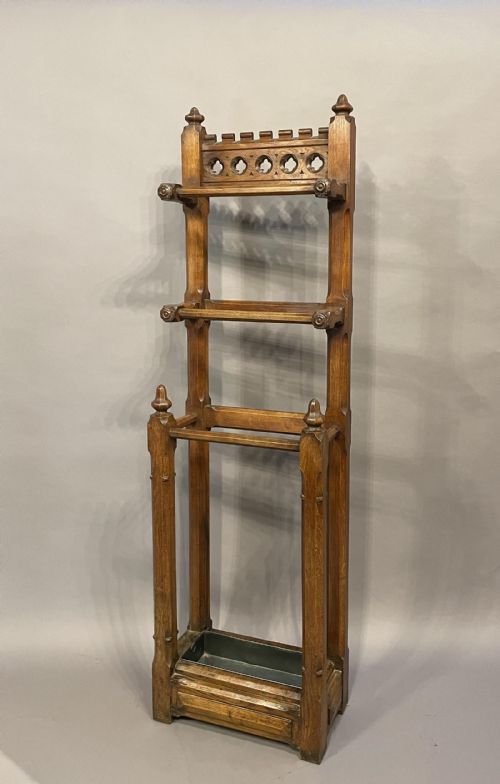


Gothic Revival Umbrella Stand
A gothic revival umbrella stand brings architectural drama to an entrance hall, offering sturdy utility through pointed arches and ecclesiastical motifs.
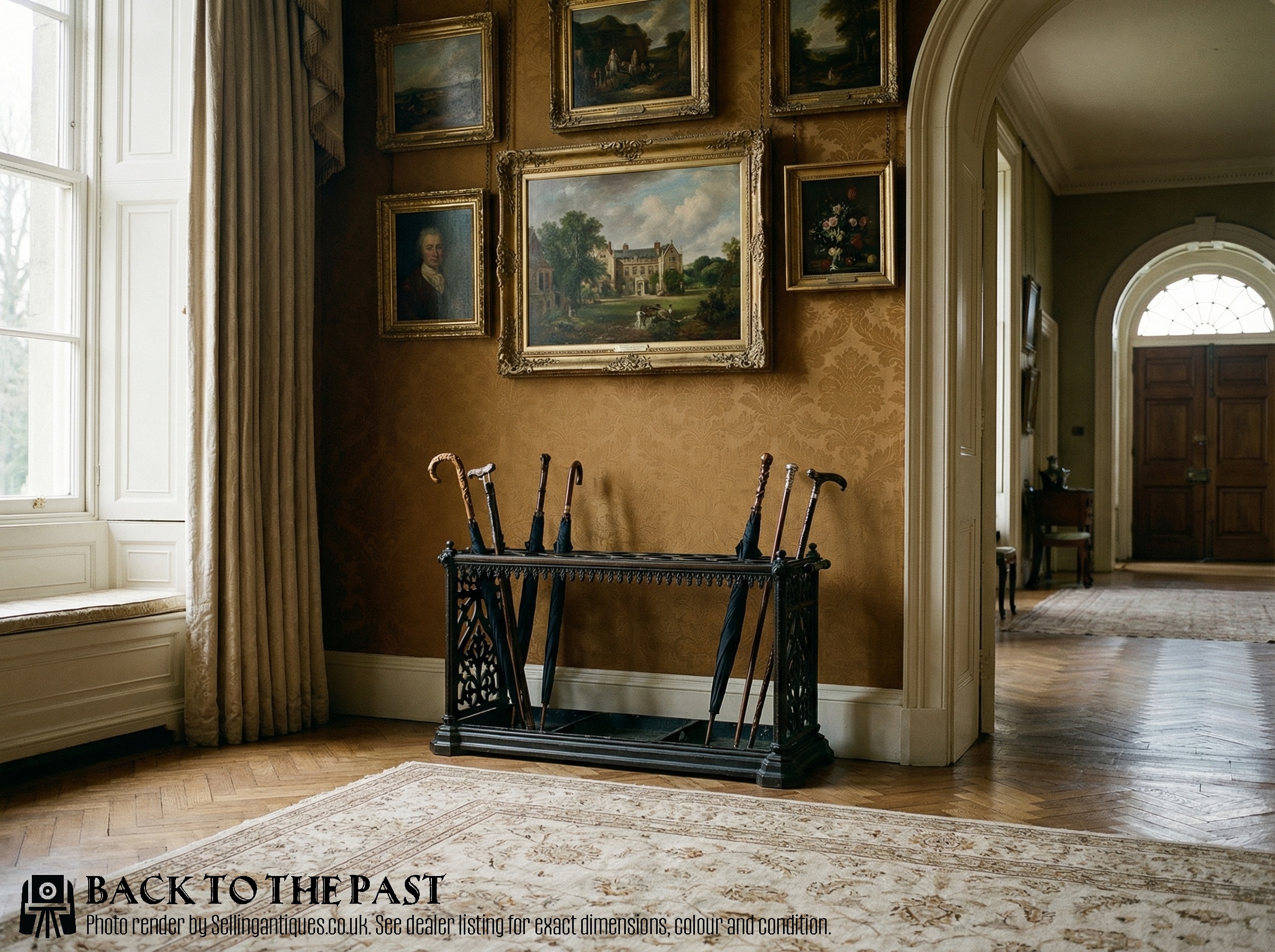
Gothic Revival Umbrella Stand
A gothic revival umbrella stand is a piece of entrance hall furniture designed to hold wet umbrellas and walking sticks, appearing in forms such as dedicated umbrella stands, large hall stands, hall cupboards, and stick racks. These items emerge from the nineteenth century, specifically across the Victorian era, embodying the architectural ornamentation of the Gothic Revival style.
Buyers browsing this selection most frequently encounter heavy oak examples alongside robust metal pieces, particularly cast iron and brass constructions. The designs incorporate pointed arches, carved tracery, and occasionally figurative elements like a Greenman or a depiction of William Wallace.
The objects serve a dual purpose of domestic organisation and stylistic display within nineteenth-century hallways. Examples range from compact corner umbrella stands to large country house hall cupboards with integrated stick racks.
What varies in quality
Quality in a gothic revival umbrella stand rests upon the crispness of the carving in the oak or the definition of the openwork in the cast iron. Superior examples demonstrate deep, deliberate chisel work on the timber or sharply cast foundry patterns without surface blurring.
The presence of original functional components, such as matching drip trays, zinc inserts, and intact brass hooks, elevates a piece. Furthermore, structural integrity across large hall stands and corner racks indicates superior original construction by nineteenth-century joiners and metalworkers.
Materials documented across these listings include oak, cast iron, brass, zinc, and sheet metal, spanning the Victorian period from eighteen-seventy to eighteen-eighty.
Coalbrookdale
The Gothic Revival Umbrella Stand Glossary
- Gothic Revival
- An architectural and decorative style drawing inspiration from medieval ecclesiastical design, featuring pointed arches, trefoils, and heavy vertical lines. This style dominates the ornamentation of nineteenth-century hall furniture.
- Cast Iron
- An iron-carbon alloy poured into moulds to create rigid, durable objects with complex openwork patterns. Foundries utilised this material extensively for nineteenth-century umbrella and stick stands.
- Hall Stand
- A piece of hallway furniture combining an umbrella or stick stand with hooks for hats and coats, often including a mirror or glove box. These items form a major category alongside standalone umbrella racks.
- Aesthetic Movement
- A late nineteenth-century design movement that emphasised visual beauty and reform in decorative arts. Pieces from this movement display specific stylistic preferences distinct from strict historicism.
Gothic Revival Umbrella Stand: Frequently Asked Questions
What is a gothic revival umbrella stand?
A gothic revival umbrella stand is a nineteenth-century hallway furnishing designed to store wet umbrellas and walking sticks while displaying medieval architectural motifs like pointed arches and tracery.
These pieces range from dedicated cast iron racks to massive carved oak hall stands incorporating hat hooks and mirrors.
How do I care for an antique oak stand?
Protect the carved oak by keeping the piece away from direct heat sources and sudden temperature fluctuations in the hallway. Ensure that any metal or zinc drip trays are regularly emptied and dried to prevent moisture damage to the surrounding timber.
Apply traditional wax polish sparingly to maintain the finish without building up heavy residues on the intricate carvings.
Are cast iron stands too heavy for modern halls?
Cast iron stands possess substantial weight, which provides excellent stability against heavy walking sticks and large umbrellas. This heavy mass prevents tipping, making them secure even in busy household entrances.
Positioning requires care during placement to avoid damaging delicate flooring materials beneath the base.
How can I tell Victorian pieces apart?
Victorian pieces distinguish themselves through material combinations, such as carved oak paired with brass hooks or cast iron bearing foundry marks and date stamps. Stylistic sub-categories like the Aesthetic Movement or Jacobean Revival offer additional clues regarding the specific decade of manufacture.
Examining construction methods, such as the joinery on oak hall cupboards or the moulding on iron racks, reveals the manufacturing standards of the eighteen-seventies and eighties.