



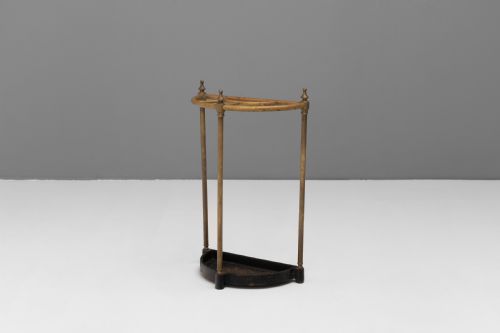
Iron Walking Stick Holder
An iron walking stick holder stands ready in the hallway to receive wet canes and umbrellas with utilitarian grace.
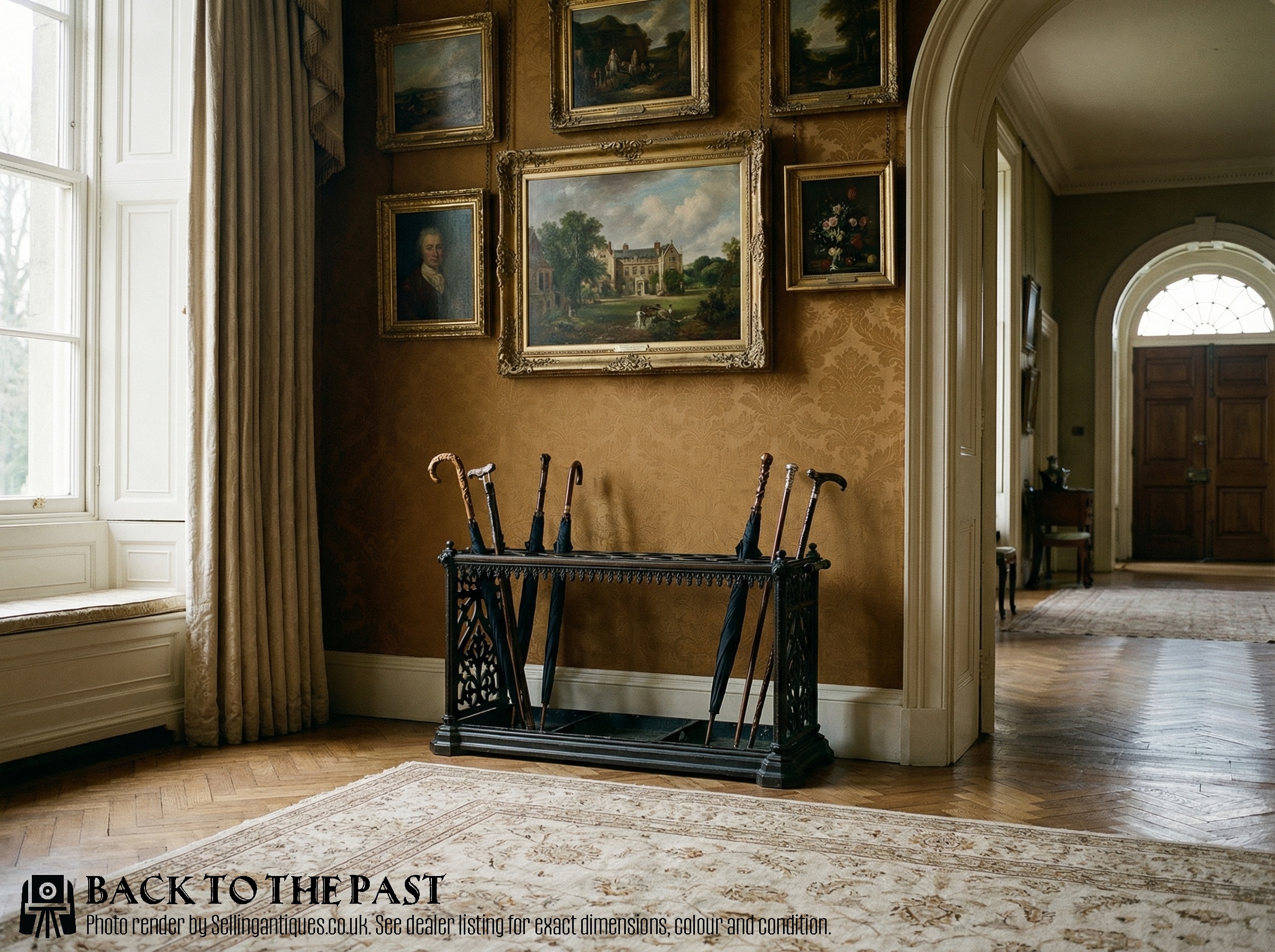
Iron Walking Stick Holder
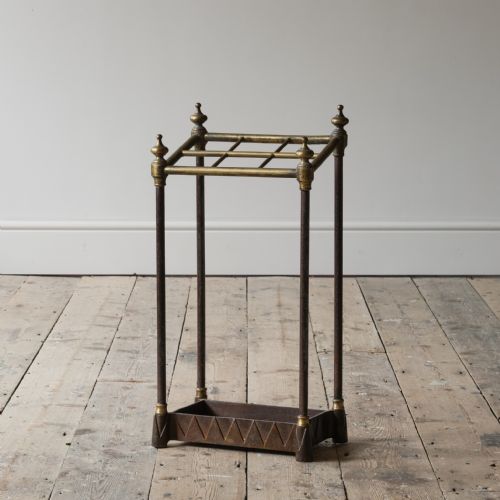
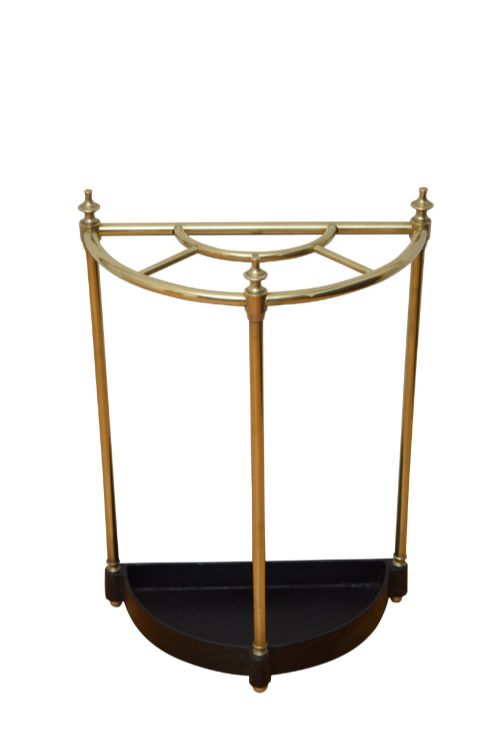
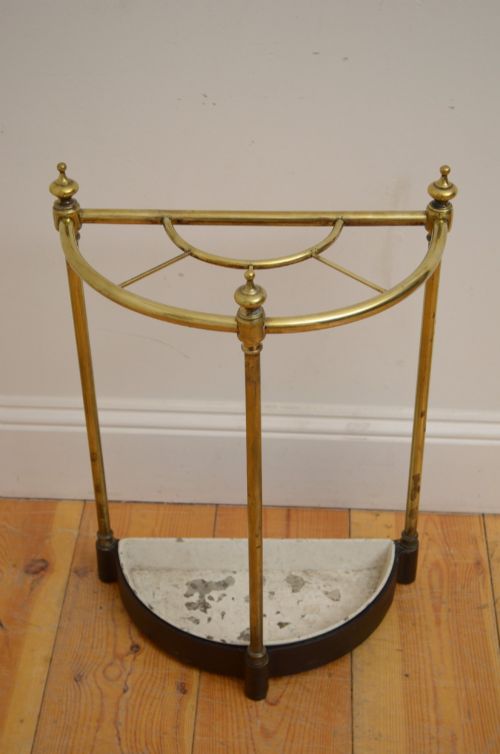
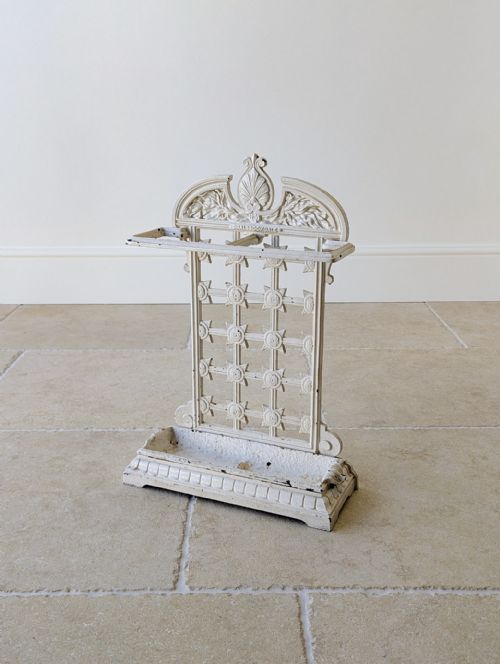
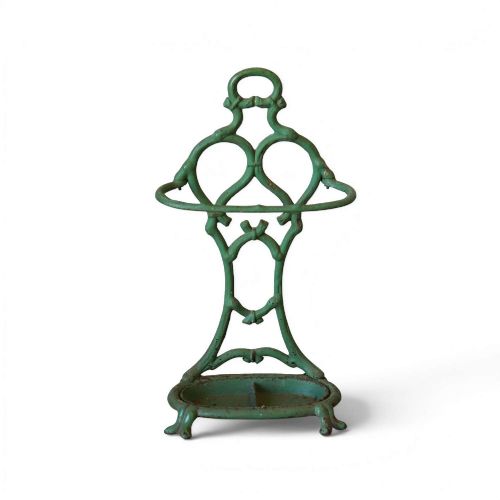
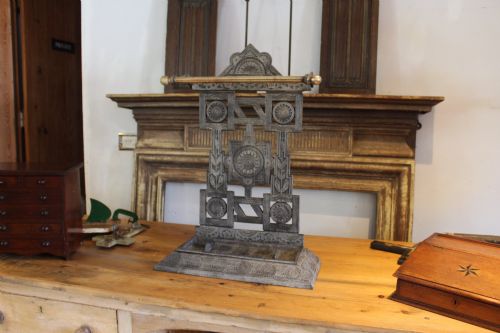
An iron walking stick holder is a functional hallway furnishing designed to store heavy walking canes, umbrellas, and parasols. These items appear primarily in Victorian and Edwardian iterations, spanning the nineteenth century into the early twentieth century. You will encounter pieces shaped in half moon, circular, oval, and corner profiles intended to sit flush against hallway walls.
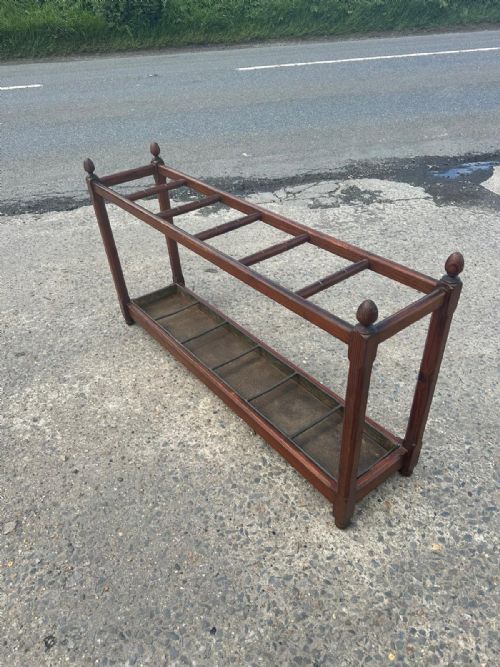
The objects listed here predominantly combine cast iron with brass accents, though variations incorporate pitch pine, oak, mahogany, and marble drip pans. Makers embraced diverse decorative idioms, producing items in Aesthetic Movement, Arts and Crafts, Art Nouveau, and rustic Victorian Country styles. Many examples originate from British foundries, while French workshops contributed distinct botanical and faux bois designs.
Materials and construction methods
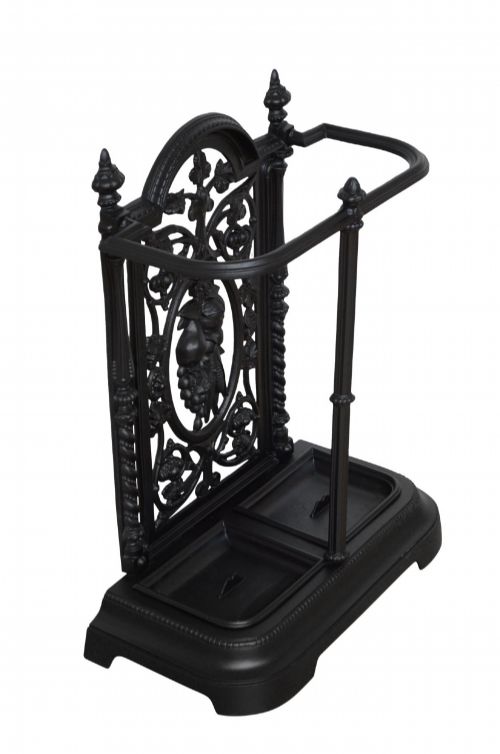
Foundries utilised sand-casting techniques to form the rigid iron frames, loops, and pierced backplates that define these stands. Molten metal poured into moulds created intricate openwork patterns, lattice structures, and relief motifs such as bamboo stalks or sporting dogs.
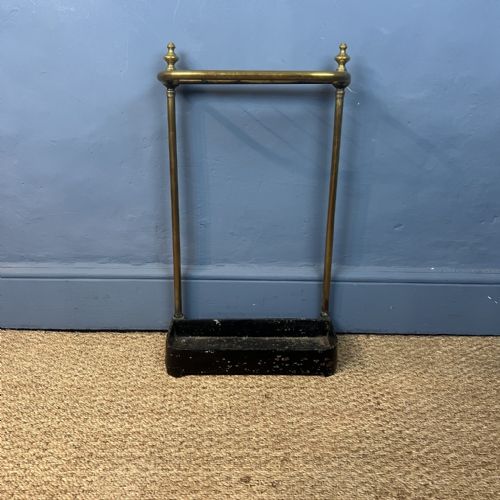
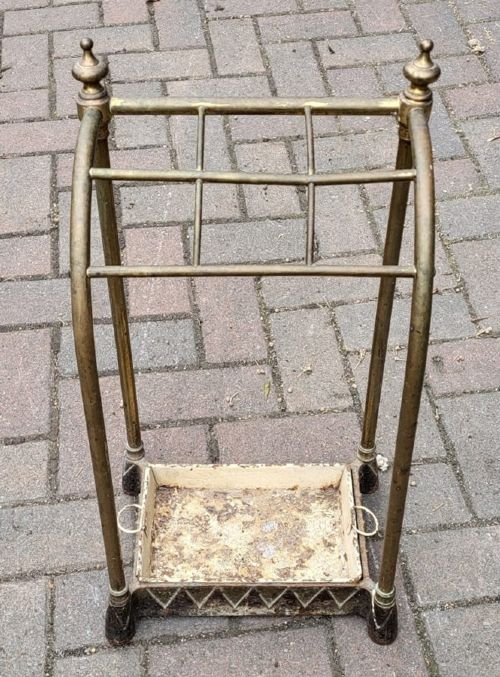
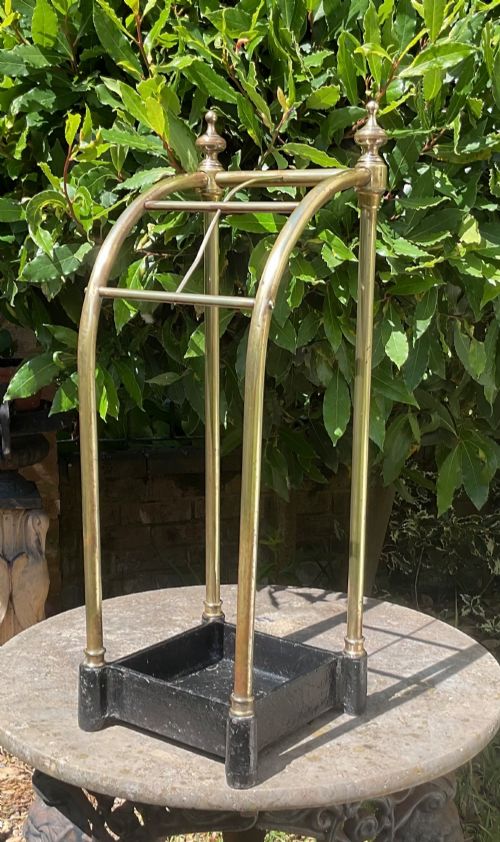
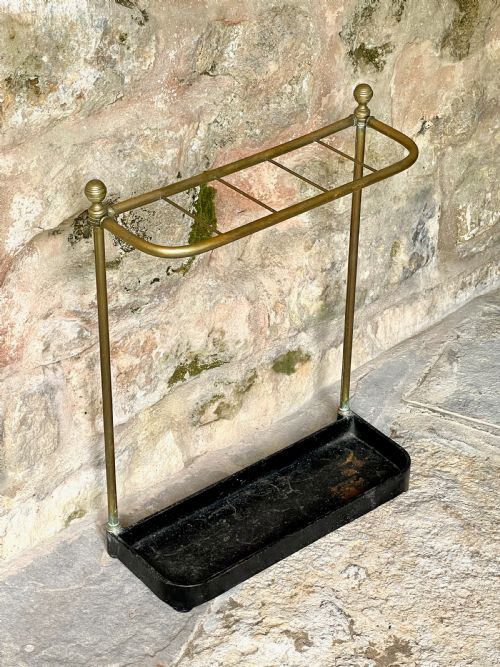
Manufacturers integrated contrasting materials by pairing heavy cast iron bases with polished brass rails, copper bands, or turned wooden frames in pitch pine and oak. Painted finishes and enamel coatings were applied to protect the metal surfaces from moisture dripping off wet walking sticks.
Listings demonstrate a strong preference for half-moon and circular floor plans executed in cast iron and brass.
Evaluating the standard of manufacture
Quality rests upon the crispness of the casting and the structural integrity of the frame. Finer stands display sharp, well-defined surface detailing without the smoothing or blurring that occurs when production moulds become worn.
The integration of mixed media also dictates the standing of a piece, separating standard utilitarian foundry output from sophisticated designs by prominent makers. Robust construction, original drip trays, and intact brass rails distinguish superior examples from ordinary workshop alternatives.
Coalbrookdale·Thomas Jeckyll·Falkirk Ironworks·Shoolbred
The Iron Walking Stick Holder Glossary
- Demi-Lune
- Half-moon shape designed to fit flat against a hallway wall. This profile allows the stand to occupy minimal floor space in narrow entrance halls.
- Faux Bois
- Imitation of wood grain rendered in metal or other non-wooden materials. French makers frequently applied this technique to cast iron to mimic natural bamboo.
- Aesthetic Movement
- Design style emphasising visual beauty over narrative subject matter. Pieces from this movement often feature stylised plant forms and geometric organisation.
Iron Walking Stick Holder: Frequently Asked Questions
Where should an iron walking stick holder go?
These pieces belong in a boot room, hallway, or entrance lobby where damp walking sticks and umbrellas accumulate after outdoor walks. Their heavy metal frames provide a stable base that prevents tipping when loaded with thick wooden shafts.
Placing the stand on a hard floor surface rather than thick carpet protects the surrounding area from moisture and mud left by wet gear.
How do I care for cast iron stands?
Maintain the metal by wiping away accumulated dust and moisture with a soft, dry cloth to prevent surface corrosion. Ensure the internal drip pan is emptied and dried regularly if the stand receives wet umbrellas.
Avoid using harsh chemical polishes on painted iron surfaces, reserving metal cream strictly for brass elements where applicable.
Are these stands suitable for modern hallways?
The compact footprints of demi-lune and corner configurations make these stands practical for contemporary entranceways with limited space. Their sturdy weight safely accommodates modern walking aids, umbrellas, and hiking poles.
The varied aesthetic styles, ranging from rustic painted iron to polished brass, allow them to complement both traditional and modern interior schemes.
How can I tell the period of a stand?
Dating relies on stylistic clues, such as the sinuous plant motifs characteristic of Art Nouveau or the geometric precision of the Arts and Crafts movement. Construction methods, including the transition from hand-finished sand castings to mass-produced uniformity, also indicate the era.
Catalogue records, registered design marks, and foundry stamps cast into the iron frame frequently provide definitive chronological evidence.