


Large Gold Glass
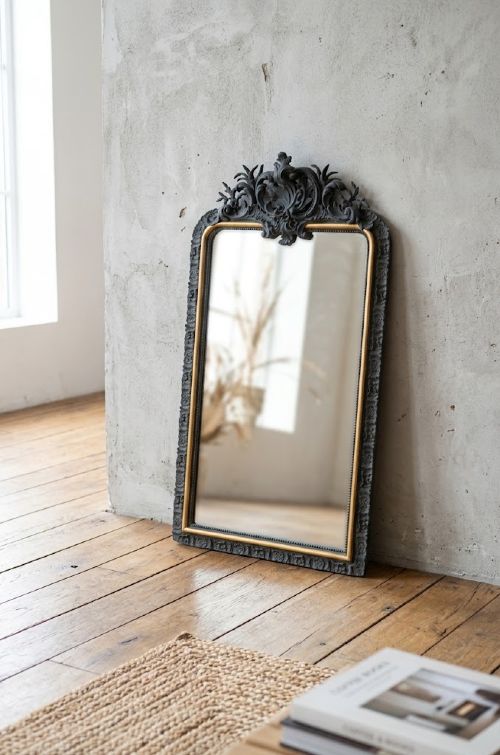
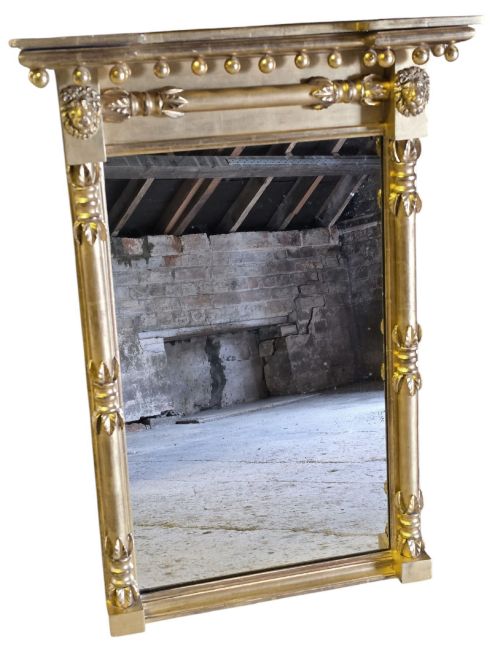
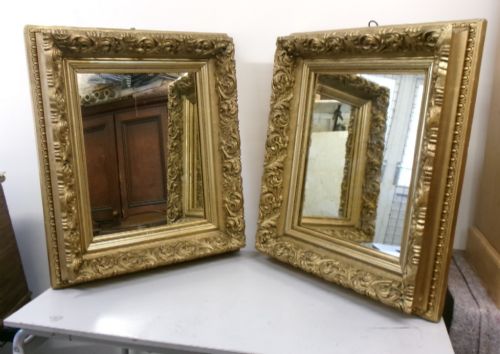
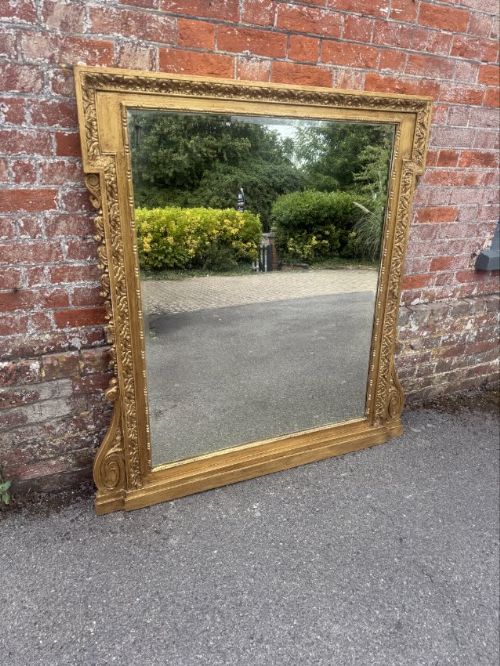
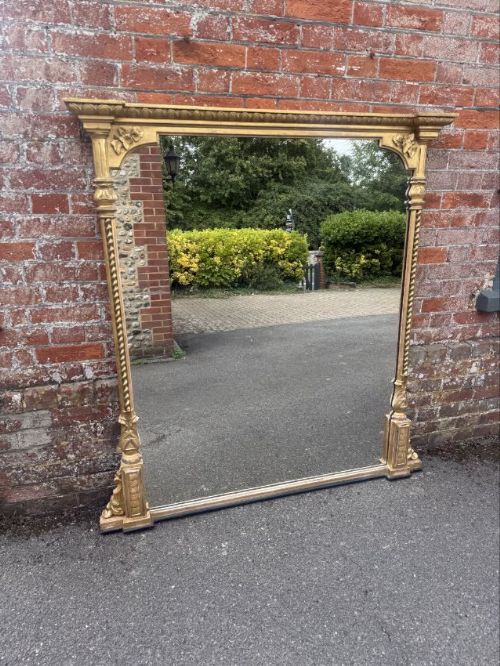
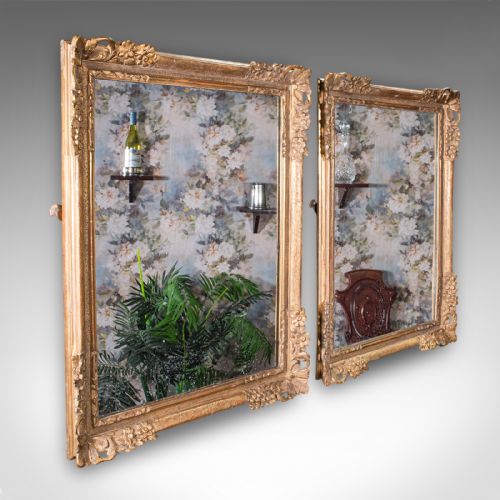
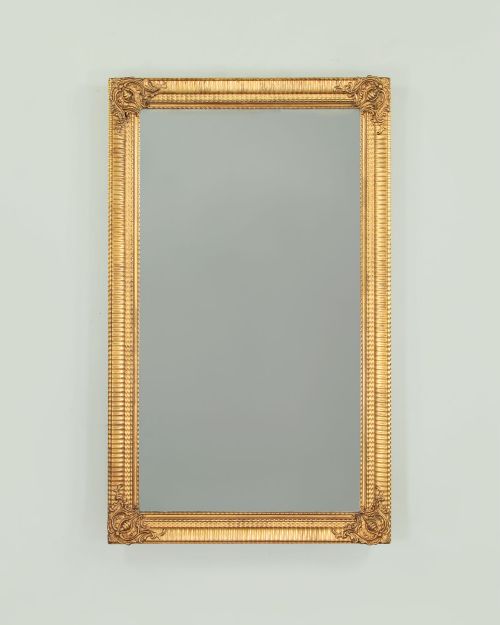
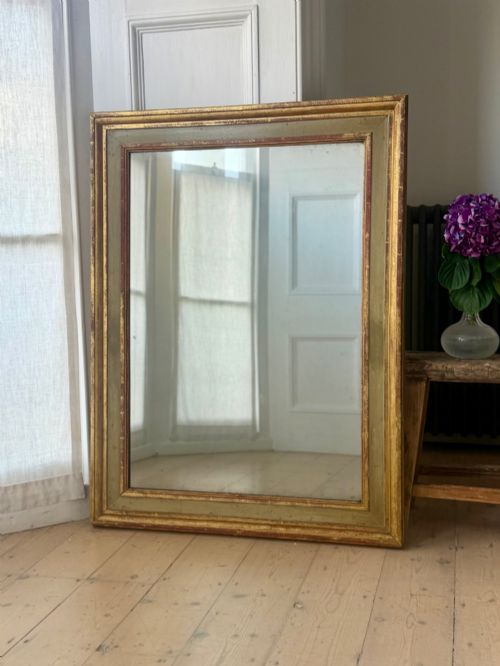
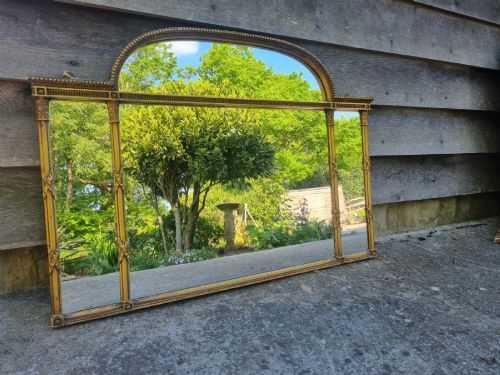
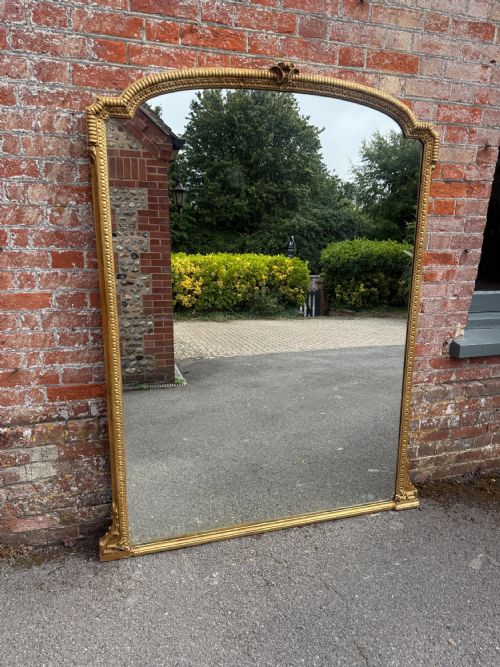
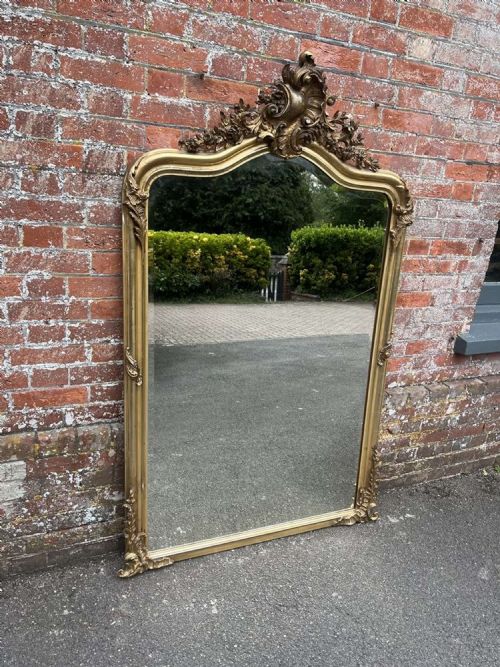
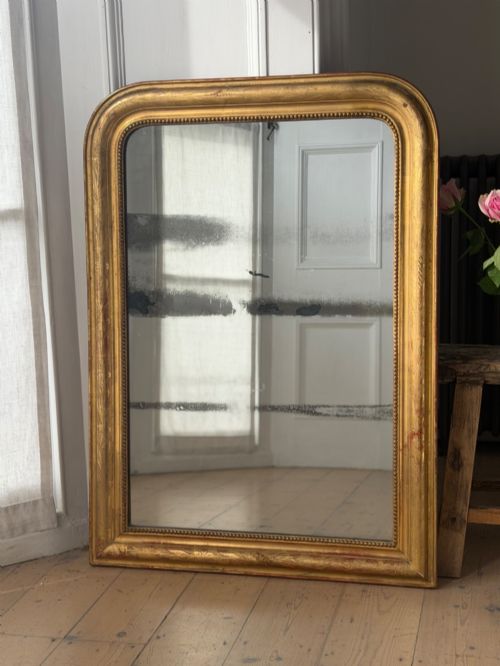
Large gold glass brings together glittering gilded frames, luminous plates and golden inclusions, most commonly seen in the nineteenth-century overmantel and wall mirrors filling this selection.
Large Gold Glass
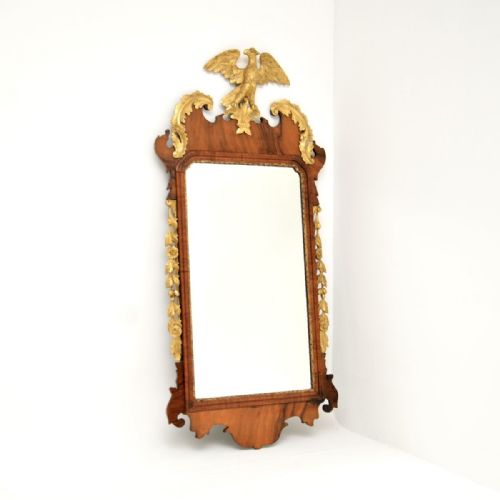
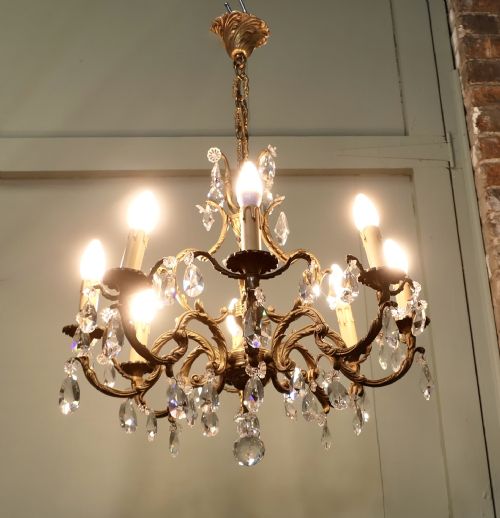
When you search for large gold glass, you encounter primarily nineteenth-century overmantel and pier mirrors encased in heavily gilded wood frames, alongside occasional decorative glass vessels and chandeliers.
The objects stem from English and French workshops, spanning Georgian, Regency, Victorian, and Napoleon III periods, where scale and brilliant metal finishes served grand domestic interiors.
Mirrors dominate the selection, bringing light and depth to rooms through antique plates, while occasional pieces incorporate coloured glass or golden aventurine inclusions.
How they were made
Carved timber foundations of pine or hardwoods received layers of gesso to build up intricate relief mouldings, rope twists, and ribbed frames before receiving thin sheets of gold leaf.
Reflective surfaces relied on traditional mirror glass, sometimes utilising historical mercury techniques that develop characteristic foxing over decades of oxidation.
Secondary materials such as brass, composition ornaments, and mahogany parcel gilt detailing added structural weight and decorative contrast to the primary gilded surfaces.
Alongside grand salon mirrors, the historical record holds a glittering gold glass witches ball intended to ward off wicked spirits.
What varies in quality
The crispness of the hand-carved wooden details and the depth of the gesso relief beneath the gold leaf determine the initial artistic standard of the frame.
Survival of original mirror plates and the natural ageing of mercury silvering distinguish untouched pieces from later replacements.
Proportion, architectural harmony, and the richness of the gilding separate standard decorative items from exceptional statement pieces.
The Large Gold Glass Glossary
- Gesso
- A plaster-like mixture applied to wooden frames to create a smooth or moulded surface for gilding. It allows for sharp relief details.
- Giltwood
- Timber that has been coated in gold leaf or gold paint. It forms the primary structural and decorative housing for large mirrors.
- Pier Mirror
- A tall glass designed specifically to hang on the wall space between windows. These often include decorative lower panels or candle sconces.
- Overmantle Mirror
- A wide glass proportioned to sit directly above a fireplace mantelpiece. They anchor the room's central hearth.
- Foxing
- Small dark spots and cloudy patches that develop on antique mirror glass as the reflective backing ages and oxidises. It provides authenticity.
- Aventurine
- Glass containing tiny sparkling metallic inclusions of copper or gold. It creates a shimmering internal effect within decorative vessels.
Large Gold Glass: Frequently Asked Questions
Where should I hang a large overmantle mirror?
These large mirrors traditionally sit directly above a fireplace mantelpiece, reflecting light and anchoring the room's central wall.
Ensure the wall structure can support the substantial weight of the carved wood and glass frame before installation.
How do I care for antique gilded frames?
Dust the carved gesso and gold leaf gently with a dry, soft brush to protect the delicate metallic surfaces from abrasion.
Avoid using liquid cleaners or polishing compounds near the gilding, as moisture causes the underlying gesso to soften.
What is foxed glass?
Foxed glass refers to antique mirror plates that display natural age spots, cloudiness, and oxidation within the silvering.
This atmospheric ageing is prized by collectors as proof of a genuine historical mirror plate.
How do I date a gold glass mirror?
Examine the construction of the wooden frame, the composition of the gesso, and the style of the carving for period markers.
Georgian and Regency pieces show different moulding profiles and joinery compared to later Victorian or Napoleon III revivals.