



Large Gilded Chimney Mirror
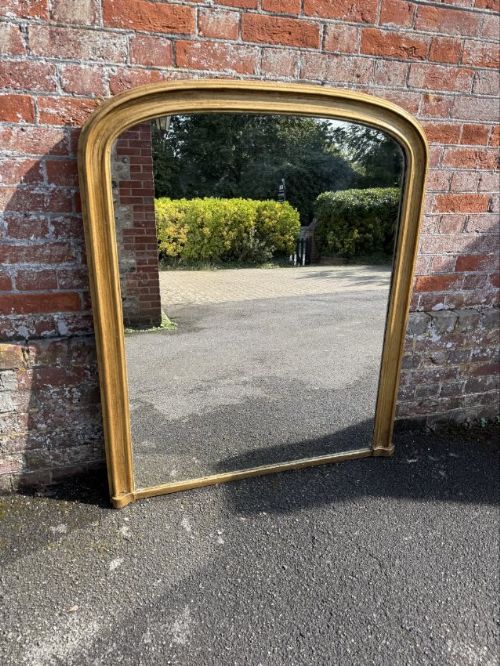
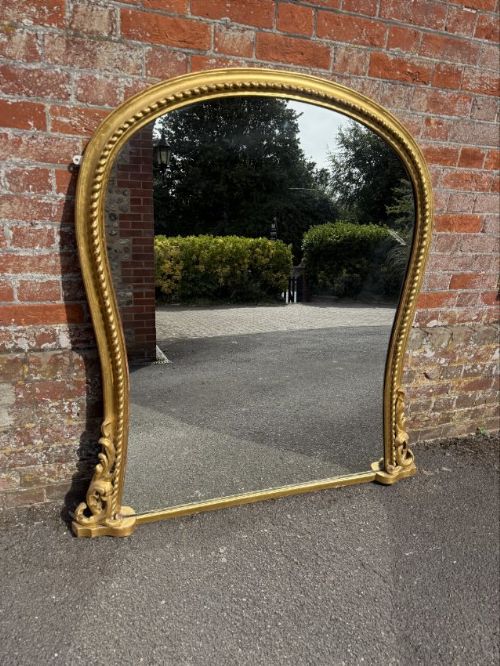
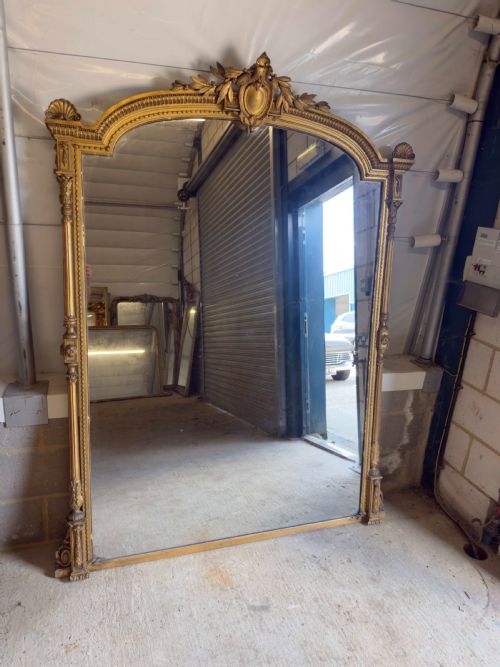
A large gilded chimney mirror brings scale and reflected light to a room, sitting naturally above a hearth as these grand overmantel pieces were designed to do.
Large Gilded Chimney Mirror
A large gilded chimney mirror is a substantial wall piece designed to occupy the space above a fireplace mantel, reflecting light around the interior. These items appear primarily in nineteenth-century forms, including Regency, Victorian, and Edwardian periods, stretching from the Georgian era into the early twentieth century.
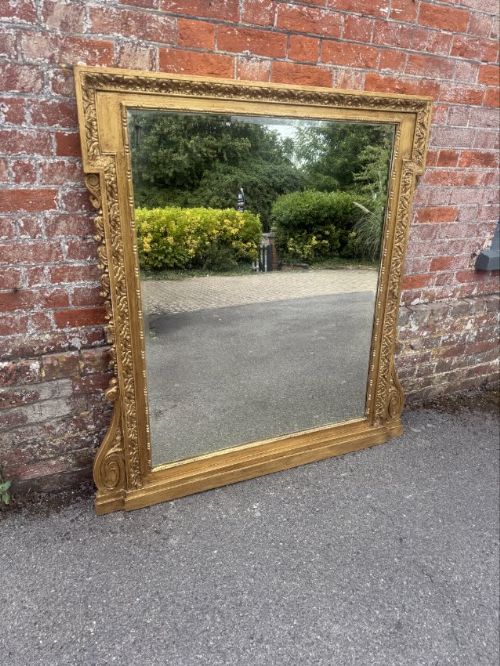
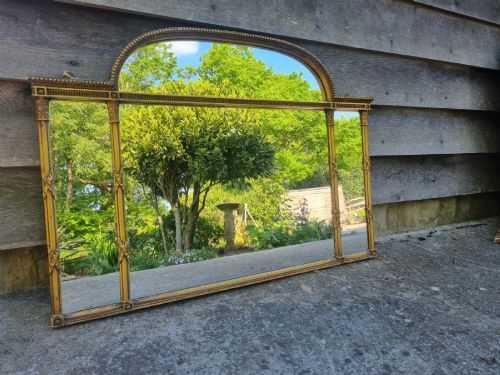
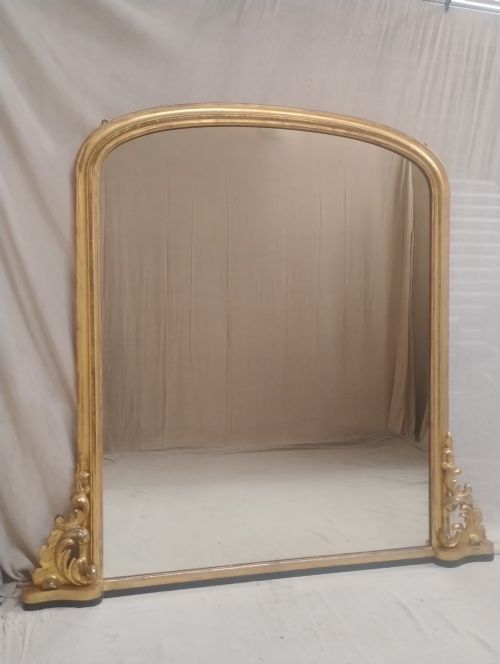
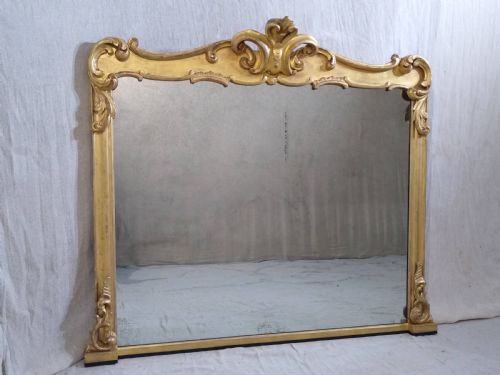
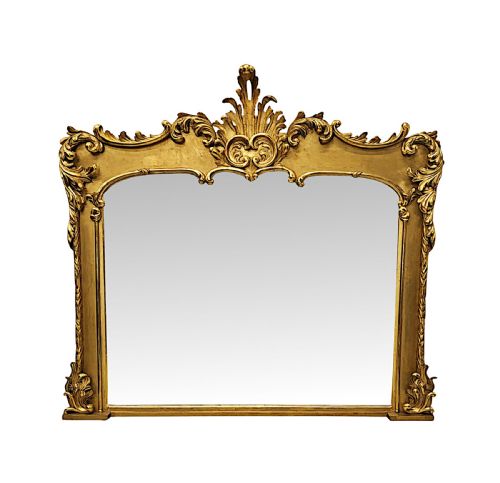
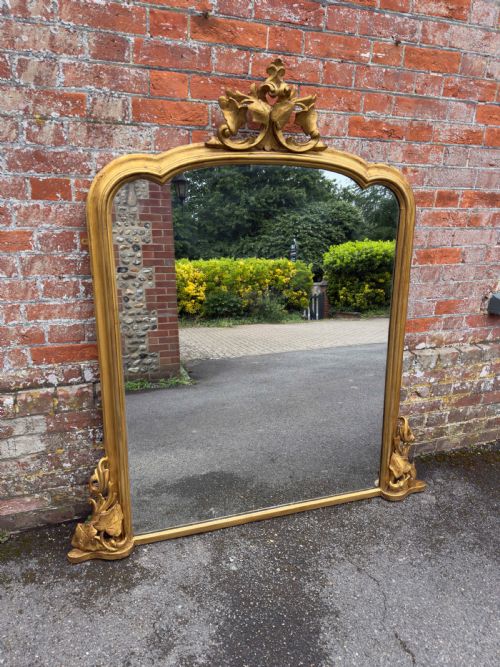
The dominant format on this page is the overmantel mirror, often shaped with an arched top, a shaped crest, or a rectangular frame. Makers produced these in varied scales, including grand proportions suited to formal reception rooms and country houses.
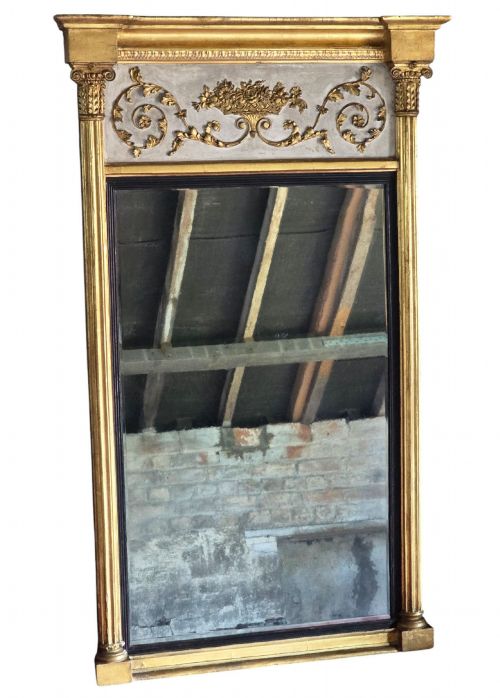
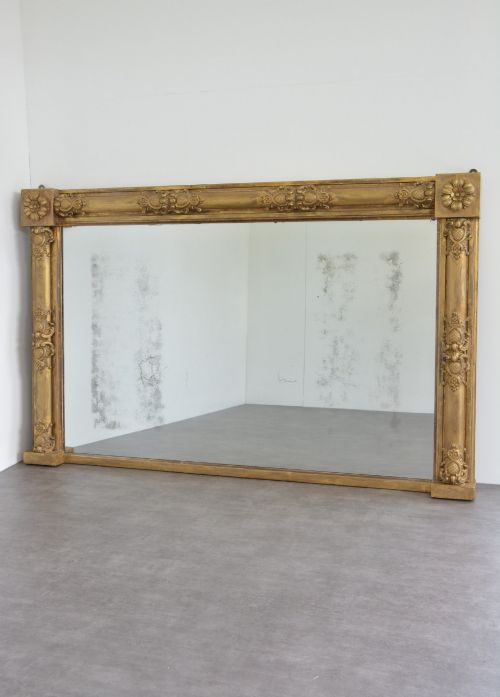
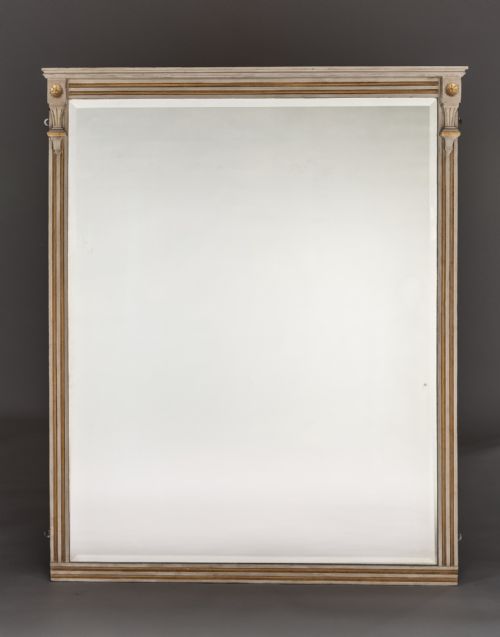
Framing styles span from simple architectural profiles to ornate decorations such as rope twists, hour-glass ribbing, and neoclassical motifs. Some examples incorporate white painted details alongside the gold finish, while others feature distinct regional characteristics like Irish trryptic layouts with bird carvings.
How they were made
Makers constructed the foundational frames using timber such as carved wood or oak, building up intricate surface ornament with gesso and composition layers. Artisans then applied gold leaf or gilt finishes over the prepared surfaces to achieve the characteristic reflective metallic sheen.
Mirror glass plates were set within these heavily decorated wooden structures, sometimes displaying age characteristics like light foxing. Carving techniques varied from linear ribbed patterns and rope twists to elaborate rococo scrollwork and neoclassical decorations.
Some nineteenth-century Irish country house mirrors feature hidden squirrel and Ho Ho bird details tucked among the elaborate gilded gesso carvings.
What varies in quality
The distinction between standard items and superior examples lies in the depth and crispness of the hand-carved wood and moulded gesso decoration. Finer pieces retain intricate relief work on arched tops and frames that remains sharp rather than softened by heavy over-gilding.
Proportion and scale dictate the visual impact of the piece, with better examples balancing substantial dimensions against balanced framing details. The integrity of the original gilding and the preservation of the early mirror glass contribute significantly to the standing of an individual mirror.
Ciceri and Co
The Large Gilded Chimney Mirror Glossary
- Overmantel mirror
- A large mirror specifically designed to hang or rest upon the mantelpiece above a fireplace. These pieces often feature wide horizontal or vertical proportions to anchor the hearth area.
- Gesso
- A plaster-like mixture applied to wood frames to create a smooth surface for gilding. Artisans carved or moulded this material to form intricate decorative reliefs.
- Giltwood
- Timber that has been coated with gold leaf or metallic powder. This finish gives the frame its bright, reflective golden appearance.
- Trryptic
- A mirror divided into three distinct vertical sections or panels. This configuration appears in specific nineteenth-century Irish pieces alongside decorative bird motifs.
- Foxed glass
- Mirror glass displaying dark spots, clouding, or speckled oxidation caused by age. This natural ageing process alters the reflective surface.
- Composition
- A moulded mixture of materials like whiting, resin, and glue pressed into decorative ornaments. Makers used this technique as a quicker alternative to hand-carving deep wooden details.
Large Gilded Chimney Mirror: Frequently Asked Questions
How do I hang a heavy overmantel mirror?
These substantial pieces require secure anchoring directly into structural wall studs using heavy-duty brackets suited to the weight of the timber and glass. Many historical examples were designed to rest partially on the mantelpiece while being secured safely to the wall at the top.
Professional installation ensures the frame remains stable and prevents the weight from straining the antique joints or the wall fixings.
Were these mirrors always meant for fireplaces?
Makers designed overmantel mirrors specifically to fill the wide wall space above a fireplace hearth, where they captured and multiplied the light from the fire below. Their proportions and weight matched the architectural scale of chimney breasts in period rooms.
While they occasionally migrated to large piers between windows, their primary function remained tied to the hearth as a central decorative focal point.
How do I clean a gilded frame safely?
Dust the intricate gesso and carved wood surfaces gently using a soft, dry brush to avoid disturbing the delicate gold leaf layer. Moisture and chemical cleaners can lift the historic gilt finish or damage the composition ornaments beneath.
For the mirror glass itself, apply a mild glass cleaner to a cloth rather than spraying directly onto the plate, preventing liquid from seeping behind the frame edges.
What is foxed glass on an antique mirror?
Foxed glass refers to the natural breakdown of the backing behind the mirror plate, resulting in charming dark spots, soft clouding, and speckled discoloration. This chemical ageing process happens gradually over many decades as air reacts with the reflective coating.
Collectors often appreciate original foxed glass because it confirms the authenticity and historical age of the mirror plate.