



Large French Stool
A large french stool brings grounded elegance to a room, offering generous proportions and period character.
Large French Stool
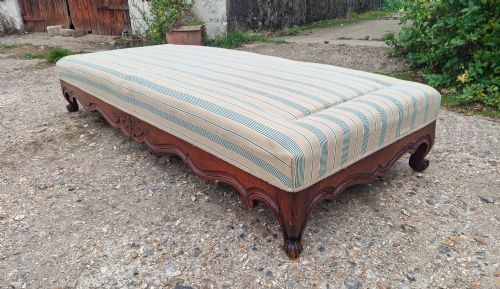
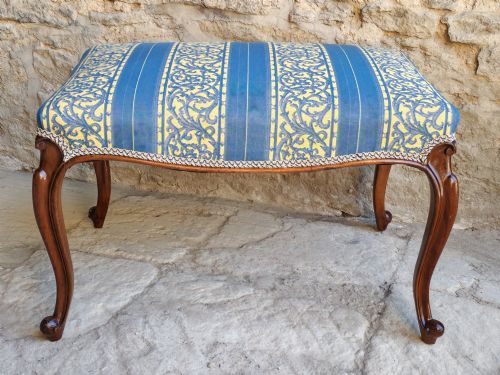
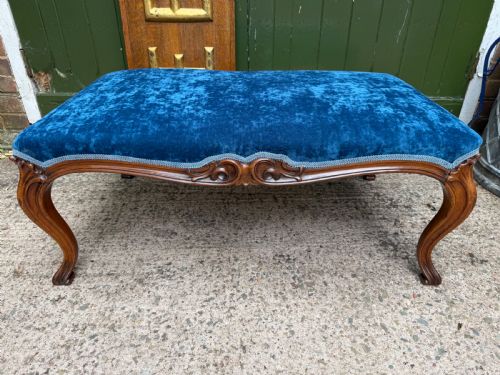
A large french stool provides a substantial seating or resting surface, frequently appearing in forms like footstools, ottomans, and centre stools. These pieces span the nineteenth century, including specific years like eighteen-sixty, eighteen-eighty, and nineteen-thirty, alongside broader periods such as Regency and Victorian.
Buyers meet variations influenced by French Chateau, French Rococo Revival, Louis XIV Revival, and Louis XVI Style aesthetics. Walnut, mahogany, rosewood, and timber provide the structural foundation for these substantial furnishings.
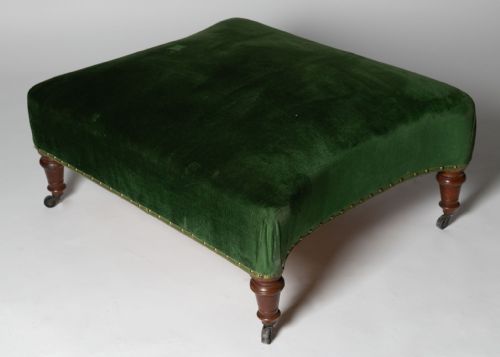
Upholstery defines much of the surface area, utilising fabric, velvet, and various textiles. Some examples retain plain wooden frames ready for new upholstery, while others present fully finished gilded and carved details.
How they were made
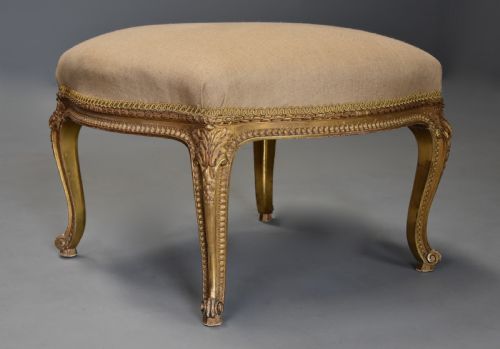
Craftsmen utilised solid timbers such as walnut, mahogany, and rosewood to construct the robust frames of a large french stool. Carved wooden elements often received layers of gilt or gilding to create rich metallic finishes on surfaces.
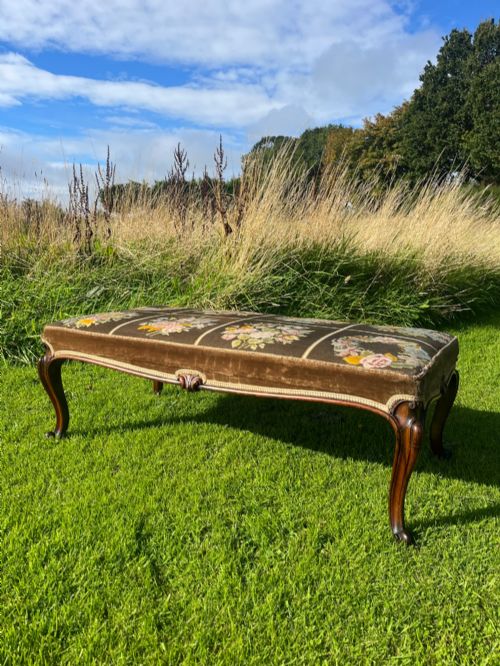
Joinery techniques secured cabriole legs and rectangular or curved rails to support the heavy loads placed upon footstools and ottomans. Textile coverings, including velvet and patterned fabrics, were fixed over padding to complete the top surface.
Large French Stool Retail Price Guide 2026
Typical asking prices for large french stool among the pieces listed under this phrase on Sellingantiques today, from the lower quarter to the upper quarter. They describe what is for sale here now, not the wider market.
Design influences include French Chateau, Louis XIV Revival, and Rococo Revival styles.
What varies in quality
The depth and crispness of hand-carved ornamentation separate standard frames from those exhibiting superior artistry. Crisp foliate carving and well-defined cabriole legs demonstrate a higher standard of workshop execution.
The choice of primary timber and the application of quality gilding affect the visual presence of the piece. Superior examples integrate sound structural joinery with refined surface treatments that endure through centuries.
LOIDRAULT FRERES PARIS
The Large French Stool Glossary
- Giltwood
- Wood that has been coated with gold leaf or a gold-coloured metallic finish. This technique highlights carved details on nineteenth-century frames.
- Cabriole leg
- A furniture leg that curves out and then in, resembling animal legs. It is commonly found on revival and period seating forms.
- Centre stool
- A large, freestanding stool designed to be viewed from all sides, often placed in the middle of a room. These pieces provide versatile seating or resting surfaces.
Large French Stool: Frequently Asked Questions
What rooms suit a large french stool?
These substantial pieces fit well in drawing rooms, large bedrooms, or studies where extra seating or a footrest is required. Their generous proportions anchor a seating arrangement.
They also serve as low tables when topped with a rigid tray, combining decorative presence with practical utility.
How do I identify a revival style?
Revival pieces borrow decorative motifs from earlier French reigns, such as Louis XIV or Louis XVI. Look for characteristic carving styles and symmetrical forms.
Nineteenth-century makers reinterpreted these historical designs using contemporary workshop methods and seasoned timbers.
Are these stools suitable for daily use?
Solid timber frames and sturdy joinery ensure these pieces handle everyday sitting and resting. Proper maintenance of the wood and fabric keeps them functional.
Frames intended for new upholstery allow owners to select durable modern textiles suited to contemporary living.
What is the difference between an ottoman and a footstool?
Ottomans typically offer fully upholstered top surfaces designed for sitting or resting feet, often on a grand scale. Footstools may feature exposed wooden frames and legs.
Both forms appear frequently within nineteenth-century seating categories on this page.