

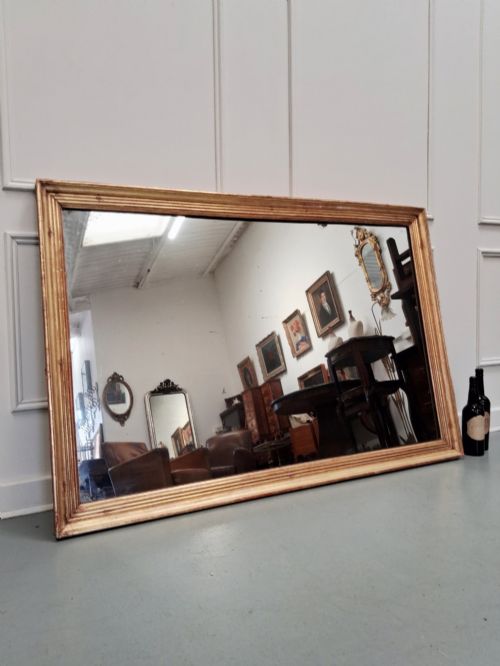
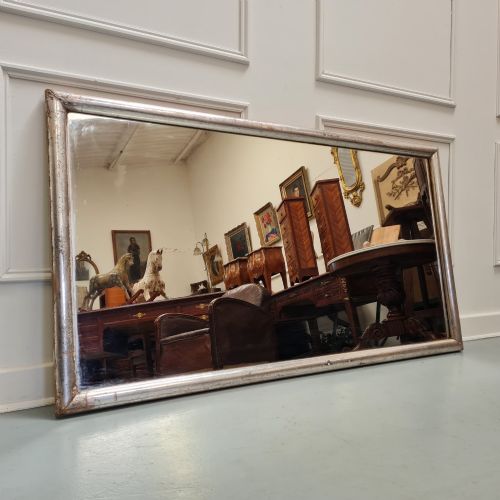
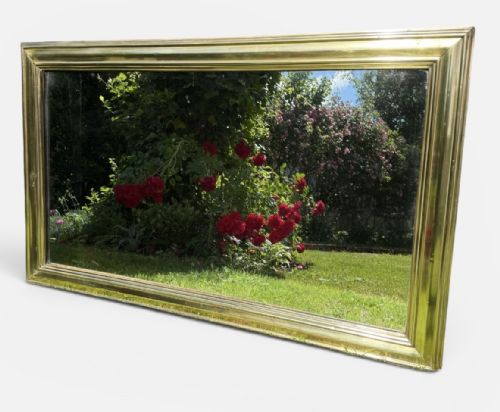


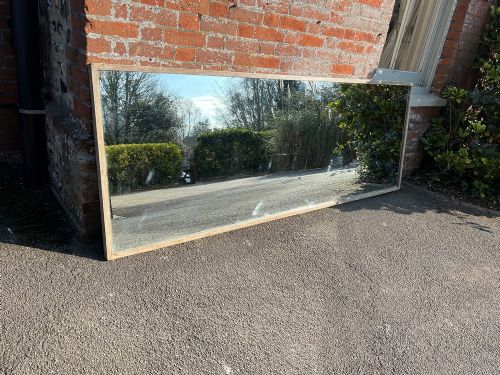


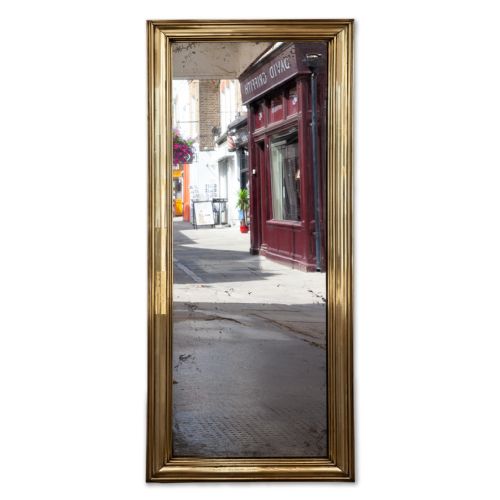

Large French Bistro Mirror
A large french bistro mirror brings grand scale and reflective light to a room, carrying the practical elegance of nineteenth-century establishments.
Large French Bistro Mirror
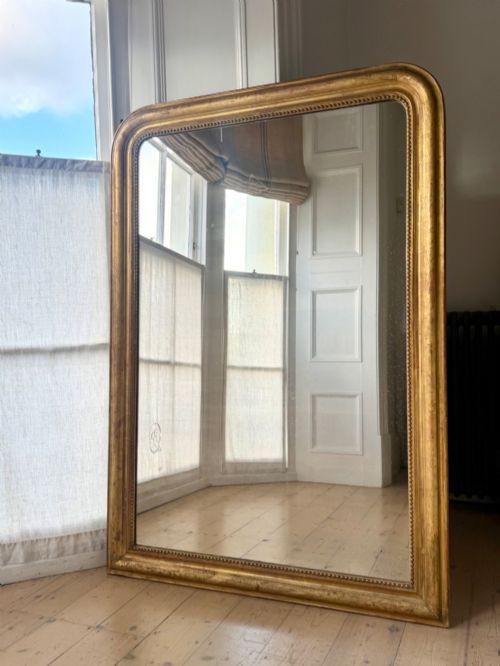
A large french bistro mirror serves as a dominant architectural element, originally hung in public houses and dining spaces to amplify candle or gas light. These pieces primarily date from the nineteenth century, spanning decades from eighteen hundred through to early twentieth-century examples.
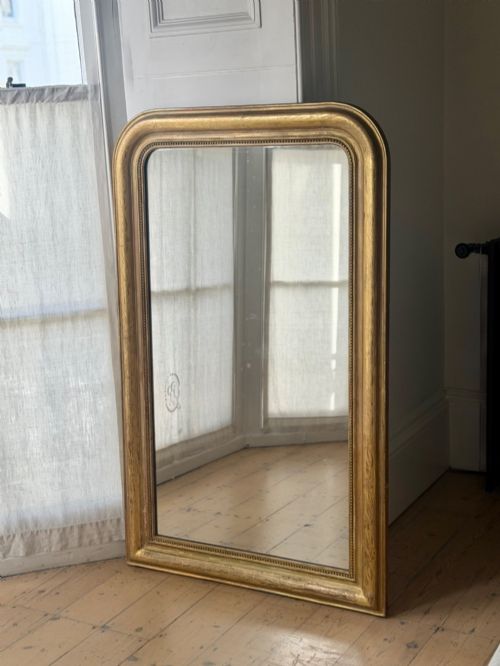
Buyers encounter substantial wall-mounted formats, including overmantels, pier glasses, and portmanteaus. Wooden frames dominate the selection, often shaped in Louis Philippe or provincial styles with generous proportions.
The aesthetic balances heavy framing with aged glass plates, bringing authentic European character into domestic interiors.
Construction and materials
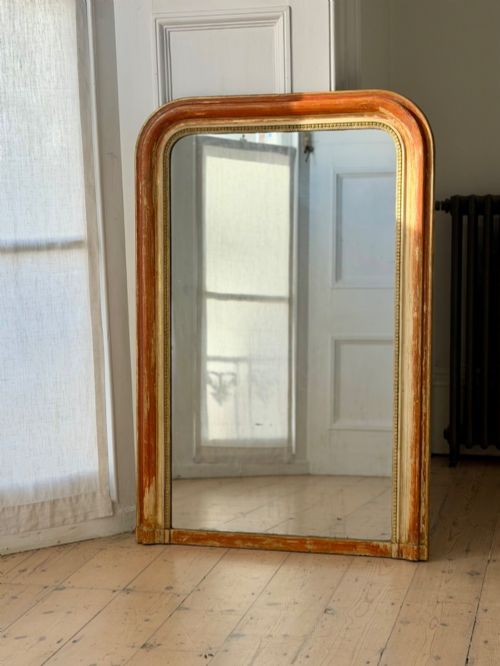
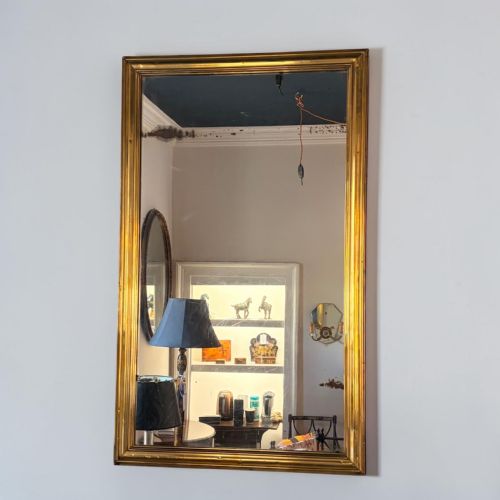
Carpenters built the primary structures from timber, frequently applying layers of gesso to create crisp mouldings and decorative reliefs before finishing with paint, silvering, or gold leaf. Brass also appears as a primary framing material, offering a clean metallic border distinct from carved wood.
Mirror plates of the period were set by hand into the rebate, backed with protective coatings that often developed natural foxing and distressing over decades of exposure to ambient moisture.
Large French Bistro Mirror Retail Price Guide 2026
Typical asking prices for large french bistro mirror among the pieces listed under this phrase on Sellingantiques today, from the lower quarter to the upper quarter. They describe what is for sale here now, not the wider market.
Many of these mirrors retain centuries of French restaurant gossip silently trapped behind their foxed glass.
Assessing quality and craftsmanship
Depth and crispness of the carved wood and gesso ornamentation separate standard examples from finer pieces, where delicate foliage and moulding remain sharp beneath the gilt or paint layers. Original mirror plates with deep, uniform patination hold greater appeal than modern replacement glass.
Structural integrity of the heavy timber joints and the preservation of original gilt or painted surfaces dictate the overall desirability of an individual piece.
The Large French Bistro Mirror Glossary
- Gesso
- A plaster-like mixture applied to wooden frames to provide a smooth base for gilding or painting. Artisans carved intricate details directly into this hardened layer.
- Louis Philippe
- A mid-nineteenth-century French style characterised by restrained classical proportions, often featuring gentle rounded upper corners on vertical rectangular frames.
- Foxing
- Small dark spots and irregular blemishes that develop within the silver backing of older mirror plates over time. This chemical ageing process creates a characteristic speckled reflection.
- Overmantel
- A large mirror specifically designed to hang above a fireplace mantelpiece. These pieces often stretch horizontally or vertically to fill the wall space beneath the ceiling.
- Portmanteau
- A multi-functional hall furniture piece incorporating a mirror, coat hooks, and sometimes umbrella stands. These items combined practicality with decorative presence in entrance halls.
Large French Bistro Mirror: Frequently Asked Questions
How do I hang a heavy mirror safely?
Due to the substantial weight of timber frames and thick glass plates, these mirrors require robust wall fixings anchored directly into masonry or structural studs. Professional mirror hangers utilise heavy-duty brackets that distribute the load evenly across the frame.
Position the hanging wire or heavy-gauge D-rings securely into the wooden structure of the frame rather than relying on decorative mouldings.
What is the best way to clean antique mirror glass?
Clean the glass gently using a soft microfibre cloth and a mild, ammonia-free glass cleaner sprayed onto the cloth rather than directly onto the plate. Avoid harsh scrubbing around the edges where the silvering meets the frame.
Preserve the aged character by leaving undisturbed foxing and natural patination intact.
How can I date a nineteenth-century mirror?
Examine the construction methods visible on the reverse, including hand-cut screws, pegged wooden joints, and the thickness of the backing boards. The composition of the glass plate and the wear on the gesso layers also offer strong chronological clues.
Compare the framing profile, such as Louis Philippe or provincial moulding styles, against documented period designs.
Can these mirrors be placed in bathrooms?
Bathrooms introduce high humidity that can accelerate the degradation of original gesso, wood, and historic silvered backing plates. If placed in damp environments, ensure adequate ventilation to protect the antique materials.
Consider keeping these pieces in dry reception rooms, hallways, or living spaces to maintain their condition.