




Large Framed Landscape Painting
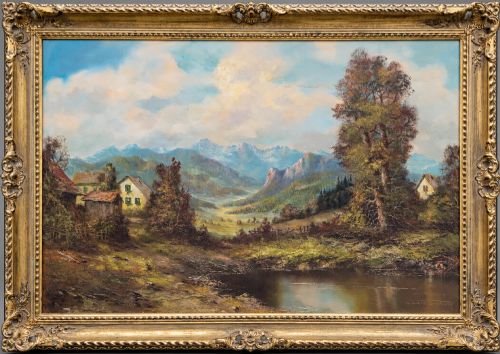
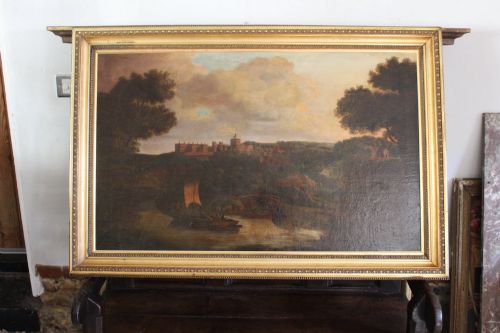
A large framed landscape painting brings the scale and atmosphere of the countryside or city into a room, anchored by period mouldings and canvas.
Large Framed Landscape Painting
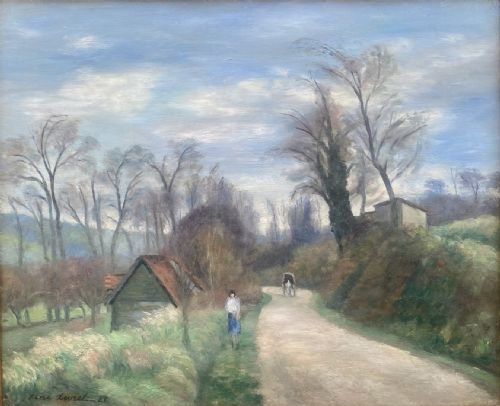
A large framed landscape painting delivers expansive visual presence, capturing rural vistas, coastal scenes, and river views on a grand scale. Buyers exploring this category encounter works stretching from the eighteenth century through the nineteenth century and into mid-century modern interpretations.
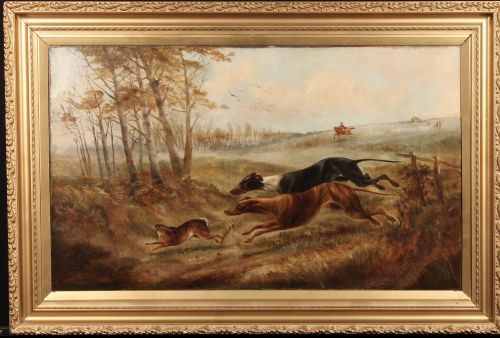
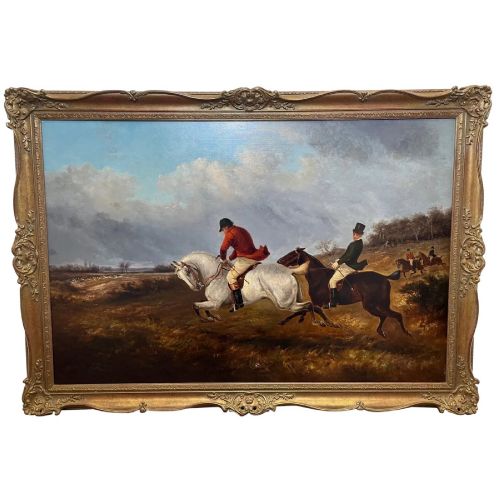
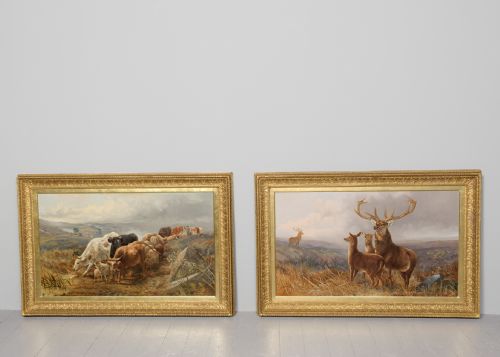
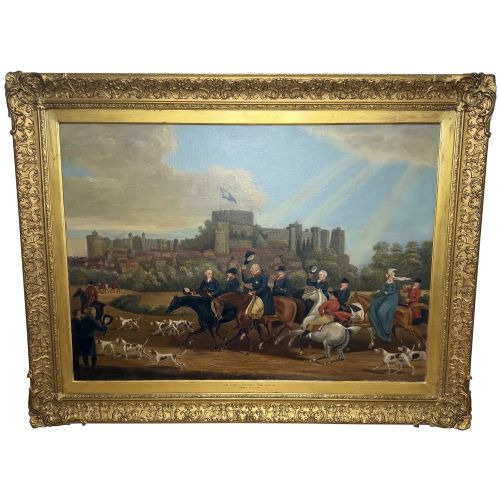
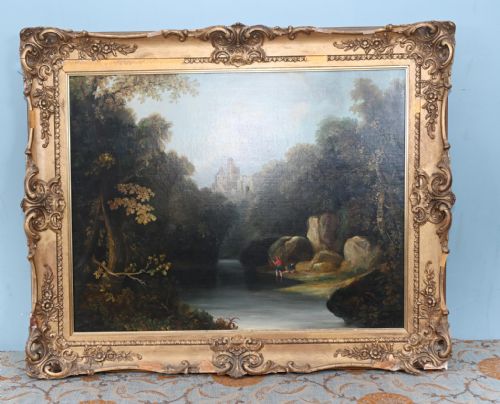
The most common examples on this page are nineteenth-century oil paintings on canvas, housed in substantial giltwood or gesso frames. These pieces often feature pastoral settings, hunting scenes, or dramatic mountain ranges rendered by British and continental schools.
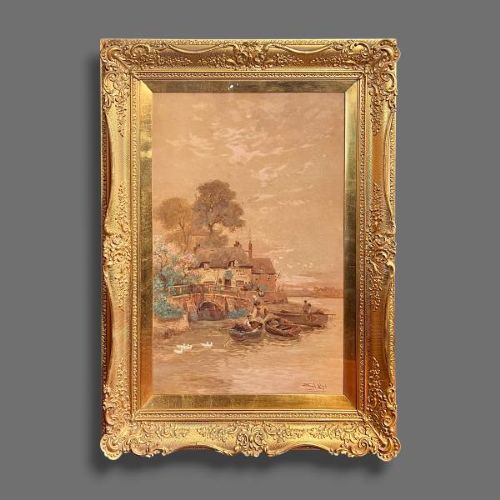
Beyond traditional oils, the selection encompasses watercolours, pastels, and gouache works under glass, alongside mid-century impressionist and abstract compositions. Each format relies on its original or period-appropriate frame to complete the presentation.
How they were made
Painters applied oil paint or water-based media onto stretched canvas, wood panels, or heavy paper, building depth through layered brushwork and impasto. Canvas supports were primed and tensioned within wooden stretcher frames before receiving their final artistic layers.
Moulded gesso and carved wood form the characteristic frames, often finished with applied gold leaf or gilt paint to create reflective borders. These frames were constructed separately by specialists, using traditional joinery and ornamental plasterwork to match the scale of the artwork.
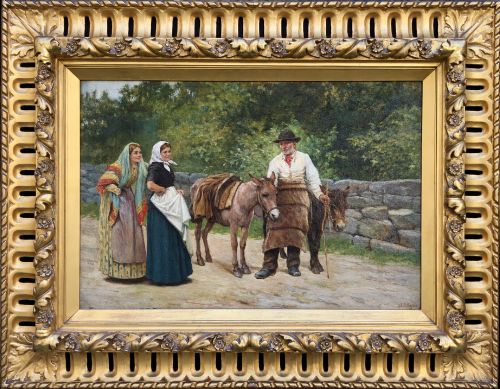
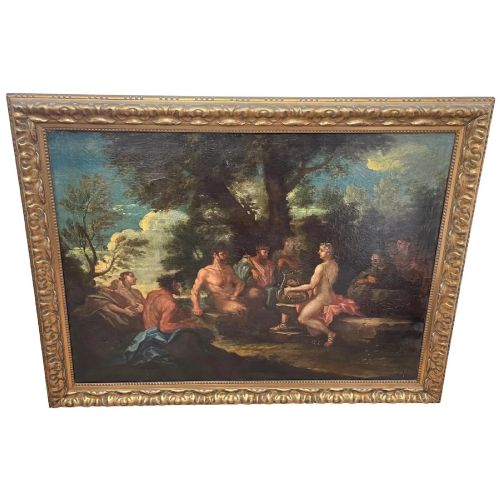
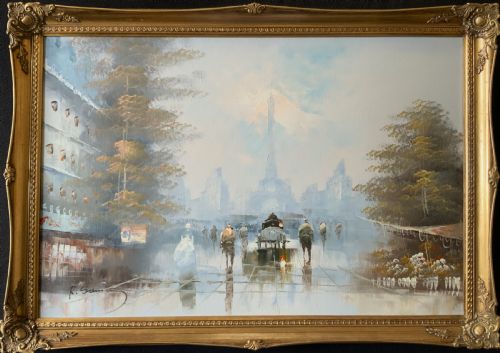
The selection includes British and continental schools, featuring coastal views, portraits, pastoral scenes, and abstract cityscapes.
What varies in quality
The distinction between tiers of work rests on the confidence of the brushwork and the handling of light and perspective within the scene. Superior paintings demonstrate a masterly understanding of atmosphere and anatomical proportion in figures or animals, whereas lesser examples rely on formulaic repetition.
Frame craftsmanship also dictates overall quality, with hand-carved giltwood mouldings representing a higher standard than pressed composition ornament. The preservation of the original surface, free from heavy overpainting or structural canvas repairs, elevates the standing of any piece.
Richard Sebastian Bond·Thomas Smythe·Rene Levrel·Erich Mercker·Robert Cleminson·Joseph Knight·John Moxon·Alexandre Le Bihan·William Henry Mander·Thomas Sidney Cooper·Gabriel Dauchot·Thomas Bromley Blacklock·Stuart Lloyd·Herbert Royle·William Littlejohn·William Sydney Cooper·David Cox Jnr·Charles Vickers·William Mellor
The Large Framed Landscape Painting Glossary
- Giltwood
- Wood carved and coated with gold leaf or a gold-coloured metallic finish. This material provides the brilliant, reflective border standard on traditional period frames.
- Impasto
- Paint applied thickly to a canvas, standing proud of the surface so that the texture of the brush or palette knife remains visible. It adds physical dimension and catches the light.
- Gesso
- A plaster-like mixture applied to wooden frame mouldings as a smooth base for gilding or painting. It allows intricate decorative details to be cast or carved along the edge.
- Provenance
- The documented history of ownership and origin for a work of art. A clear record establishes authenticity and links the piece to specific collections or exhibitions.
Large Framed Landscape Painting: Frequently Asked Questions
How do I hang a heavy framed painting safely?
Heavy canvas works require secure fixing into solid wall studs or the use of heavy-duty cavity anchors rated for the weight of the frame. Professional picture wire and robust brass D-rings distributed evenly across the wooden stretcher bars ensure the piece hangs flat and secure.
Position the centre of the canvas at approximately eye level to achieve the correct visual balance in the room. Ensure the wall location avoids direct sunlight and dramatic temperature fluctuations that could affect the stability of the wood and canvas.
How should I clean an antique oil painting?
Surface dust can be removed gently from the canvas using a very soft, dry artist brush or a clean microfibre cloth. Avoid pressing down or using any moisture, household cleaners, or solvents on the painted surface.
Professional conservators should handle deeper cleaning, varnish removal, or the repair of any tears in the canvas. Attempting DIY cleaning on older oils risks irreversible damage to the delicate glazes and pigments.
How can I tell the period of a frame?
Frame styles generally reflect the era of the artwork they enclose, displaying distinct moulding profiles, corner construction methods, and ornament types. Nineteenth-century frames frequently utilise heavy cast gesso ornamentation over a wooden carcass, finished with genuine leaf gilding.
Inspecting the reverse of the frame reveals joinery details, timber ageing, and past exhibition labels that help confirm its age. Later replacements often show modern fixings or machine-cut timber inconsistent with the painting's date.
What is the difference between canvas and panel paintings?
Canvas paintings utilise woven textile stretched over a wooden frame, providing a slightly flexible surface that responds to atmospheric changes. This method became dominant for larger works due to its relative lightweight nature and portability.
Panel paintings use solid wood boards or card supports, offering a rigid ground that prevents the cracking sometimes associated with aged canvas. Both supports require stable indoor environments to prevent warping or paint flaking.