
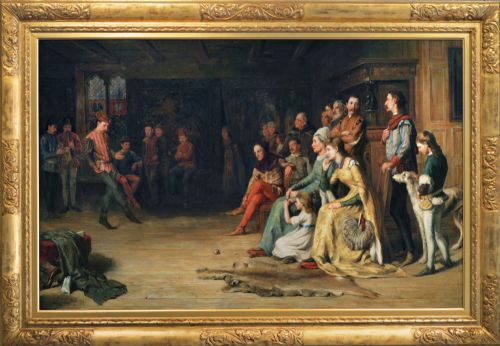


Large Framed Figurative Art
Large framed figurative art brings human presence and narrative depth to interiors through substantial painted and printed works.
Large Framed Figurative Art
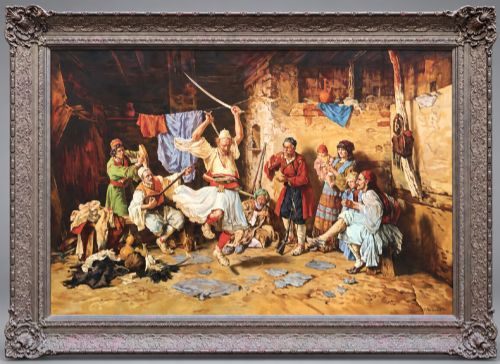
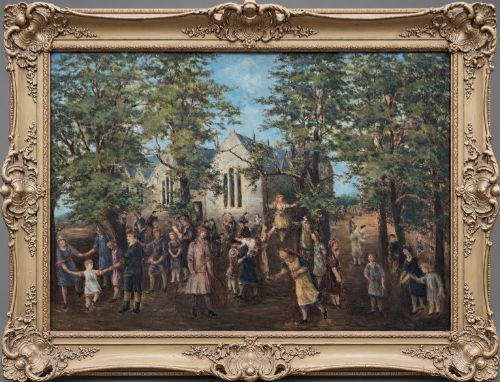
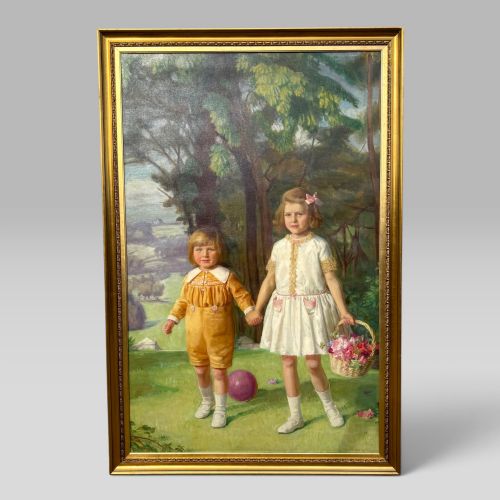
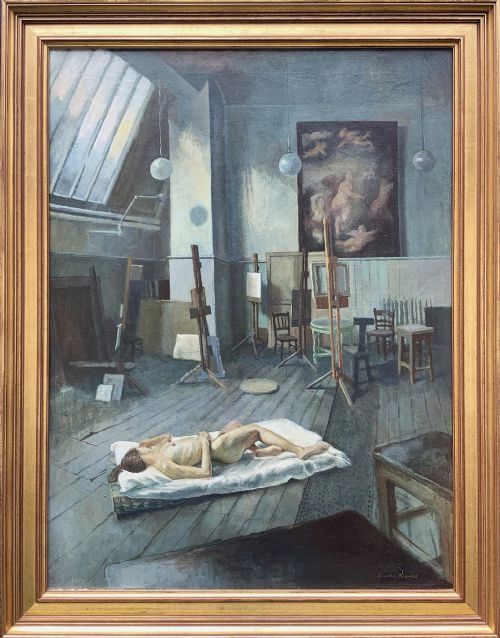
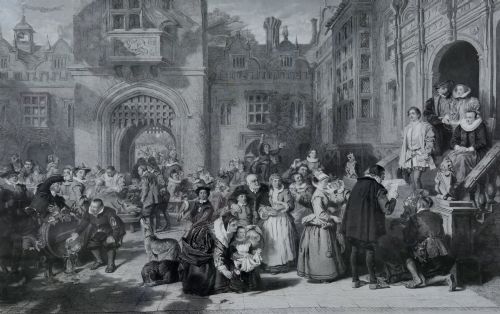
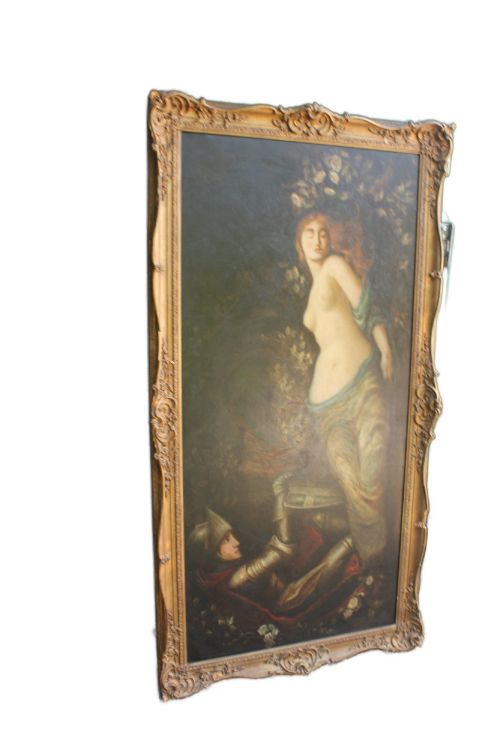
Large framed figurative art spans 19th-century Victorian works, Pre-Raphaelite romanticism, Edwardian portraits, and mid-century realism. Buyers encounter substantial oil paintings on canvas, watercolours on paper, charcoal studies, and framed prints housed within wood and gilt gesso frames.
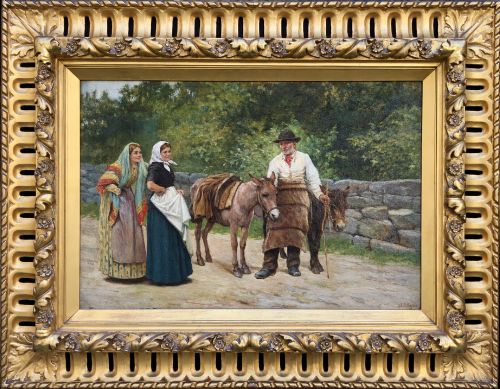
The subjects range from historical genre scenes and theatrical compositions to intimate studio interiors, female nudes, and peasant portraits. These pieces often originate from British, French, Belgian, and Italian studios, reflecting diverse regional styles from the 19th and 20th centuries.
Materials and Techniques
Makers built these works using oil paint applied to canvas, alongside watercolours, pastel, charcoal, and coloured etchings on paper. Canvases are typically stretched over wooden frames and secured within decorative surrounds.
Frames are constructed from wood, frequently enriched with moulded gesso and gilt finishes to complement the scale and tone of the imagery. Ceramic plaques appear via Italian faience production methods.
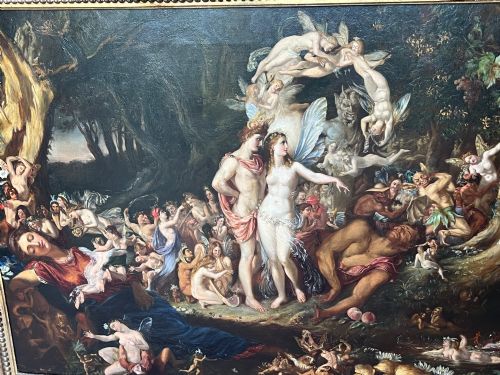
Fairies, blacksmiths, musicians, and peasants populate these large canvases, ensuring your walls host a bustling crowd of historical characters.
Factors of Quality
Quality rests upon the confidence of the draughtsmanship and the handling of human anatomy, expression, and narrative atmosphere. Superior works demonstrate accomplished brushwork and psychological depth within complex compositional arrangements.
The integration of the artwork with its original or period-appropriate wood and gesso frame influences the integrity of the piece. Greater distinction belongs to signed works by recorded Royal Academy exhibitors and recognised continental painters.
Sir Joseph Noel Paton·Felix Stone Moscheles·James Hamilton·James HayLLAR·Friedrich von Kaulbach·Jean-baptiste Joseph Pater·Hendricus Joseph Dillens·Martinetti·C. Ravier·Henry Collins·Robert Alexander Hillingford·Bernard Meninsky·Thomas Gist
The Large Framed Figurative Art Glossary
- Genre painting
- Depiction of aspects of everyday life by portraying ordinary people engaged in common activities. These scenes often carry historical, moral, or narrative undertones.
- Pre-Raphaelite
- A style associated with a mid-19th-century group of English painters who favoured detailed execution, bright colours, and complex literary or religious subjects.
- Gesso
- A plaster-like mixture applied to wood frames as a base for moulding ornamental details and applying gilding. It provides a smooth surface for decorative relief work.
- Etchings
- Printmaking methods where lines are incised into a metal plate with acid before ink is applied and transferred to paper. Coloured versions receive pigment by hand or printing pass.
Large Framed Figurative Art: Frequently Asked Questions
What periods do these artworks cover?
The selection spans from the nineteenth century through the Edwardian era to mid-century modern pieces. These include Victorian social realism, Pre-Raphaelite compositions, and post-century realist works.
Dates range from historical creations of the 1880s and 1890s up to mid-century pieces from the 1930s and 1960s.
What materials were used for these works?
Makers utilised oil paint on canvas, watercolour, pastel, and charcoal on paper, alongside coloured etchings and ceramic plaques. Frames are predominantly constructed from wood with gesso and gilt treatments.
Support structures involve standard canvas stretches, heavy framing materials, and protective glass where paper or delicate mediums require shielding.
How do I hang large figurative art?
Due to the substantial scale and weight of these framed works, secure wall fixings and wall studs are essential. Ensure appropriate picture wire and heavy-duty D-rings are fitted to the wooden frame.
Position pieces at eye level in rooms with stable humidity levels, avoiding direct sunlight to protect oil paint, watercolours, and paper surfaces.
How are different art movements identified?
Victorian and Pre-Raphaelite pieces typically display narrative themes, theatrical staging, and meticulous attention to detail. Mid-century works often favour looser brushwork, simplified forms, and modernist interiors.
Signatures, framing styles, and subject matter provide further clues to dating and regional origins.