





![Pen and Ink Sketch - Female Nudes by William Edward Frost [1810-1877]](https://www.sellingantiques.co.uk/photosnew/dealer_kendallhouse/dealer_kendallhouse_full_1758970795762-8493507346.jpg)


Academic Nude Figure Sketch
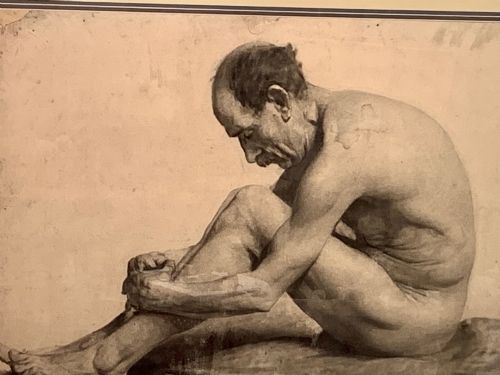
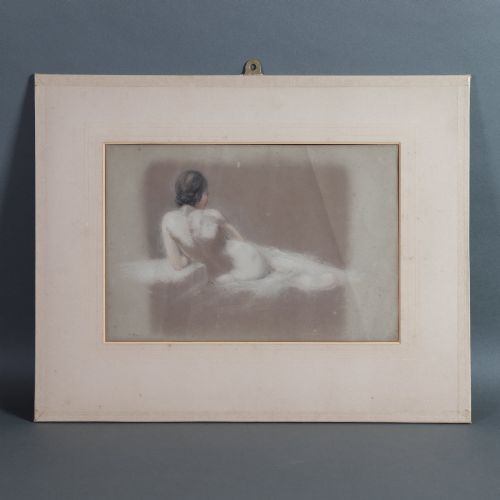
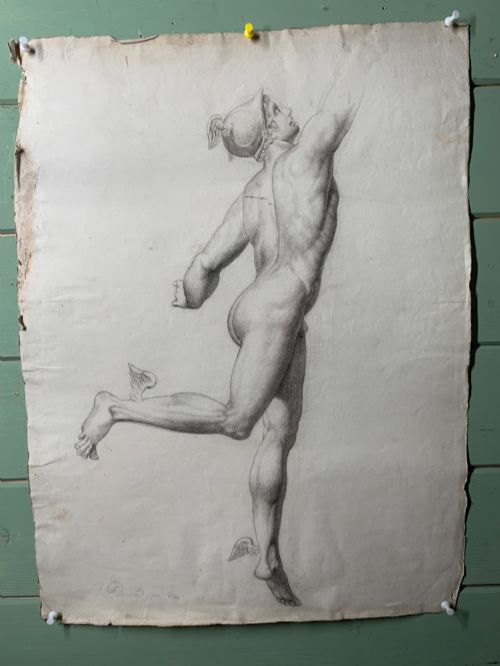
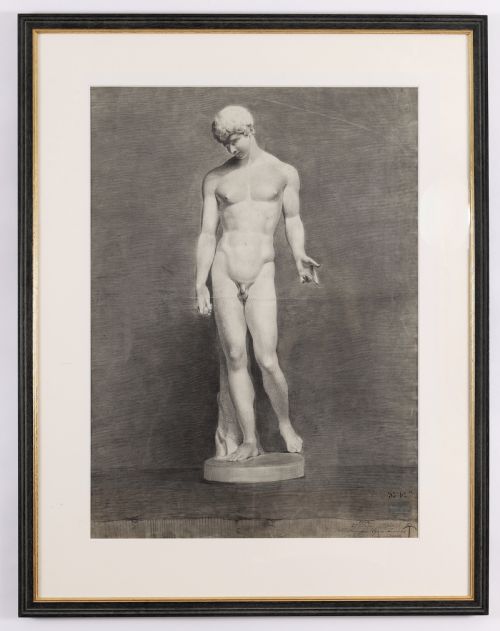
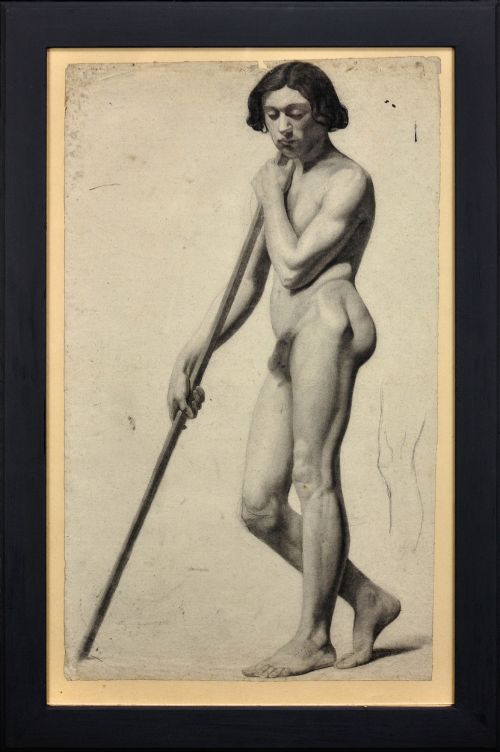
An academic nude figure sketch captures the rigorous discipline of life drawing through precise handling of proportion and form.
Academic Nude Figure Sketch
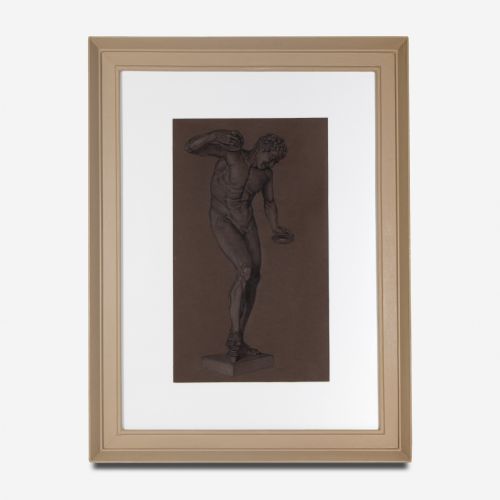
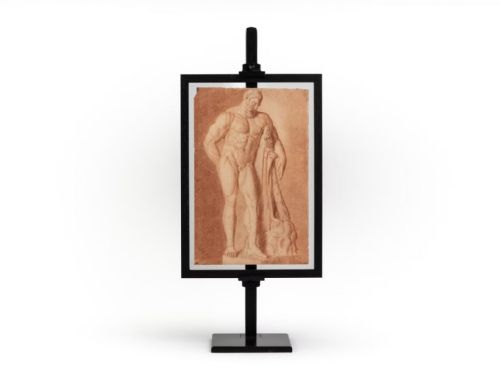
An academic nude figure sketch represents the foundational practice of studying the human form from life or classical sculpture within artistic training. These works record the physical musculature, posture, and balance of subjects such as the God Hermes, the Capitoline Antinous, or the Farnese Hercules. Buyers frequently encounter framed drawings executed in pencil, graphite, chalk, and charcoal across this selection.
The pieces span multiple centuries and stylistic approaches, including Georgian, Victorian, and mid-twentieth-century examples alongside French and Italian school interpretations. Forms range from single sheet studies to double-sided recto and verso compositions and paired life studies. These works provide direct insight into historical studio practices and the meticulous translation of three-dimensional anatomy onto a flat surface.
Materials and execution
Artists executed these works on paper and toned paper utilising dry mediums such as graphite, charcoal, red chalk, and black chalk. These materials allowed draughtsmen to build tone progressively, mapping deep shadows and crisp highlights across the muscular contours of the body. Pen and ink and mixed media also appear, offering sharper linear definition where structural accuracy took precedence over soft tonal blending.
Framing materials reflect the period of presentation, with antique gilt wood frames commonly used to house and protect works on paper. The physical support often bears the natural ageing of the sheet, including handling marks and subtle discoloration that accompany centuries of studio use. Technique relies on disciplined observation, utilising the inherent tooth of the paper to grab pigment and define volume.
Periods represented across the selection span from the Georgian era through the nineteenth century and into the 1960s.
Assessing quality in historical drawings
Quality rests upon the draughtsman's mastery of anatomical proportion, foreshortening, and structural integrity. A superior academic nude figure sketch demonstrates confident command of line and shadow, where the articulation of bone, tendon, and muscle convinces the eye of physical weight. Weaker examples reveal hesitation in the initial mapping of the figure or an unconvincing grasp of underlying skeletal structure.
The handling of the medium itself distinguishes exceptional works from routine student exercises. Masterful control of graphite, charcoal, or red chalk creates a luminous sense of skin and form without relying on excessive smudging or heavy-handed correction. The integration of light across the torso and limbs determines whether the figure appears static or possesses genuine vitality.
William Etty·Augustus John·Henry Arthur Roberts·Winifred Eugene Ballard·William Edward Frost
The Academic Nude Figure Sketch Glossary
- Recto and verso
- The front and back of a single sheet of paper. Historical study sheets frequently contain drawings on both sides.
- Life study
- A drawing executed directly from a live human model. This practice formed the core of traditional academic art training.
- Toned paper
- Paper that possesses a natural tint other than white or off-white. Artists use it to build highlights with white chalk alongside dark mediums.
- Foreshortening
- The visual effect of an object or human limb appearing shorter than it actually is because it angles toward the viewer.
- Manner of
- An artwork produced in the general style of a specific master but not necessarily by their hand or immediate workshop.
Academic Nude Figure Sketch: Frequently Asked Questions
What is an academic nude figure sketch?
An academic nude figure sketch is a preparatory or instructional drawing created to study human anatomy, proportion, and tonal volume. These works were fundamental to the curriculum of traditional art academies.
Artists used live models or antique sculpture casts to hone their observational skills and master the complexities of rendering the human form.
How do you date historical drawings?
Dating relies on stylistic markers, framing techniques, watermarks on the paper, and documented signatures or inscriptions by the artist. Comparative analysis with dated works from the same school provides further context.
Many pieces carry specific period attributions ranging from the Georgian era to the mid-twentieth century based on these physical and historical clues.
How should I frame and display these drawings?
Works on paper require conservation-grade framing behind UV-filtering glass or acrylic to prevent fading of fragile mediums like chalk, charcoal, and graphite. Keeping them away from direct sunlight preserves the integrity of the paper.
Displaying them in stable indoor environments protects both the antique frames and the delicate surfaces of the drawings from humidity fluctuations.
Why do some drawings feature studies on both sides?
Paper was a costly commodity in historical art schools, prompting students and masters to utilise both the front and back of a single sheet. These recto and verso compositions offer a double window into the artist's working process.
Collectors value dual-sided sheets because they often display different angles or alternate attempts at capturing the same anatomical subject.