
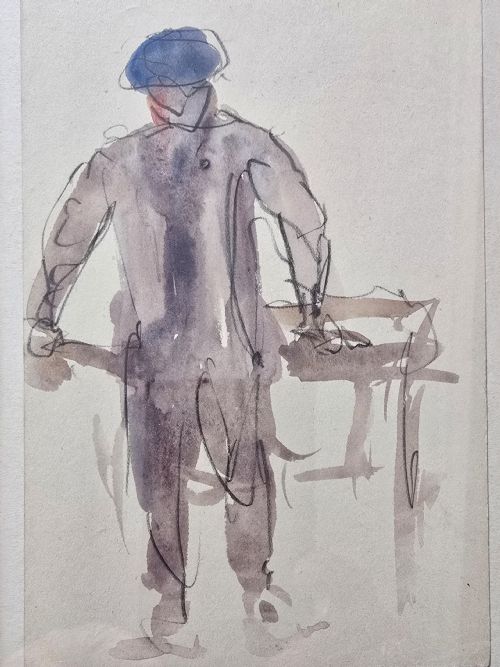


Grey Paper Figure Sketch
A grey paper figure sketch brings tonal depth and immediate life into a room through charcoal and chalk on tinted sheets.
Grey Paper Figure Sketch
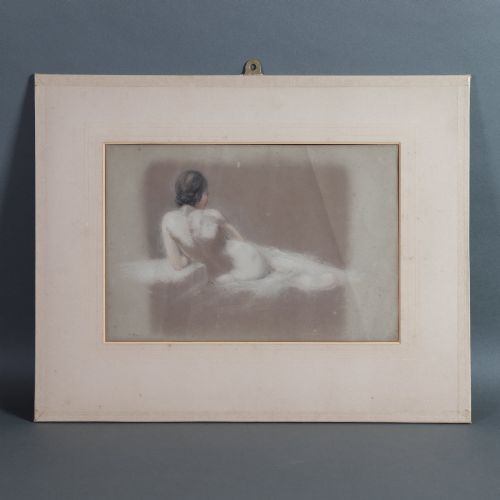
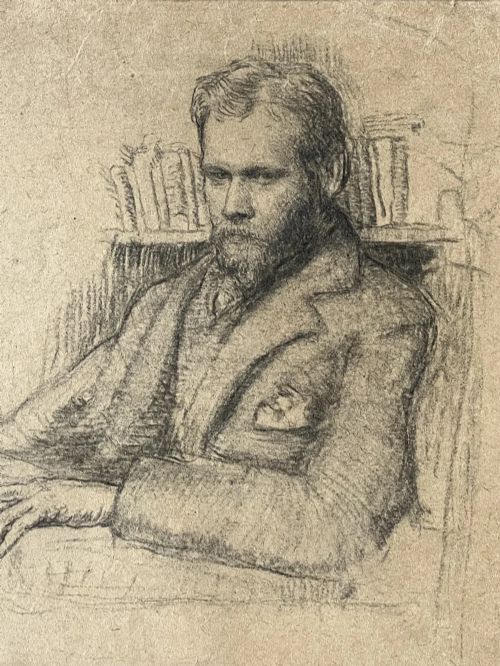
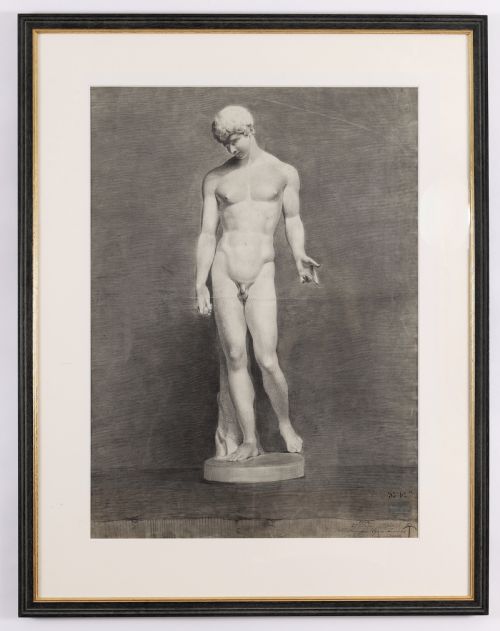
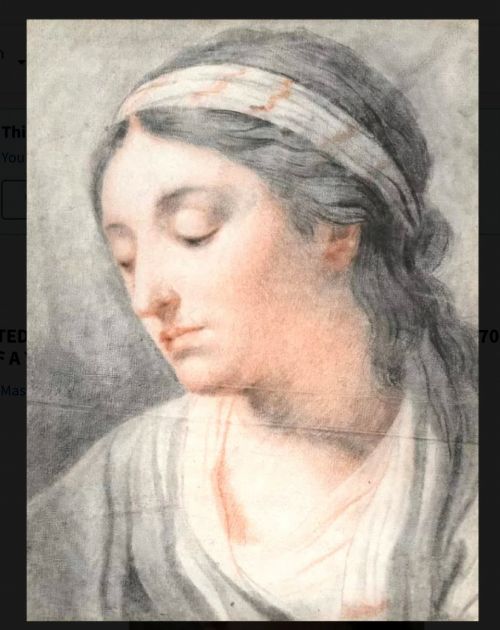
A grey paper figure sketch captures human forms and portrait studies rendered directly onto tinted grounds. These works span from the seventeenth century through to the mid-twentieth century, encompassing academic realism, romanticism and modernist movements.
You will most frequently encounter nineteenth-century examples and early twentieth-century pieces, including portrait drawings and figure studies. Artists utilised the neutral tone of the paper to build both highlights and shadows efficiently.
The selection ranges from anonymous school works to pieces attributed to notable European and British hands. Subjects include female figures, literary portraits and historical studies.
Materials and execution
Draftsmen relied primarily on paper as a foundational support, frequently utilising tinted or grey sheets that allowed mid-tones to emerge naturally. Charcoal, graphite and chalk provided the dense dark lines and soft tonal gradations required for figure work.
Artists layered white chalk alongside dark media to create dramatic highlights on the grey surface. Some pieces incorporate pencil, pastel, pen and ink or watercolour to add colour and definition to the composition.
Paper has quietly held onto the charcoal traces of resting artists for over three hundred years.
Markers of distinction
Quality rests upon the sureness of the draughtsmanship and the economy of line used to define the human form. Strong academic training shows in the accurate rendering of bone structure, posture and shadow.
The relationship between the dark medium, the white highlights and the neutral grey paper dictates the visual impact of the sheet. Superior examples display confident tonal balance without overworking the delicate surface of the paper.
William Etty·Augustus John·Marie Leczinska·Frank Dobson·Francis Dodd
The Grey Paper Figure Sketch Glossary
- Ground
- The prepared surface or base colour of the paper upon which a drawing is executed. Tinted grounds provide an immediate middle tone that speeds up the sketching process.
- Draughtsmanship
- The skill and technique of making drawings, particularly involving the human figure and perspective. Strong draughtsmanship underpins successful portrait and study works.
- Study
- A preparatory or practice drawing made by an artist to explore a subject or composition. Many finished historical drawings began as rapid life studies.
- Mixed media
- An artwork utilising more than one medium on the same surface. These works often combine pencil, chalk, watercolour and ink.
Grey Paper Figure Sketch: Frequently Asked Questions
Why did artists draw on grey paper?
Working on a grey ground provided artists with a pre-existing mid-tone, which saved time when building up volume.
This technique allowed creators to apply dark charcoal for shadows and white chalk for highlights simultaneously.
How should I frame these drawings?
Paper works require archival mounting with acid-free materials to prevent degradation over time.
Keep them away from direct sunlight to protect vulnerable charcoal, chalk and pastel pigments from fading.
What periods do these sketches cover?
The available selection spans several centuries, reaching from seventeenth-century Italian sheets to twentieth-century modernist works.
Nineteenth-century academic and French school drawings form a substantial portion of the available range.
Are these works finished pieces or studies?
Many examples function as life studies or preparatory drawings capturing the initial concept of a figure.
Others stand as complete portraits intended for display and exhibition in their own right.