


Black Charcoal Figure Drawing
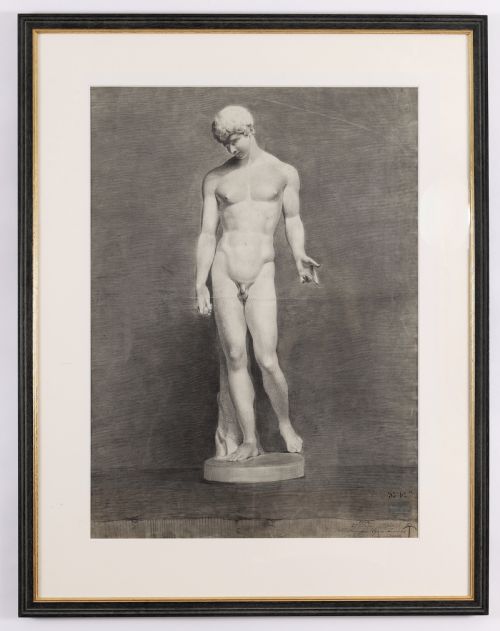
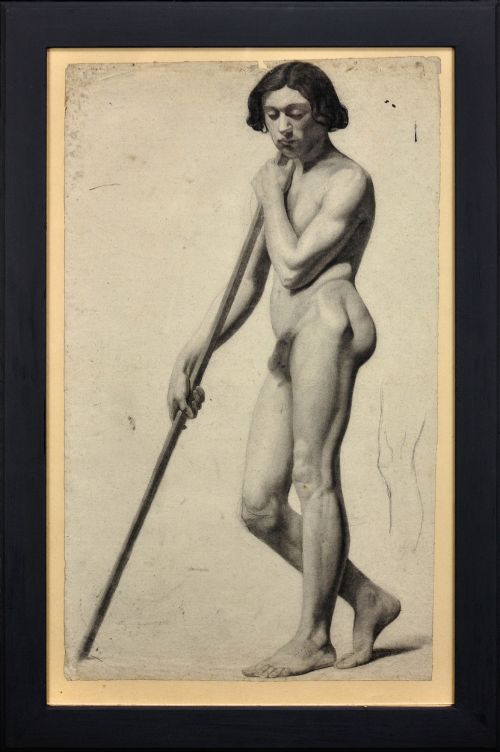
These black charcoal figure drawing pieces offer a direct line to academic life studies and portraiture executed on paper.
Black Charcoal Figure Drawing
A black charcoal figure drawing captures the human form through expressive monochrome mark-making on paper supports. Collectors pursuing a black charcoal figure drawing typically encounter framed academic studies, life drawings, and portraits spanning several centuries.
The selection ranges from early academic life studies of male and nude figures to twentieth-century avant-garde cubist compositions and art deco period portraits. Works originate from various periods including the seventeenth, eighteenth, nineteenth, and twentieth centuries.
Framed artwork and framed drawings dominate the available forms, often presented behind glass in wooden frames. These pieces document rigorous training methods, studio practices, and individual portraiture across diverse European traditions.
Materials and Technique
Artists utilise charcoal, black chalk, and graphite applied directly to paper substrates to build tone and line. Secondary mediums such as red chalk, pastel, and pencil occasionally appear alongside charcoal to define contours and model form.
Framing materials typically involve wood and glass to protect the fragile paper surfaces from environmental degradation. The application technique varies from precise academic realism to looser gestural strokes seen in cubist and mid-century works.
Mediums documented in the inventory include charcoal, black chalk, graphite, red chalk, and pastel over lithograph.
Assessing Quality
The sophistication of anatomical rendering and the expressive control of the medium dictate the standing of a piece. Stronger works demonstrate a confident command of light, shadow, and proportion during life studies or portrait sessions.
Historical context and documented provenance elevate certain pieces, particularly those linked to academic training institutions or identified artists. The condition of the paper support and the integrity of the original framing elements also influence the overall character of the artwork.
Henry Arthur Roberts·Demetrios Galanis·Winifred Eugene Ballard·John Hoppner·Sonia Lawson·Francis O A Haviland·Francis Dodd
The Black Charcoal Figure Drawing Glossary
- Academic Realism
- A style of painting and drawing produced under the influence of European academies of art, emphasising precise anatomy and classical techniques.
- Deux Crayon
- A drawing technique utilising two distinct chalk or charcoal colours, typically black and red, to create contrast and tonal warmth on paper.
- Life Study
- An artwork created by observing a live nude or clothed model, forming a core component of traditional art school training.
- Provenance
- The chronology of the ownership, custody, or location of a historical historical artwork, establishing its authenticity and history.
Black Charcoal Figure Drawing: Frequently Asked Questions
What periods do these drawings cover?
The available selection spans from the seventeenth century through the eighteenth and nineteenth centuries into the twentieth century, including pieces from the 1920s, 1930s, and 1960s.
Earlier items often reflect academic training traditions, while later twentieth-century examples embrace art deco and cubist stylistic developments.
How should I display charcoal art?
These works on paper require protection behind glass to prevent atmospheric moisture and dust from damaging the delicate charcoal particles.
Positioning the framed artwork away from direct sunlight preserves the paper support and prevents fading of the monochrome pigments over time.
What subjects appear in these works?
Human figures form the primary subject matter, encompassing male and nude life studies, family scenes, and individual portraits.
Artists documented both formal studio settings and everyday human interactions, ranging from academic poses to intimate maternal studies.
How do I identify academic life drawings?
Academic life drawings typically display rigorous attention to anatomical precision, muscular structure, and tonal shading derived from live model sessions.
Many originate from structured art school environments where artists honed their draftsmanship using charcoal and chalk on paper.