
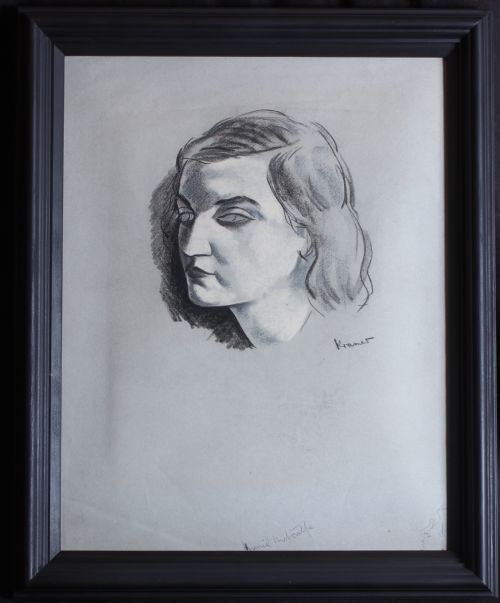
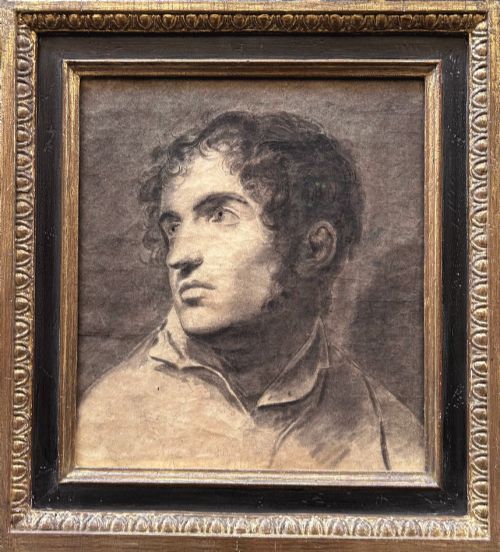
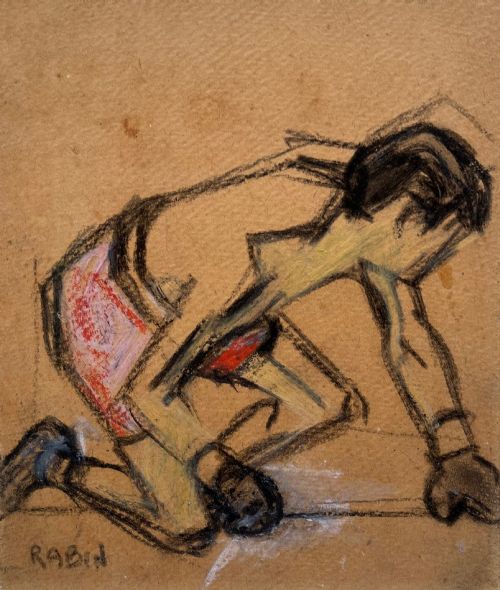
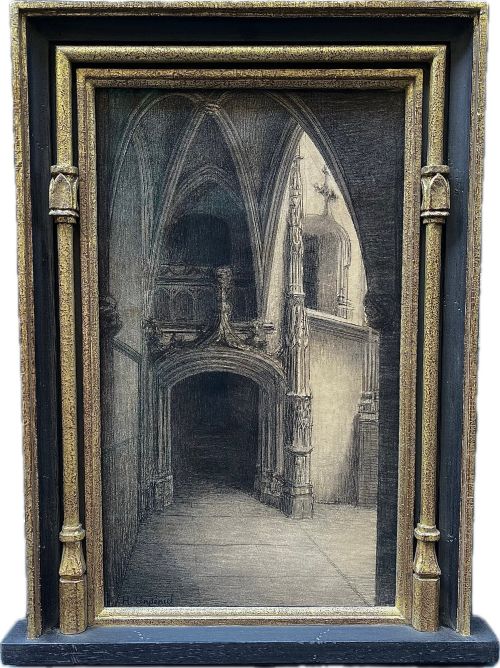
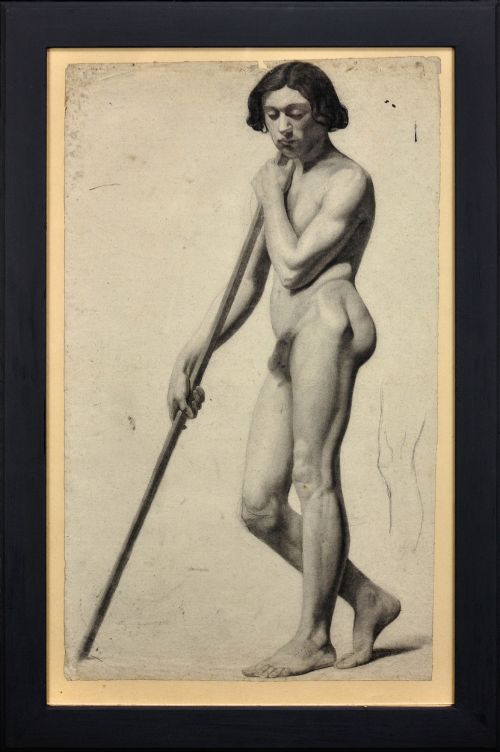


Original Charcoal Study Artwork
Original charcoal study artwork brings direct hand-drawn observation from past centuries into modern rooms through monochrome paper.
Original Charcoal Study Artwork
Original charcoal study artwork comprises hand-drawn sketches and life studies executed directly on paper, capturing immediate artistic intent. These works range from nineteenth-century academic figure drawings to twentieth-century modernist and cubist compositions. Buyers find everything from intimate portraits to full-scale figurative pieces.
The selections available here lean heavily toward nineteenth-century academic realism and twentieth-century British and French modernist movements. Framed drawings dominate the presentation, preserved behind glass in wood or gilt frames. These pieces function primarily as wall art that records the working process of the artist.
Materials and technique
Artists utilise charcoal, graphite, chalk, and pastel applied to various grades of paper to build tone and line. Many works combine media, layering chalk or graphite with charcoal to achieve depth and contrast in academic studies. Fixatives are sometimes applied to stabilise the friable carbon particles on the sheet.
Support materials include traditional paper housed within timber or gilt wood frames, often protected behind glass. The framing varies from antique gilt mouldings to simpler wooden surrounds chosen to preserve the delicate surfaces. Handling these works requires care due to the sensitive nature of unglazed or loosely bound drawing media.
Several drawings preserve the hurried studio annotations and stray thumbprints of nineteenth-century students struggling with stubborn lighting.
Distinctions in quality
Quality rests upon the anatomical precision and expressive confidence of the draughtsmanship visible on the page. Superior pieces demonstrate a firm grasp of light, shadow, and proportion achieved through decisive marks rather than hesitant corrections. Academic life studies often reveal the rigorous training of the hand behind the work.
The condition of the paper surface and the integrity of the framing also dictate the standing of a piece. Well-preserved sheets retain their original contrast without excessive foxing or acid burning from old mounts. Works carrying documented provenance or attribution to recognised practitioners command stronger interest.
Samuel Rabin·Henri Charles Angéniol·Henry Arthur Roberts·Demetrios Galanis·Arthur Todd·Winifred Eugene Ballard·John Hoppner·John Macallan Swan·Frank Dobson·Henri Joseph Harpignies·Cecil CP Lawson·Juliet Pannett
The Original Charcoal Study Artwork Glossary
- Academic Realism
- A style of painting and drawing produced under the influence of European academies of art, emphasising traditional standards and precise anatomy.
- Deux Crayon
- A drawing technique utilising two colours of chalk or crayon, typically black and red or white, on toned paper to create highlights and shadows.
- Foxing
- Brown spots or patches on paper caused by chemical reactions over time, frequently seen in antique prints and drawings.
- Provenance
- The chronology of the ownership of a work of art, used as a guide to authenticity and history.
Original Charcoal Study Artwork: Frequently Asked Questions
What is an original charcoal study?
An original charcoal study is a direct, one-off drawing created by an artist to explore a subject or prepare for a larger composition. These works record the immediate observations and technical decisions of the creator.
Unlike printed reproductions, each stroke of carbon on paper remains unique to the hand of the artist who made it.
How should charcoal drawings be framed?
Charcoal drawings require framing behind glass to prevent dust and airborne particles from settling on the fragile carbon surface. A mat or mount should separate the paper from the glass so the delicate medium does not touch the pane.
Protecting the sheet from direct sunlight prevents the paper from yellowing and keeps the monochrome tones stable over decades.
How do I identify academic life studies?
Academic life studies typically feature nude or draped figures posed in specific stances within a studio setting. They display careful attention to human anatomy, muscle structure, and tonal shading.
These drawings often originate from formal art school training sessions where students practiced rendering form from live models under controlled lighting.
Are these drawings one-of-a-kind?
Every piece recorded here is an original, unique drawing rather than an editioned print or mass-produced poster. The artist drew directly onto the paper surface by hand.
This direct creation means no identical copy exists, making each artwork a singular historical object.