


Vintage Female Nude Drawing
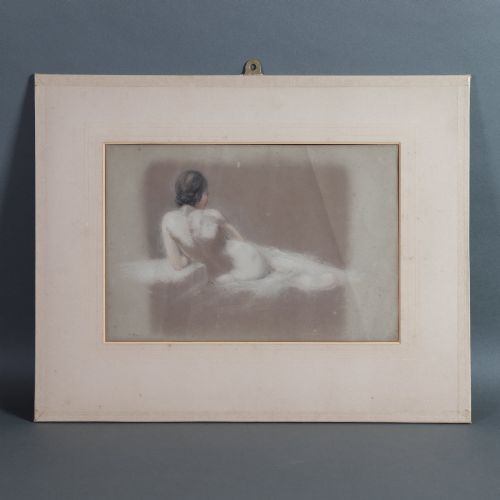
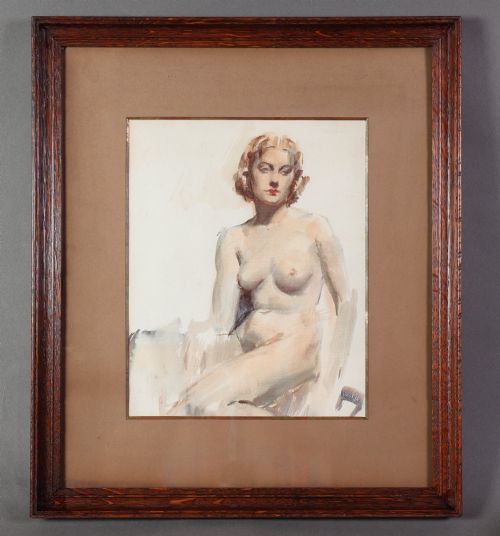
A vintage female nude drawing is an original study of the human form on paper, prized for its immediacy and directness.
Vintage Female Nude Drawing
A vintage female nude drawing captures the human form through direct observation, emerging primarily from academic settings and private studios. The selection spans distinct periods from the early twentieth century through the mid-century modern era.
The most common formats you encounter are charcoal life studies on paper and framed pencil drawings. These pieces range from intimate sketches to large portraits created within British art schools.
Works on this page encompass various styles, including Academic Realism, Modern British, and Art Deco. They reflect the changing approaches to figure drawing across several decades of the twentieth century.
Materials and techniques
Artists utilise traditional dry media on paper, predominantly employing charcoal, graphite, and chalk to build form and tone. Pastels and mixed media also appear, offering richer colour and texture in mid-century examples.
Framing forms an integral part of these pieces, with antique gilt wood frames frequently housing the works on paper. Copper plates and painted wooden panels occasionally accompany the drawings, as seen in illustrated book projects.
One exceptional drawing comes with the intriguing dual identity of the subject recorded as an exotic dancer and a local postmistress.
Distinctions in quality
Quality rests upon the sureness of the line and the artist's command of proportion and shadow. Stronger works demonstrate a confident, economy of mark-making that captures volume and weight convincingly.
Provenance and attribution elevate certain pieces, particularly those bearing the signature of established artists or originating from documented artistic circles. The condition of the paper and the suitability of the period frame also influence the overall standing of an artwork.
William Etty·Augustus John·Winifred Eugene Ballard·Mariette Lydis·Frank Dobson·Henry Bird
The Vintage Female Nude Drawing Glossary
- Life drawing
- The act of drawing a human figure from a live model. This practice forms the bedrock of academic training and traditional art school instruction.
- Mixed media
- An artwork combining two or more distinct artistic materials or mediums on a single surface. Artists often pair charcoal with chalk or pastel to achieve greater tonal depth.
- Academic Realism
- A style of painting and drawing produced under the influence of European academies of art. It emphasises precise anatomical accuracy and careful observation.
- Recumbent
- Lying down or reclining. This posture is a traditional subject for figure studies, emphasising relaxed musculature and shadow.
- Copper plate
- A metal sheet engraved or etched for printing illustrations. These plates accompany original drawings intended for published volumes.
Vintage Female Nude Drawing: Frequently Asked Questions
What periods do these drawings come from?
The works span the early to mid-twentieth century, with examples dating from the Edwardian era through the art deco period and into the nineteen-fifties.
Most pieces cluster around the interwar years and the post-war mid-century modern movement.
How were these life studies created?
Artists drew directly from live models in studio settings or art schools, using charcoal, graphite, chalk, or pastel on paper.
Some pieces incorporate mixed media or serve as preliminary illustrations for published literary works.
Are the frames original to the artwork?
Many drawings retain antique gilt wood frames that complement their period of origin. Framing often reflects the aesthetic choices of the mid-century or earlier decades.
Checking the backing and mount helps determine if the framing is contemporary to the drawing itself.
How do I identify a British School drawing?
British School attributions generally denote works by unnamed artists working within Britain during a specific century. These pieces often emerge from regional art schools or private collections.
Stylistic markers align them with Modern British or academic traditions of their respective decades.