


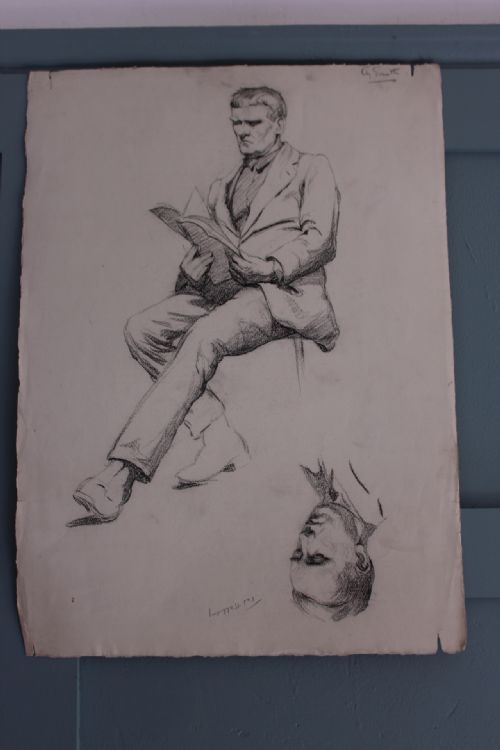

Charcoal Life Drawing
Charcoal life drawing captures the human form with immediate, expressive marks on paper, offering buyers a direct connection to academic study and artistic practice.
Charcoal Life Drawing
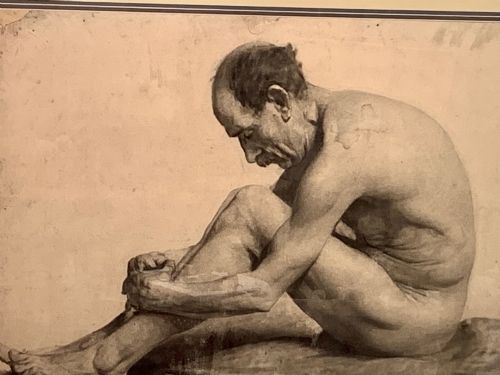
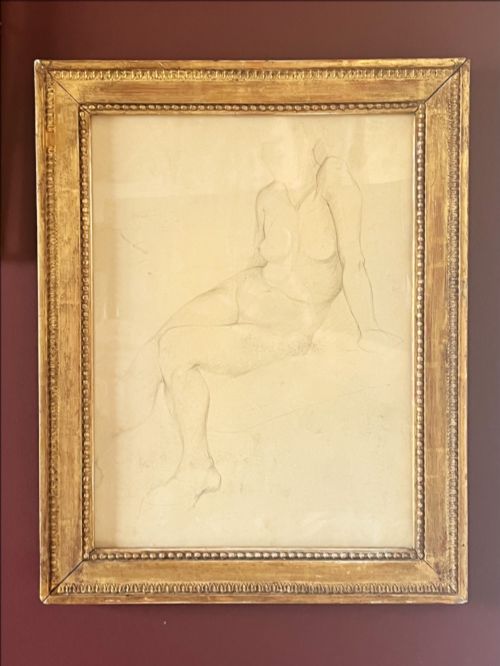
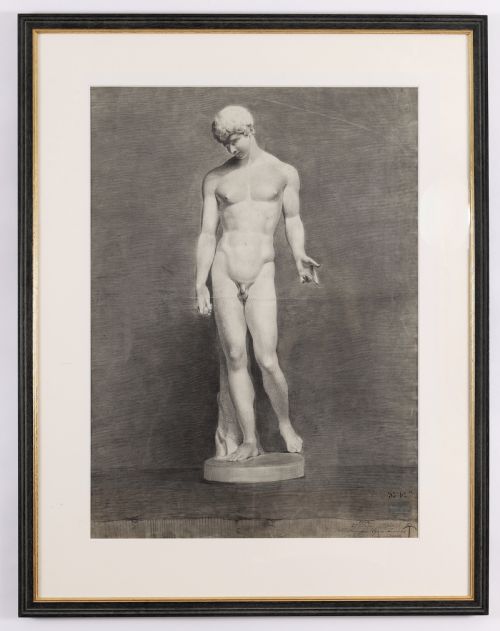
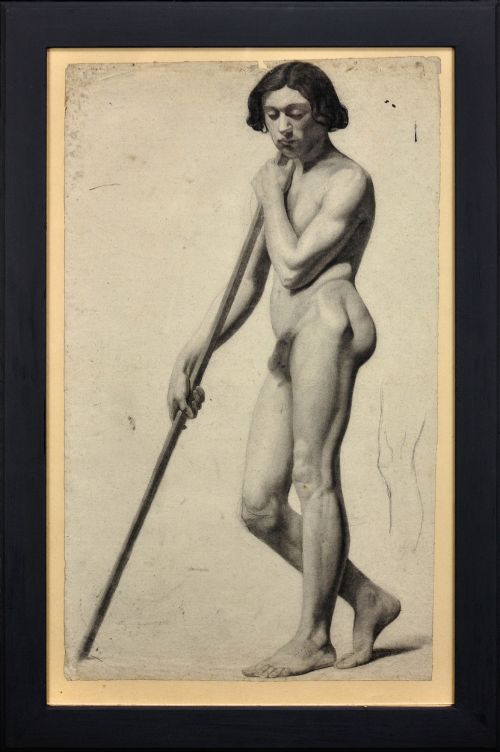
A charcoal life drawing is an original study of a human subject, rendered on paper using charcoal, graphite, or chalk. These works capture figures in academic realism, neoclassical, and modern British styles, reflecting rigorous studio training from the nineteenth and twentieth centuries.
You will frequently encounter framed academic studies of male and female nudes alongside portraits and still life works. The selections span periods from the nineteenth century through the Edwardian era, 1910, 1920, 1930, 1950, and 1960.
Most pieces on this page are presented as framed artwork or wall art, often secured behind glass within wood or gilt wood frames. They document the traditional progression of art school training through detailed anatomical observation.
How they were made
Artists utilised charcoal and chalk applied directly to paper or toned paper to build up tonal depth and stark contrast. Graphite was also employed for precise preparatory lines and structural definition.
The finished works were typically mounted behind glass and housed in wood or gilt wood frames to protect the delicate charcoal medium from smudging and environmental damage.
The selection includes academic realism, modernist, and mid-century modern styles, documenting figures from the nineteenth century through the 1960s.
What varies in quality
The distinction between works rests upon the precision of anatomical rendering and the confidence of the mark-making. Stronger pieces display a sophisticated understanding of light and shadow on toned paper, capturing volume and form without excessive blending.
Condition and preservation dictate value. Drawings retained beneath glass within their original gilt wood or wood frames maintain cleaner surfaces, whereas unprotected paper often bears handling marks and foxing.
Henry Arthur Roberts·Winifred Eugene Ballard·Frank Dobson·J Jean Betourne
The Charcoal Life Drawing Glossary
- Academic Realism
- A style of painting and drawing produced under the influence of European academies of art, emphasising precise anatomical accuracy and classical proportions.
- Toned Paper
- Paper that is coloured in a neutral shade such as grey or buff, allowing the artist to work up both highlights in chalk and shadows in charcoal.
- Life Study
- A drawing or painting executed directly from a live nude or clothed model, serving as a fundamental exercise in art education.
- Gilt Wood
- Wood that has been coated with a thin layer of gold leaf or metallic gilt paint, commonly used for traditional picture framing.
Charcoal Life Drawing: Frequently Asked Questions
What is an academic life study?
An academic life study is a rigorous drawing completed by an art student or master observing a live model in a studio setting. These pieces focus intensely on musculature, posture, and proportion.
Such works were foundational to nineteenth and twentieth-century art training, resulting in highly detailed renderings of male and female figures.
Are these drawings original works?
Every piece listed is an original hand-drawn artwork executed directly onto paper using mediums such as charcoal, chalk, and graphite. They are unique studio pieces rather than mechanical reproductions or prints.
Signatures, dates, and inscriptions found on the sheets or frames often provide provenance linking the work to specific artists and art schools.
How do I identify the period of a drawing?
Period is determined by a combination of framing style, paper type, subject matter, and any documented dates or signatures. Nineteenth-century examples often feature rigorous neoclassical proportions, while 1950 and 1960 pieces lean toward mid-century modern abstraction.
Examining the back of the frame and the physical characteristics of the paper stock helps confirm the era of creation.